Snow and wet-weather grip combined with comfort and durability, delivering performances that remain consistent over time.
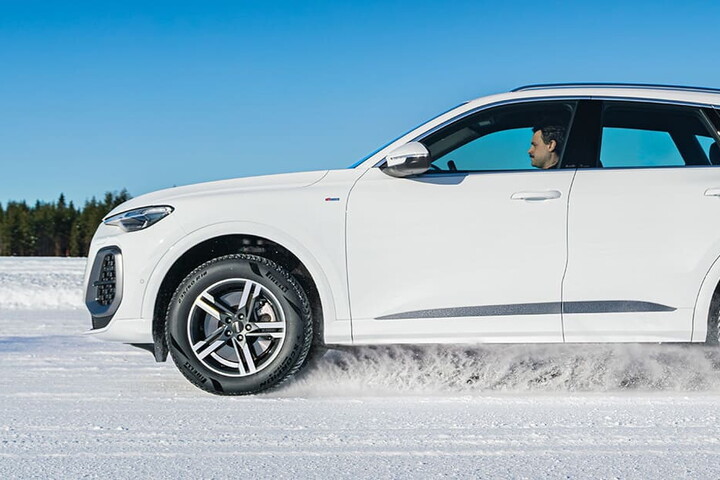
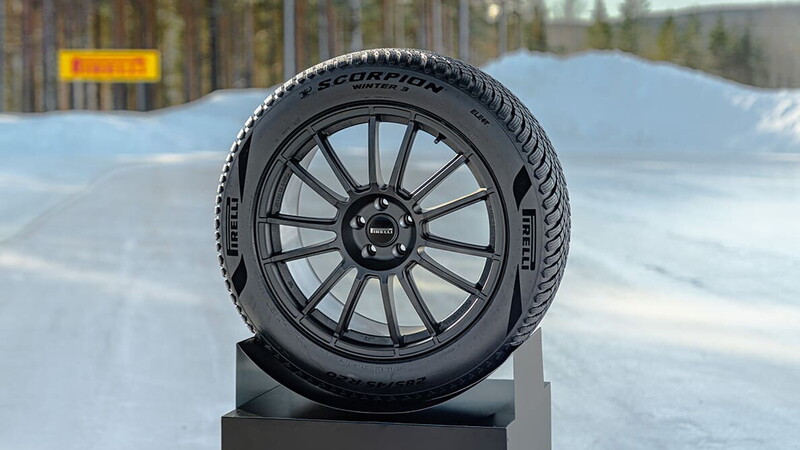
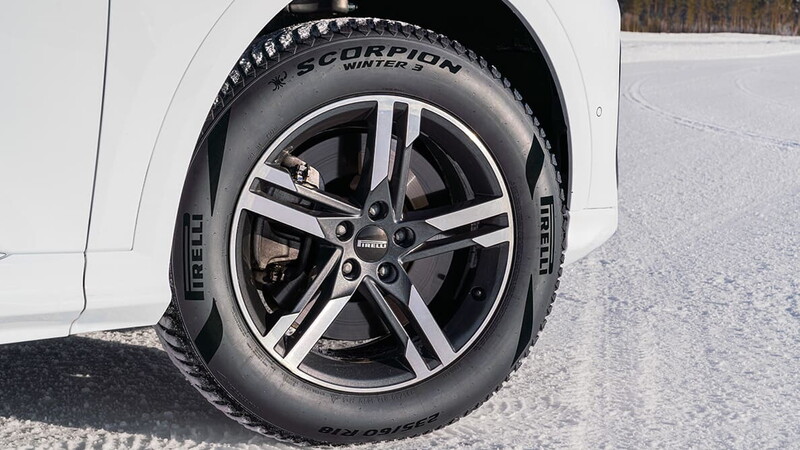
Scorpion Winter 3 is here, completing the renewal of Pirelli's winter range. Designed to meet the specific requirements of SUVs in typical cold-weather conditions, the new tyre addresses the unique characteristics of a vehicle category that now accounts for more than 50% of the global market¹. SUVs require dedicated tyre solutions due to their greater weight and higher centre of gravity, and Scorpion Winter 3 has been engineered accordingly, with a bespoke internal structure and tread design. The new product successfully overcomes one of the traditional compromises of winter tyres, delivering an outstanding balance of performance on snow, wet and dry surfaces alike. This achievement has already been confirmed by its first independent test, in which Scorpion Winter 3 was ranked first among its competitors².
All sizes available at launch achieve an A rating for wet grip under the European tyre label³, while external noise performance falls within the A-B classes of the EU label⁴. The range is also available with Elect technology, developed specifically for electric and plug-in hybrid vehicles, reflecting growing demand for these powertrains within the segment.
DESIGNED AROUND THE WINTER NEEDS OF SUVS
Development began with a focus on tyre behaviour under high loads. The contact patch was redesigned to optimise pressure distribution, a key factor in improving both mileage and wear regularity on heavier vehicles such as SUVs.
This approach led to one of the most important innovations of the new generation: for the same level of tread wear, the active edges within the contact patch, and therefore snow and wet grip, are maintained more consistently over time. The tyre structure itself has also been engineered to handle higher loads through a dedicated internal tyre carcass design and customised tread pattern.
TECHNOLOGIES ADOPTED FROM THE CINTURATO WINTER 3
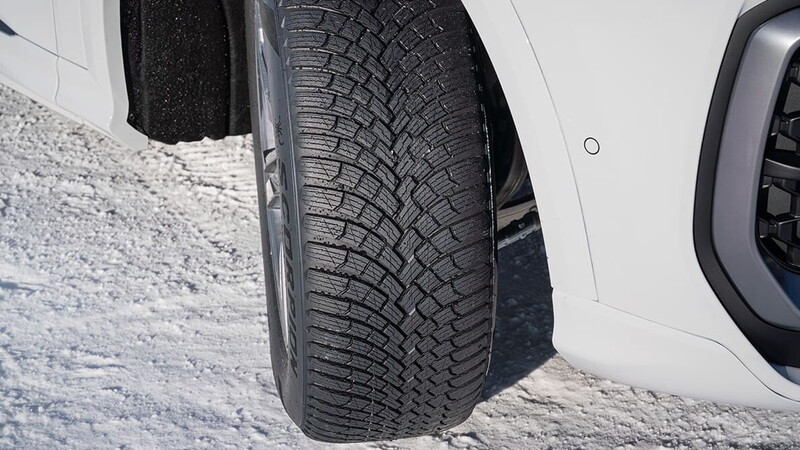
The tread pattern incorporates several solutions first developed for the Cinturato Winter 3, recently named the winner of an independent ADAC test. These include the zig-zag central groove, which improves water evacuation and lateral stability on snow, the ‘Snow Keeper Teeth', Pirelli's patented technology that retains snow within the grooves to exploit the natural adhesion of snow-on-snow contact, and a high void ratio that enhances performance on snow, wet roads and in aquaplaning conditions.
These features are complemented by solutions developed specifically for SUVs, including reinforced tread blocks for improved handling and wear resistance under high loads, together with a specially calibrated sipe density to maintain performance on dry surfaces.
AN INNOVATIVE COMPOUND
The compound draws on the experience gained with P Zero Winter 2, Pirelli's winter tyre for high-performance vehicles. It features advanced polymers, including the Dual-Core Polymer, whose dual operating mechanism delivers higher grip across different conditions, while dedicated plasticisers broaden the tyre's effective operating temperature range.
TESTED VIRTUALLY AND IN THE REAL WORLD
Scorpion Winter 3 was developed using Pirelli's advanced Virtual Development technologies, enabling engineers to accurately simulate multiple variables, reduce development time and minimise the number of physical prototypes required.
Both static and dynamic driving simulators played a key role in refining performance, with particular attention paid to dry handling and overall driving pleasure.
The validation programme was completed at the Pirelli Sottozero Centre in Swedish Lapland, where year-round testing on snow and ice is possible thanks to dedicated outdoor tracks and indoor facilities.
RANGE AND AVAILABLE SPECIALTIES
The new Scorpion Winter 3 launches with a range of 30 sizes from 18 to 22 inches and is available with several dedicated technologies.
These include Elect, which can increase the driving range of electric and plug-in hybrid vehicles by up to 10%⁵; the Pirelli Noise Cancelling System (PNCS), which reduces perceived cabin noise through a sound-absorbing material integrated inside the tyre; and Seal Inside, which helps maintain air pressure even after a puncture caused by an external object⁶.
THE SCORPION FAMILY
The new winter tyre joins the Scorpion family, first introduced by Pirelli in 1986 specifically for high-riding vehicles and originally fitted to the Lamborghini LM002.
Since then, the Scorpion range has expanded to cover summer, winter and all-season products, from road-focused SUV tyres to off-road solutions. From the outset, Scorpion has maintained a strong original equipment focus, with products developed in close collaboration with vehicle manufacturers.
Scorpion Winter 3 continues this tradition, contributing to the more than 1,200 homologations achieved by the family, including bespoke developments for models from leading premium and prestige manufacturers such as Aston Martin, Porsche, Lamborghini, Lotus, Audi, BMW, JLR and NIO.
THE PIRELLI WINTER RANGE
With winter tyre regulations coming into force on 15 November, Scorpion Winter 3 completes Pirelli's fully renewed Winter range, refreshed over the past two years and structured according to vehicle type.
Alongside the new SUV and CUV winter tyre, the range includes P Zero Winter 2 for high-performance vehicles and Cinturato Winter 3 for saloons, crossovers and everyday mobility.
1. What is the main innovation of the new Pirelli Scorpion Winter 3?
Scorpion Winter 3 is the latest generation of Pirelli's winter tyre developed specifically for SUVs. Its design has been driven by the ambition to overcome one of the traditional trade-offs of winter tyres, delivering an exceptional balance between safety on snow and wet surfaces, driving comfort, mileage performance and dry-road handling.
2. Why was it necessary to develop a tyre specifically for SUVs?
Today, SUVs account for more than half of the global automotive market and have characteristics that differ significantly from conventional passenger cars, including higher vehicle weights and a higher centre of gravity. For this reason, Scorpion Winter 3 features an internal structure, carcass and tread pattern specifically engineered to manage the loads typical of these vehicles and provide optimum performance throughout the winter season.
3. How does Scorpion Winter 3 maintain its performance over time?
One of the tyre's most significant innovations lies in its redesigned contact patch, which improves pressure distribution and promotes more even wear. This allows the number of active edges generating grip to remain more consistent over time, preserving high levels of performance on snow and wet surfaces even as the tread wears.
4. Which technologies enhance safety in winter conditions?
The new tyre incorporates a range of technologies developed by Pirelli, including a zig-zag central groove that improves water evacuation, Snow Keeper Teeth that retain snow within the grooves to enhance traction, and a high void ratio designed to improve performance on snow, wet roads and in aquaplaning conditions.
5. What results has it achieved in terms of grip and comfort?
All sizes available at launch achieve an A rating for wet grip under the European tyre label, while noise performance falls within the A-B classes of the EU label. These results confirm the tyre's ability to combine safety, acoustic comfort and efficiency without compromising one attribute in favour of another.
6. What role did virtual development and driving simulators play in the project?
Scorpion Winter 3 was developed using Pirelli's advanced Virtual Development tools. Digital simulations and both static and dynamic driving simulators enabled engineers to optimise numerous tyre parameters at an early stage, reducing development time and the number of physical prototypes required, with particular focus on dry handling and driving pleasure.
7. Where and how was the new tyre tested?
Following the virtual development phase, the tyre underwent an extensive physical validation programme at the Pirelli Sottozero Centre in Swedish Lapland. Here, engineers were able to assess performance on snow and ice throughout the year thanks to dedicated test tracks and indoor facilities capable of reproducing winter conditions consistently.
8. Which technologies will be available at launch?
Scorpion Winter 3 will be available in 30 sizes ranging from 18 to 22 inches. The range includes Elect technology for electric and plug-in hybrid vehicles, which can contribute to increasing driving range by up to 10%, the PNCS (Pirelli Noise Cancelling System) to reduce noise perceived inside the cabin, and Seal Inside technology, which helps maintain tyre pressure even in the event of a puncture caused by an external object.
¹Source: S&P Global Mobility data and analysis
²Tests conducted by AlVolante (Year 28, No. 10, October 2026) using 235/60 R18 tires on an Alfa Romeo Stelvio
³All replacement sizes available at the time of the product launch achieved a 100% rating in class A on the EU label for wet grip.
⁴All replacement tire sizes available at the time of the product launch received a rating ranging from 25% in class A to 75% in class B on the EU noise label.
⁵Comparison between PIRELLI SCORPION™ ELECT™ and PIRELLI SCORPION™ tires (size 235/60/R18), measuring the gain in battery range resulting from reduced rolling resistance in the ELECT™ version. The tests were conducted on a Volkswagen ID.4 under instrumented conditions at a constant speed of 50 km/h over a range of 550 km. Source: Internal Pirelli R&D tests conducted between March and June 2022.
⁶Information on how the technology works is available at this link