Clutch down, first gear engaged and open the throttle. Repeat: clutch, second, third, fourth – a thrilling climb all the way to seventh gear. With the Pagani Utopia Roadster, the driving experience returns to something pure, visceral, unmistakably analogue. In a universe of super and hypercars now dominated by automation, Horacio Pagani chooses instead to give back those small, precious pleasures that turn driving into emotion. Like a gated manual shift plate with short-throw stick that helps guide the perfect moment to change gear, whether downshifting ahead of a corner or stepping up once the car straightens on exit. It may sound simple. It is anything but. Creating a manual gearbox that can handle the Utopia's 1,100 Nm of torque delivered by a V12 engine is a feat of engineering in itself. Yet the sophisticated technology concealed beneath the timeless lines of every Pagani makes even this possible – delivering a driving experience that echoes another era, such as when 1950s racing ace Juan Manuel Fangio moved through the gears one after the other along the Nürburgring's seemingly endless straights, completing one of the most celebrated comebacks in Formula 1 history.
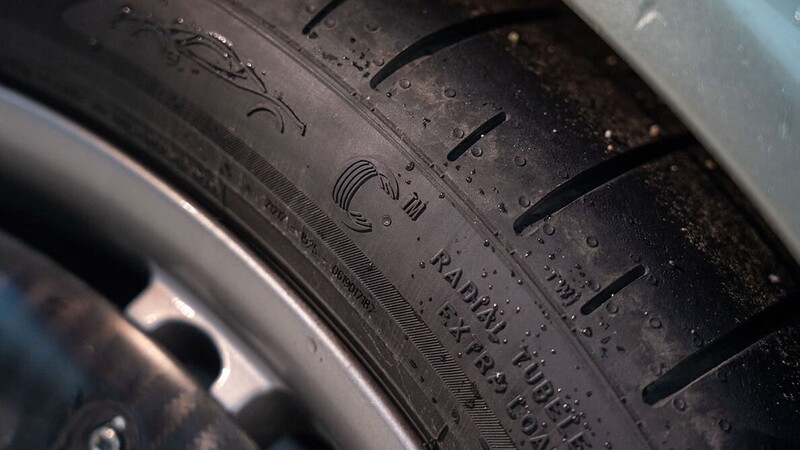
The secret? Hiding everything beneath the bonnet. The driver is left with the purity of the experience, while discreet systems work simultaneously to ensure that enjoyment is always matched by confidence. On this car, that role is played by Cyber™ Tyre, the technology Pirelli has brought to the road for the first time with Bosch and Pagani on the Utopia Roadster. Sensors embedded in the tyres feed sophisticated software, which interprets the data via the vehicle's control unit that in turn manages driver assistance systems. The result is a more effective anti-lock braking system, capable of shortening braking distances; traction control that responds with greater fluidity and precision; and an electronic stability program that engages with enhanced accuracy. Safety is increased, without diluting the pleasure of driving.
To mark the arrival of a technology that reshapes the very role of the tyre, a Pagani Utopia Roadster travelled over 1,500km, physically linking the three companies behind it: from Pagani Automobili headquarters near Modena to Bosch near Stuttgart and on to Milan, where Pirelli has had its roots for more than 150 years. This was not a test. Cyber™ Tyre is already a mature technology, ready to extend to premium vehicles and to support the evolution of software-defined cars, ultimately paving the way towards autonomous driving. Vehicles that will undoubtedly be less analogue than the Utopia Roadster yet will follow the same path as this remarkable fusion of art and engineering.
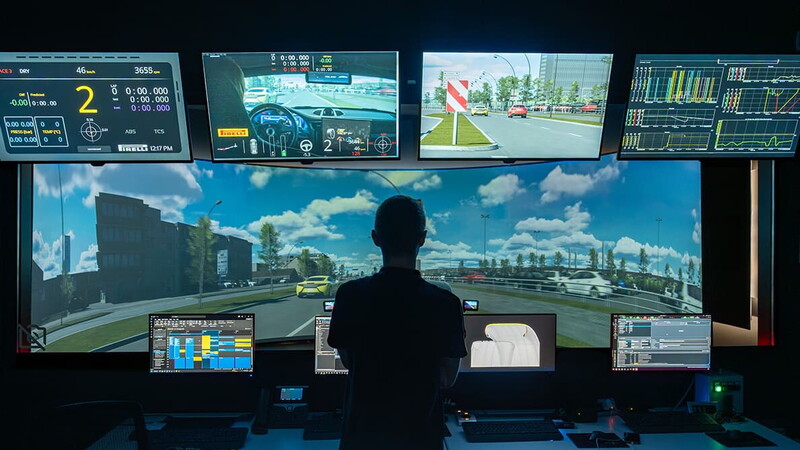
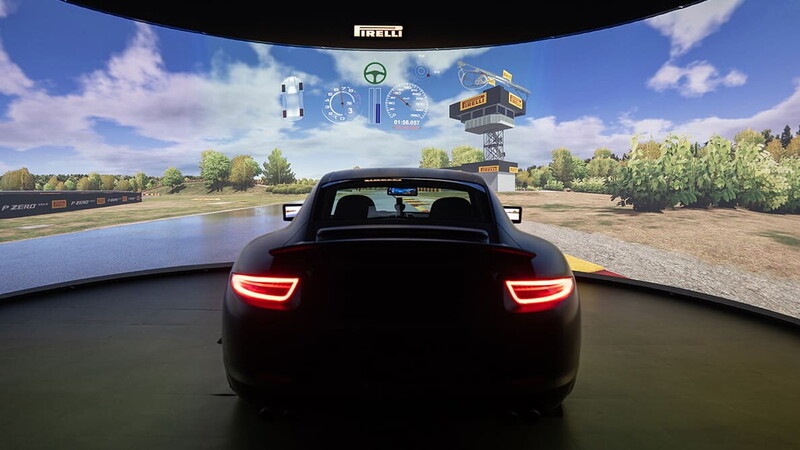
An innovation of this significance, however, cannot be improvised. Pirelli has spent more than two decades developing this integration of hardware and software – a system designed to enhance vehicle safety without ever intruding on the driving experience. This revolution begins with the tyre's digital twin: a virtual counterpart capable of “explaining” its behaviour to the car's onboard electronics – its grip limits, optimal operating conditions, inflation pressure and all the information needed to refine driving control systems delivering even more safety. It is, in effect, a sense of touch born in the digital realm. The same computers Pirelli engineers use to design tyres in a virtual environment underpin the entire process. Further advanced computer systems, derived from aerospace technologies, power the driving simulators where these digital tyres are tested – with the same drivers at the wheel who work on track, operating in a virtual setting so realistic that lap times recorded without moving a single metre align precisely with those later achieved between kerbs.
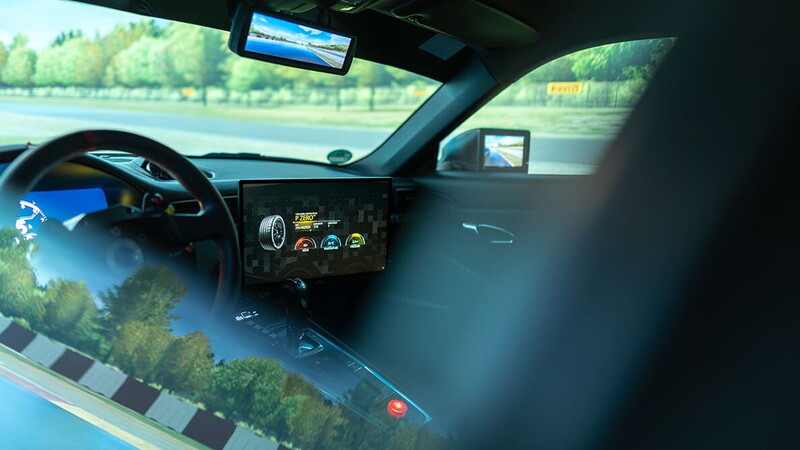
Using these very technologies, Pirelli develops tyres for the fastest cars in the world – Formula 1 single-seaters – refining virtual processes through the demands of the sport. Innovation at this level is never instantaneous. It is learned. Shaped over years of discipline, imagination and ambition. Much like when Pirelli first began to imagine that tyres could take on a different, more central role – integrating with an electronic ecosystem that was then just emerging, in a world of cars that was still, fundamentally, analogue.