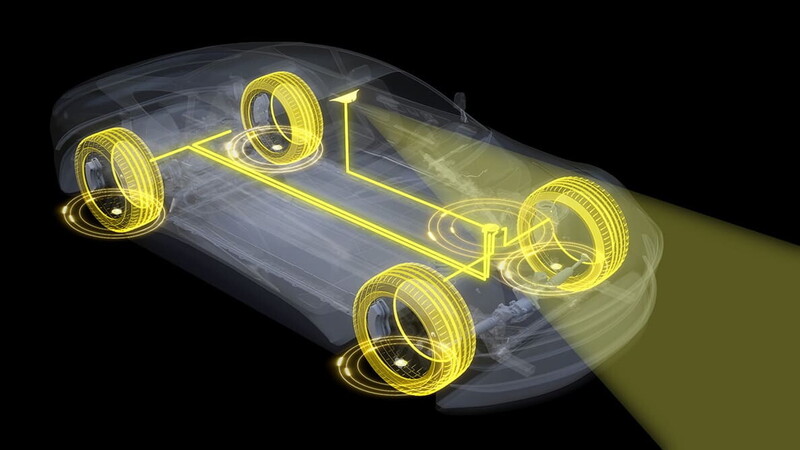
Mobility is undergoing an unprecedented transformation that is reshaping the motor car along four key axes: sustainability, electrification, connectivity and autonomous driving. In this landscape, the very architecture of the vehicle is being completely redesigned, with the tyre taking on an entirely new role. No longer merely a “rubber” component designed to provide grip and transfer mechanical forces, it has become a genuine data source capable of delivering vital information on driving conditions.
“Over twenty years ago, we realised that the role of the tyre was set to change”, explained Piero Misani, Pirelli Chief Technical Officer. “Indeed, today it has become a unique source of information about what happens at the contact patch. Tyres are the sole link between car and road, the element that transfers to the tarmac every action determined by the vehicle's mechanics and electronics. For this reason, what the tyre is able to ‘read' completes the loop towards transforming the car into a software-defined vehicle.”

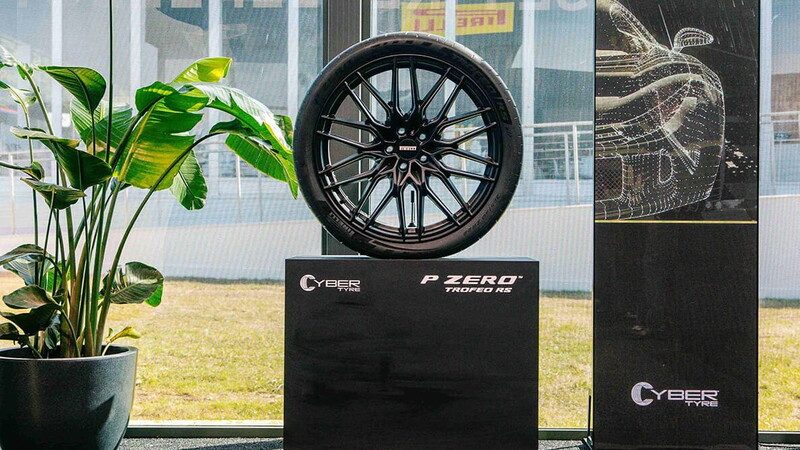
This vision gave birth to Pirelli's Cyber™ Tyre: a technology that places the tyre at the heart of a digital ecosystem as the primary entry point for gathering, interpreting and leveraging data from road contact. In doing so, it enables the vehicle and surrounding infrastructure to "talk" to one another, boosting safety, efficiency and performance.
Corrado Rocca, Pirelli Head of Cyber Unit, added: “The role of software in modern vehicles has surpassed that of mechanics. Against this backdrop, our technology plays a pivotal role in supporting the advanced functions of today's cars, which are increasingly info-hungry electronic brains, with reliable, unprecedented data”.
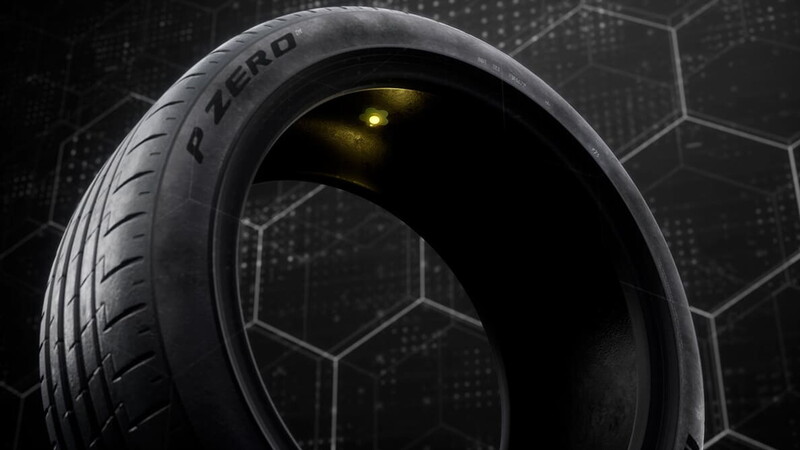
A powerhouse of technology in just 13 grammes
The Cyber™ Tyre journey began with a complex engineering challenge: detecting critical phenomena, such as aquaplaning, directly at the exact point where asphalt meets wheel. Realising this concept required years of research to ensure the electronics could withstand the extreme conditions in which they operate. The result today is a device weighing just 13 grammes. Housing a sensor, battery and transmission module, it is built to endure challenging conditions and internal wheel accelerations reaching up to 4,000 g.
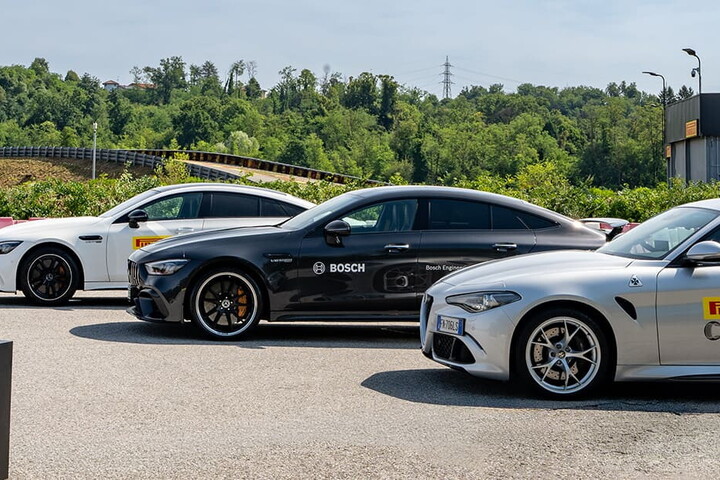
Today, the system is fully mature, operating in synergy with a software component that translates raw data into actionable insights for the car's electronic control units (ECUs). Thanks to a strategic partnership with Bosch, the tyre communicates directly with active safety systems such as ABS, ESP and traction control. Initially tested on ultra-high-performance hypercars including McLaren, Pagani and Aston Martin, Pirelli's technology is now scaling up to broader market models through partnerships with European, American and Asian car manufacturers.
Sensor Fusion: towards autonomous driving
The true quantum leap occurs when physical tyre data merges with other vehicle data. To build an even more accurate, predictive picture of vehicle behaviour, Pirelli has forged an agreement with RIDEsense, a spin-off from the Federico II University in Naples.
The partnership centres on sensor fusion: the Cyber™ Tyre algorithms linked to the physical sensor work in tandem with RIDEsense's "virtual" sensors. These software tools use mathematical models to process existing on-board data, estimating complex parameters such as residual grip and tread wear.
“The challenge isn't collecting more data, but making it even more reliable. Input redundancy, gathered through both real and virtual sensors, will enhance the safety, robustness, and decision-making capabilities of future autonomous driving systems” added Flavio Farroni and Aleksandr Sakhnevych, co-CEOs & co-Founders of MegaRide and RIDEsense.
This redundancy and cross-referenced precision will prove vital for tomorrow's Advanced Driver Assistance Systems (ADAS). To solidify its standing within autonomous driving architecture, Pirelli recently invested in Niulinx, a Milan Polytechnic spin-off specialising in autonomous driving. This move firmly establishes tyre-road contact intelligence as a cornerstone of automated vehicle control. Sensor fusion creates brand-new functionalities alongside redundancy. Take Pirelli's collaboration with Swedish AI and Computer Vision firm Univrses: by integrating data captured by on-board cameras with tyre insights, the technology is already monitoring road networks across Puglia and has recently been fitted to select vehicles in the Carabinieri's Radiomobile Unit in Rome.
An infrastructure that listens: the future of smart roads
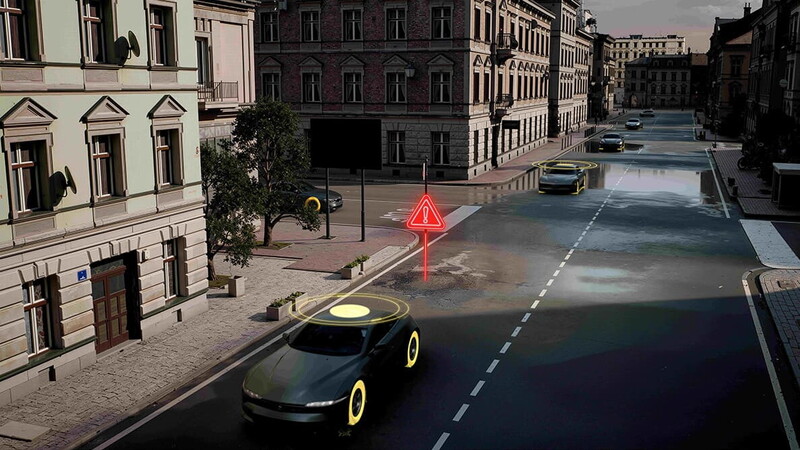
The value of this data extends far beyond the cockpit. A localised loss of grip or patches of ice represent critical intelligence for other drivers and road operators alike. This realisation prompted the partnership with Movyon (the technology arm of the Autostrade per l'Italia Group).
Cyber™ Tyre-equipped cars act as “mobile testing labs,” monitoring the state of road infrastructure far more frequently than conventional inspection vehicles.
“Joint trials revealed a strong correlation between Cyber™ Tyre data and measurements acquired via traditional monitoring systems, offering a significant edge in terms of sampling frequency, continuity and coverage density. Innovation and cross-industry synergy will help make roads safer by enabling timely, efficient maintenance scheduling through our Evolutive Pavement Management System platform,” commented Benedetto Carambia, Head of New Products at Movyon.
This shift will progress in lockstep with connected infrastructure developments, epitomised today by the Tangenziale di Napoli (Naples ring road), certified as Europe's first smart road. Thanks to the rapid evolution of smart road concepts, the industry is moving from simple data collection to true Vehicle-to-Infrastructure (V2I) cooperation. Vehicles will soon not only transmit data, but also receive dynamic speed recommendations and safety alerts tailored to real-time traffic and road surface conditions.
The digital brain in Bari
Orchestrating this vast volume of data is the Digital Solutions Center, opened by Pirelli in Bari in 2022. Established alongside the University and Polytechnic of Bari, this hub forms the core of the company's software development and data analytics operations. Driven by a team of around 80 specialists with an average age of 32, this is where the algorithms are being written to transform future mobility into a truly collaborative ecosystem.