There was a time when racing was a pursuit for pioneers and daredevils. Safety standards were virtually non-existent, cockpits were rudimentary and the cars were powerful and nearly brakeless. It was the dawn of road racing – “The beauty of speed: a roaring motorcar, that seems to run on grapeshot, is more beautiful than the Winged Victory of Samothrace,” wrote Filippo Tommaso Marinetti at the turn of the 20th century.
He and other Futurists were quick to grasp the aesthetic charge of motorsport; the technological challenge was another matter entirely. For years to come, it would remain a work in progress, with the foundations still being laid.
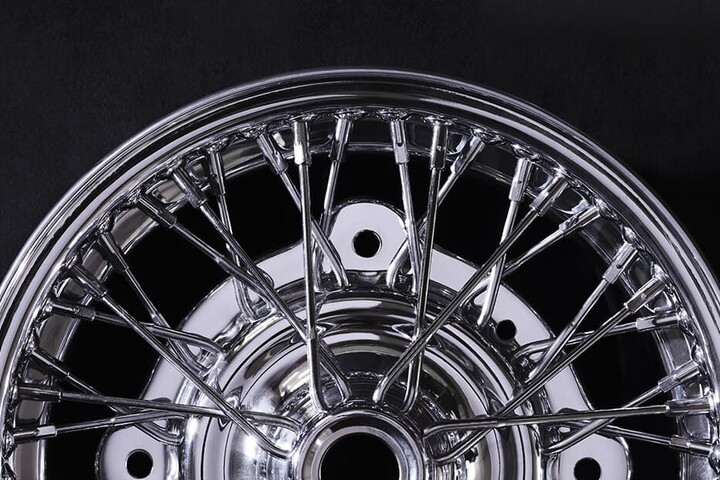
“In this context, Ruote Borrani Milano was born out of a specific need of that distant era,” explains Salvatore Stranci, current CEO of the company founded in 1922, which would soon go on to revolutionise the approach to motorsport. “The first Formula 1 cars were elongated cigars launched at 200km an hour, with drivers wearing leather helmets that were completely useless. There were no proper circuits yet; all the Grands Prix were street races, rather like Monaco today. They took place on unmade roads, with these proto-cars fitted with articulated chassis. What happened? When cornering, the chassis flexed and the extremely heavy rigid wheels slowed the manoeuvre considerably. And so Carlo Borrani – a close friend of Enzo Ferrari – devised a wire wheel with two distinctive features: a rim made entirely of aluminium and a self-aligning wheel, made possible precisely by the spokes.”
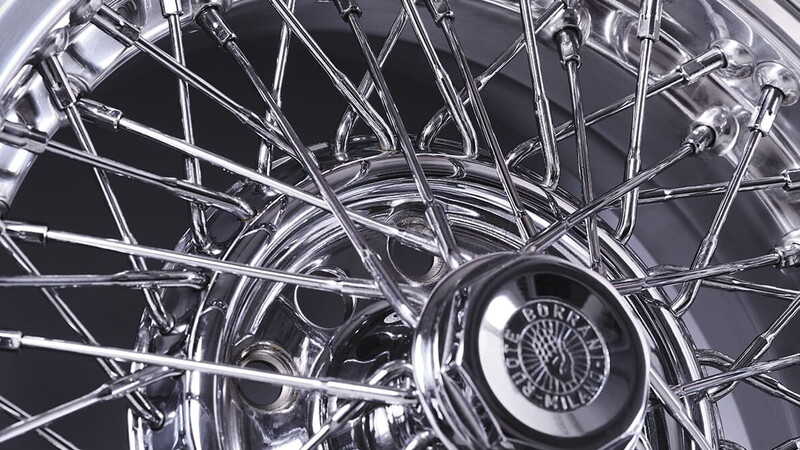
The result was a lighter, more dynamic component capable of following the movement of the single-seater. “Once this new mechanical concept had been tested, the teams that adopted it won everything there was to win. From that moment on, all of Formula 1 wanted Borrani wheels. And our story – our fortune – truly began.” Today, Borrani is a small jewel of Italian manufacturing: a company of 12 employees run like a leading multinational. In an exclusive world such as the automotive sector – one in constant motion, perpetually oriented towards innovation – this brand distinguishes itself through a certain counter-tendency: the celebration of the past that made it great. “After the post-war boom, the major car manufacturers chose Borrani wheels for their top-of-the-range models as well,” Stranci continues. “Ferrari, Alfa Romeo, Aston Martin and Maserati – any significant car with a racing vocation – fitted our components. The Prancing Horse would continue to use them as standard equipment until 1970.” And so the most iconic cars of that era dominated the world championships wearing a winning combination: Borrani rims and Pirelli tyres. “In commercial terms, today, this means that every vintage Ferrari on the market carries our wheels. Cars of this kind remain objects of cult status and active negotiation, across an extraordinary number of models.”
These are artefacts of immense fascination – but, above all, they embody the importance of the patent. “The historic car world is a genuine élite business,” adds Stranci. Around €25 billion to €30 billion is spent on maintenance, restoration and spares for collectible cars every year, according to the consultancy McKinsey. “What concerns me most about the future of our craftsmanship? Nothing, because appreciation for these cars shows no sign of slowing. And Borrani wheels, with their original techniques, are an irreplaceable asset.”
The company's continued prosperity is bound up with the dynamics of collecting. The owners of the most significant cars aim to show their prizes at the world's most prestigious concours. “Before presenting their cars, they must restore them, wheels included; either they bring them here for maintenance or they buy new ones. Always Borrani.” The entire process is validated by the judges of international concours, tasked with assessing competing cars against a predetermined set of criteria – a form of quality control, with an attached certification of excellence. “If the wheels are not in order, the car cannot enter the competition; that alone conveys the strategic importance of a company like Borrani.” It is an extremely niche sector, one of limited and progressively declining volumes as prices rise – yet with margins increasing exponentially, since no substitute manufacturer can exist. Quite simply, history cannot be rewritten and Borrani was there at the centre of it.
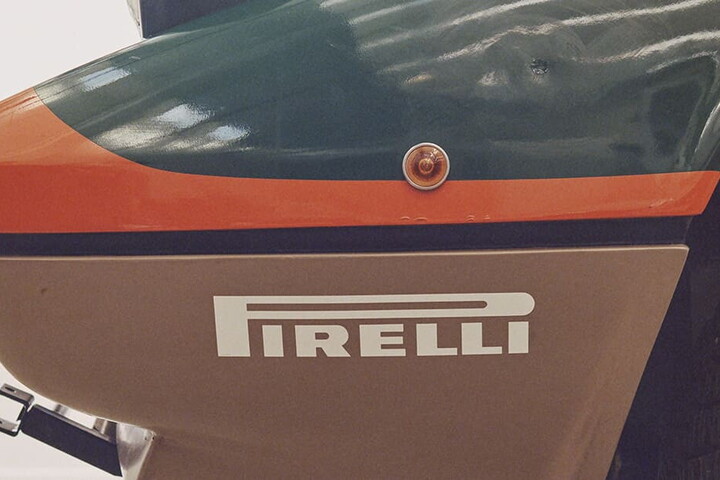
“This brand is recognised worldwide for its prestige, its exceptional nature, its inextricable bond with the greatest cars in history,” Stranci emphasises. “In the United States, people in the industry assume we are a company with 400 employees spread across 15,000 square metres; it is the brand's appeal that acts as a business multiplier.” And that long-standing reputation continues to strengthen the relationship with Pirelli. “Our products are complementary: we are the legs; they are the shoes. We are tied to the historical division of their company, which produces tyres as they once were.” Even if their clients somehow do evolve over time. “In the past they were passionate, discerning, distinguished figures who used their cars for a Sunday drive – the Gianni Agnelli type, who would go out to buy the newspaper in his Ferrari 166.” Postcards from another era. “The vintage car was also a statement, an indulgence to be enjoyed without concern for others' opinions. Today, we deal primarily with collectors.”
So let us take a brief tour of the company and examine the speciality of the house up close. “How does a Borrani wheel work? We always begin with the rim,” says the CEO. “To create this perfect ring, the material must first be cold-formed – a process we refer to in the trade as metal spinning. This resolves the welding issues that once affected the well. From there, we move to the creation of the hub. The spokes, meanwhile, are produced from a very particular material by a specialist supplier who has worked with us for 80 years, using an exclusive technology manufactured to our specification; only we have these rods. They may appear to be straightforward components, but they are extremely difficult to assemble and require substantial machinery that would be impractical to bring in-house. The spoke – whose angle of inclination on the wheel must also be precisely determined – has one exceptional mechanical characteristic: the dissipation of the forces generated and its attachment to the rim via a component known as a nipple. In terms of production, there is no room for improvisation; we work four batches at a time, at limited volumes. The hallmark of our brand is demonstrating to buyers that the product is made using the same techniques as a century ago, with the refinements accumulated gradually over time.” Achieving this demands an exceptionally selective team. “And completing a generational handover – as we had to do a few years ago – is always a challenge for us; we look for people at the very start of their working lives, to give them the right grounding and help them develop an attachment to the brand – and it is never straightforward. This kind of work requires a particular formation: four or five years training alongside a veteran who can transfer skills to new arrivals. It demands a great deal of patience. But in the end, what you find here is a calm, unhurried environment that is genuinely hard to come by elsewhere. Over time, the employees grow attached – they spend their working lives here.” And so the excellence of Ruote Borrani perpetuates itself. One revolution at a time, taking the red car from the finish line to the museum.