By Amy Wilson
Photo: F1 ACADEMY LTD | Parc Ferme Co
Only a handful of women drivers have entered a Formula 1 Grand Prix since the World Championship began in 1950. The last (and only) female driver to score any points was Lella Lombardi in 1975 – in what was her second F1 race. And the last time a woman entered qualifying for an F1 race was 1992, when Giovanna Amati was signed to Brabham.
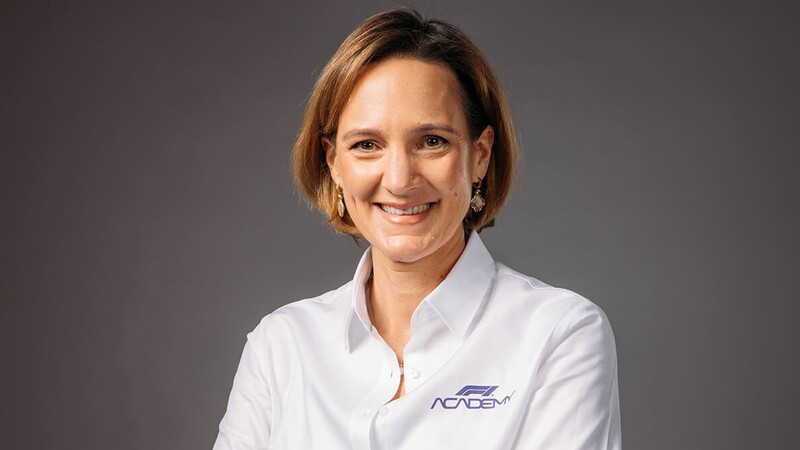
To address this absence of female drivers at the top of the sport for more than three decades, Formula 1 set up F1 Academy in 2022.
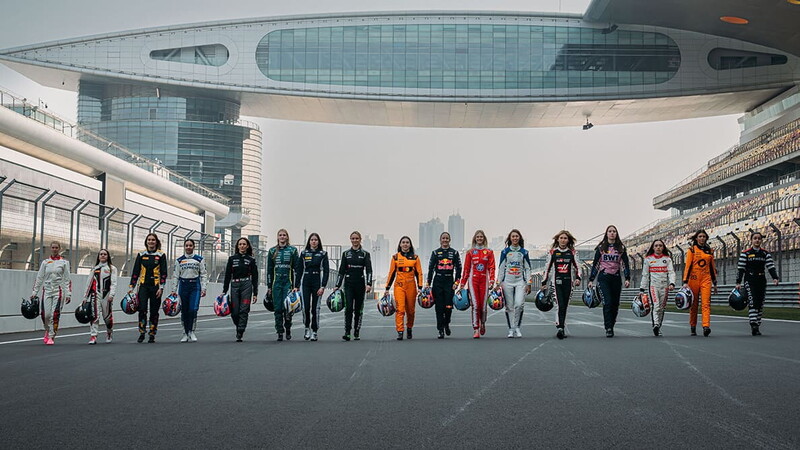
F1 Academy has an all-female racing series, now in its fourth season, with six rounds in 2026. They take place alongside the F1 race weekends in Shanghai, Montreal, Silverstone in the UK, Zandvoort in the Netherlands, Austin in the US, and ending in Las Vegas in November. The Academy also runs the Discover Your Drive programme, which offers women and girls internship opportunities with its racing teams, in disciplines ranging from engineering to race operations and communications.
“We're here to support the growth of female talent in motorsport, both on and off the track,” says Karin Fink, F1 Academy's head of commercial operations.
“The goal would be to see female drivers competing in Formula 1. But I would also say that a lot of the success will come from the pathways that we are creating as a racing series for female talent, from drivers being there by merit because they got the education, the racing experience and the same career pathway that any of the male drivers would have had."
Fink has worked in motorsport for more than 20 years, starting off as a waitress in Formula 1's Paddock Club VIP hospitality area, before progressing through a range of marketing and commercial roles, most recently as director of global motorsport marketing and events at Aston Martin Lagonda. She was recruited to F1 Academy in 2024 by its managing director Susie Wolff – herself a racing driver who took part in the 2014 British Grand Prix race weekend.
“From the beginning of my career, I was very much one of the only women in the room,” says Fink. “F1 Academy is showing that [as women] we're there and we're doing it and, as Susie often says, if you can see it, you can be it.
“We want to show that motorsport is really a place for everyone. That whatever your interest, you can find a space in motorsport, and it is not an industry that is only open to men.”
What do you think has limited women's progress as Formula 1 drivers and in motorsport generally?
When you look at the successful World Champions right now, they started karting when they were five or six years old and then spent pretty much all their weekends immersed in a world that really isn't very open to girls at that age. Motorsport or go-karting hasn't typically been something that parents would take girls to, in the way that girls were taken to ballet, or now to football.
So, girls would have had to have a strong will to compete in something that was really dominated by boys. And girls at that age often don't like hanging out with boys that much! So, they had to really push through with their parents, or they had to be lucky enough to have parents who were already immersed in motorsport and so didn't find their daughter's interest in it unusual.
Then, the only way an F1 driver can work their way in is through the pyramid of motorsport, from go-karting to the cadets, up into Formula racing or sports car racing. And if you have 100 boys at the go-karting stage, you will only have one girl at that age coming in. So, if you look at that as a pyramid, mathematically, it's not going to work because the girl is so unlikely to make it to the top.
How is F1 Academy trying to change the situation you describe?
Essentially what we want to do is shine a light on the top of the pyramid, so that at the bottom, a lot more girls come into the funnel and see something that they want to aspire to. They see our drivers compete in F1 Academy and hopefully go on to compete in higher racing series, and they say ‘yeah, I want to give this a go'.
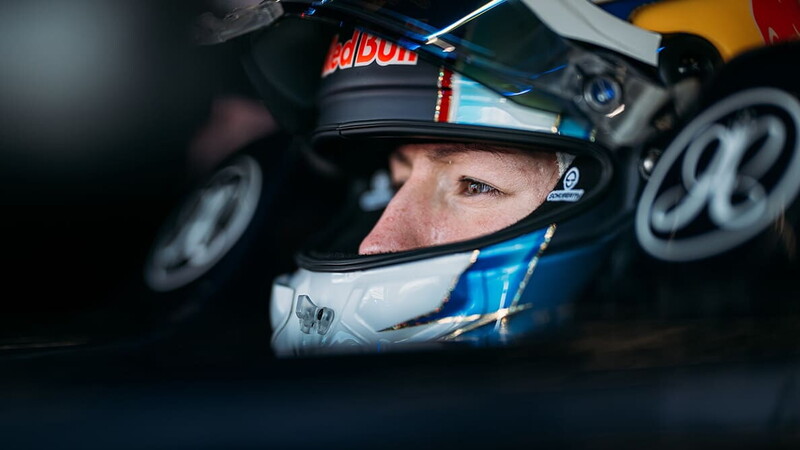
Because when you look at the girls who compete, they are fierce racing drivers. When you speak to the trainers and coaches who attend the karting races where more girls are participating, they will tell you that they don't know that it's a girl under the race suit and under the helmet; you wouldn't see any difference. So, we want to broaden the funnel and have more talent come through at the grassroots stage.
What does success look like for F1 Academy – how will you know when a lasting impact has been made?
What we're seeing already is that female participation in go-karting, at the grassroot levels, is going up. For example, we work with an organisation called Champions of the Future Academy, which is an international series that aims to increase inclusion by keeping the cost of competing down. We can definitely see that in COTFA female participation has increased, to being around 30% female karters since 2024, which is a strong indicator of progress.
In addition, having the fans and having a committed audience across all social media, TV and YouTube, where the races are not behind a paywall, is something that we look at for growth and define as part of our success. Already, 42% of the F1 fan base is female and we see a huge opportunity in that.
Last year at the race weekend in Montreal, for example, we organised an autograph session for our drivers for the first time. We didn't know if anyone would show up, but we had a queue of 600 people waiting.
So, we know that fans are interested and we work hard to make the race weekend accessible. That's why we put our paddock in the fan zone, or as close as possible to the fan zone, rather than near the F1 paddock – we want to make sure that a fan who has bought a general admission ticket can visit F1 Academy and see up close what we're doing and how we bring our mission to life.
What values and qualities does F1 Academy look for in its partners and potential partners?
It's important for us to work with partners that share the vision and want to talk about it, rather than it just being a generic sponsorship with logos and stickers. It's about the value that we create together. Pirelli has such a long-standing history in motorsport that for the company to take that step to partner with us and become a supporter of F1 Academy was one of the most important pieces at the beginning of setting up our commercial partnerships. It means we are seen as a series that is worth supporting and credible.
The Pirelli Pole Position Award is also a key moment in the F1 Academy race weekend too, when the trophy and tyre are handed over to the top qualifier.
Where does your personal passion for motorsports come from? Did you ever want to be a driver yourself?
Anyone who's been in my rental car going to and from the track knows that I most definitely would not make it as a racing driver! But I'm Austrian, I'm originally from Salzburg, so as in almost every Austrian household, Formula 1 was always on at the weekends. I had a passion for it and we had a family connection because my granddad was one of the police escorts for the drivers to the Austrian Grand Prix in the very early days.
Are there any moments that you have found particularly rewarding in your time with F1 Academy?
The last race of 2025 in Las Vegas was very emotional. There was a lot of coverage and media interest, and it felt like a big moment that people wouldn't necessarily have thought was achievable just a few years before – women racing on a street circuit under the lights of Las Vegas. So, I think kudos to Susie, Emily [Prazer, President & CEO Formula 1 Las Vegas Grand Prix and Chief Commercial Officer Formula 1] and Stefano [Domenicali, CEO of Formula 1] for having that vision, and thanks to everyone involved who made it happen. That was a moment in time where I felt rather emotional and very proud.
What advice do you give to women wanting to work in motorsports today?
My experience hasn't been a straight line – I certainly didn't ever see myself heading up the commercial side of the women's racing series. So, I think just say yes to any opportunity in motorsport that you're given, even if at first sight, it doesn't lead to your ultimate goal. I was talking to a student recently who said she's stuck in a role that she's a bit unhappy with, and I said, just finish the rotation, it's going to feel like a long time, but one day, you'll think back on one particular thing that you've learned there and it will help you going forward. Saying yes and being the person who doesn't shy away from working an extra hour, or puts their hand up when there's opportunities around, that's always going to be helpful.