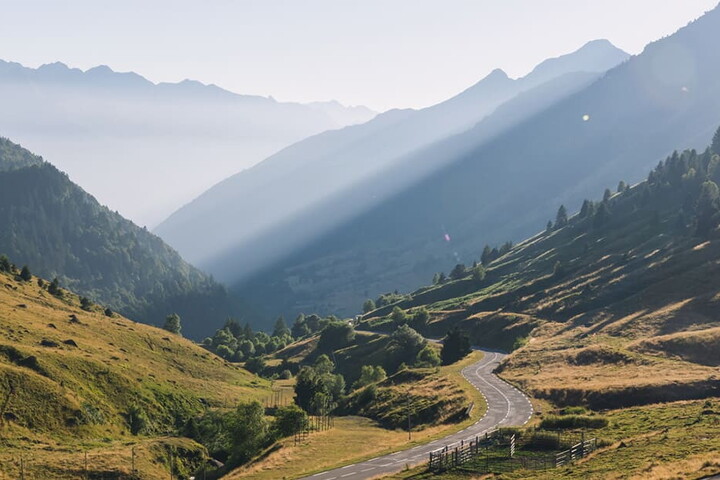
There is a special season when the Pyrenean range sheds the hustle and bustle of summer to reveal its most authentic face to travellers. As the air turns crisp and the forests are painted in warm, golden hues, the roads winding between France and Spain become the ideal setting to enjoy a few days away from the daily routine - especially for those who love road trips. Compared to the more conventional Alpine destinations, the Pyrenees are perfect for drivers seeking peace and quiet without sacrificing driving pleasure and the breath-taking landscapes unfolding along the way, making the journey a true experience in itself. Between the wispy mists of the French valleys and the clear sunlight over the Aragonese canyons, gradients and mountain passes alternate, inviting drivers to carve out smooth, precise lines and enjoy every moment behind the wheel.
The journey takes shape on the French side along the famous Route des Cols, an over 800-kilometre backbone connecting the Mediterranean Sea to the Atlantic Ocean. A great starting point is the elegant spa town of Bagnères-de-Luchon, from where you can head towards its historic ski resort, Superbagnères. An 18.5-kilometre climb with an average gradient of 6.3% leads to an elevation of over 1,800 metres, where the mysterious and elegant Grand Hôtel stands: a building that steps back in time to early 20th-century travel, overlooking Pic Aneto, the highest peak in the Pyrenees. Heading back down to the valley, you face the twelve hairpin turns of the legendary Col du Tourmalet: here, driving demands extra focus, particularly on your car's braking system. The effort, however, is rewarded by the thrill of tackling this tight sequence of bends surrounded by towering mountains. Once over the pass, the road leads to natural wonders well worth an extended stop: the Cirque de Gavarnie, a spectacular glacial amphitheatre listed as a UNESCO World Heritage site in 1997, and the nearby Cirque de Troumouse, another glacial basin at 1,482 metres that has fascinated mountain enthusiasts for centuries.
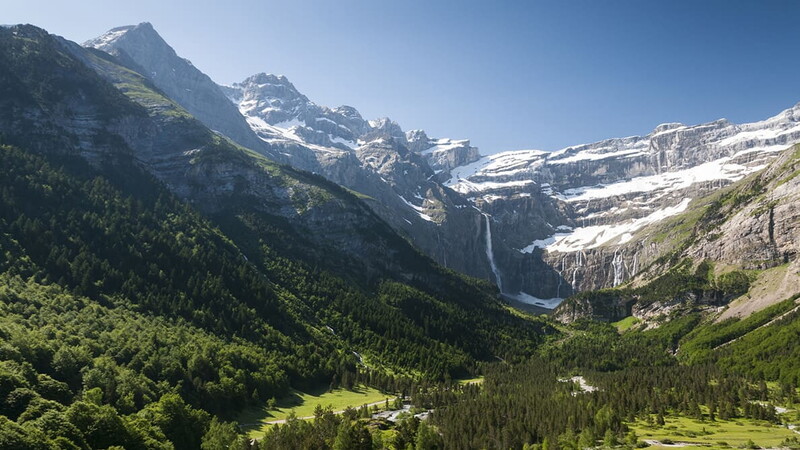
Descending through the wooded sweeps of the D934 in the Val d'Ossau, the drive becomes more relaxed as the authentic soul of the Pyrenean villages emerges. An unmissable stop is Laruns, a gem of traditional architecture set at the confluence of two mountain streams. A visit to the historic La Vallée du Pain bakery is essential to pick up one of its famous pastries to enjoy while taking in the views of Lac de Fabrèges. For those who appreciate art intersecting with spirituality, a short detour leads to Lourdes. Beyond the famous sanctuary and the Chapelle Sainte-Anne, the town offers a fine example of 19th-century architecture.
Climbing back up the valley towards the border, at 1,794 metres you reach the Col du Pourtalet, one of Europe's most scenic cross-border passes. The ascent requires a watchful eye: behind blind bends, it is easy to encounter herds of cows or grazing sheep, and refuelling in Laruns is essential as petrol stations become extremely scarce along the passes.
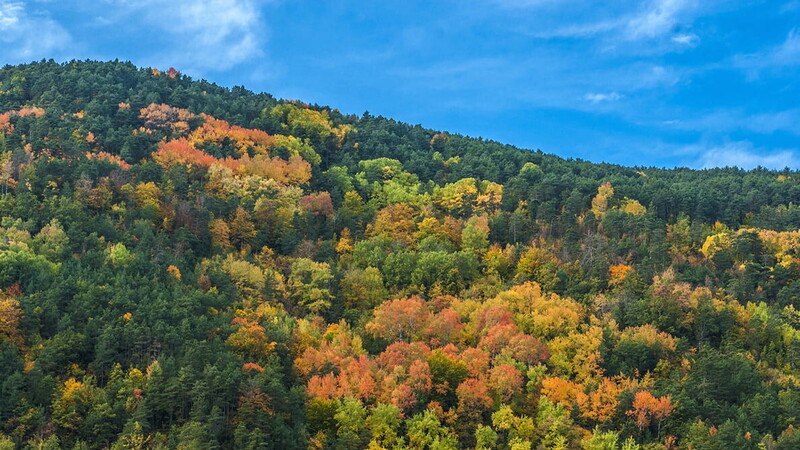
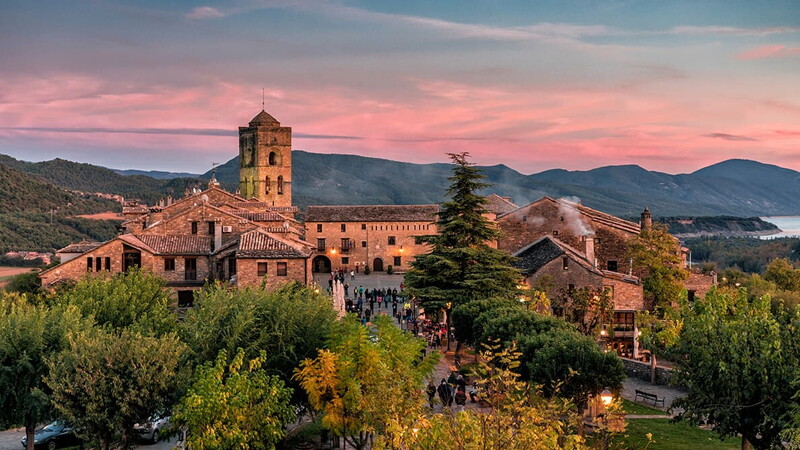
Reaching the high-altitude pastures dominated by the iconic Pic du Midi d'Ossau, the road crosses into Spain, becoming the A-136. The landscape's metamorphosis is immediate: the damp green of France gives way to massifs glowing under the clear sun of Aragon. The first Spanish stop, taking a short detour towards the Valle del río Aragón, could be the majestic monumental railway station of Canfranc, an architectural masterpiece set among the mountains, followed by the slopes of Candanchú at 1,530 metres and the villages of the Valle de Tena. Here, the undulations become gentler, allowing for a more relaxed drive that is perfect for soaking in the surrounding nature or making last-minute stops. If you prefer to press on, you can join the legendary panoramic road that crosses Spain from east to west for around 520 kilometres between Portbou and Navarre. Particularly loved by motorcyclists eager to dive into its bends, the Eje Pirenaico - as it is known in Spanish - is equally perfect for drivers who want to embrace its fluid yet engaging rhythm, crafted by the succession of valleys between Catalonia and Aragon. Among the most spectacular stretches is the Congosto de Jánovas, a gorge carved between vertical rock faces where the road narrows overhangs above the rock, demanding millimetric precision at the wheel. A mandatory stop, however, is the village of Aínsa, one of the finest examples of medieval architecture in Spain. After parking the car, you can stroll through its cobbled alleys, cross Plaza Mayor, visit the castle, and savour classic Aragonese cuisine.
Pushing further east towards Catalonia, the N-260 reveals more gems, such as the town of Ribes de Freser, the gateway to the spectacular Vall de Núria, and the imposing cliffs of the Congost de Mont-rebei carved by the Noguera Ribagorçana river. Weather conditions can also play a crucial role in getting the most out of this Pyrenean adventure: while all roads are paved and impeccably suited for touring or sports cars, autumn at high altitudes can bring dense fog or overnight frosts, and the highest passes may close with the first snowfalls. Yet, a minor weather detour can easily turn into the perfect excuse to spend time in one of the traditional inns lining the main Pyrenean routes. Because when you choose to cross the Pyrenees by car, you must be prepared to be amazed by the beauty of the journey. The sheer pleasure of driving - with your car responding to every twist and turn - goes hand in hand with discovering centuries-old villages, unspoiled valleys, and unique landscapes, on a trip where the road itself is the true protagonist.