By Justin Marozz
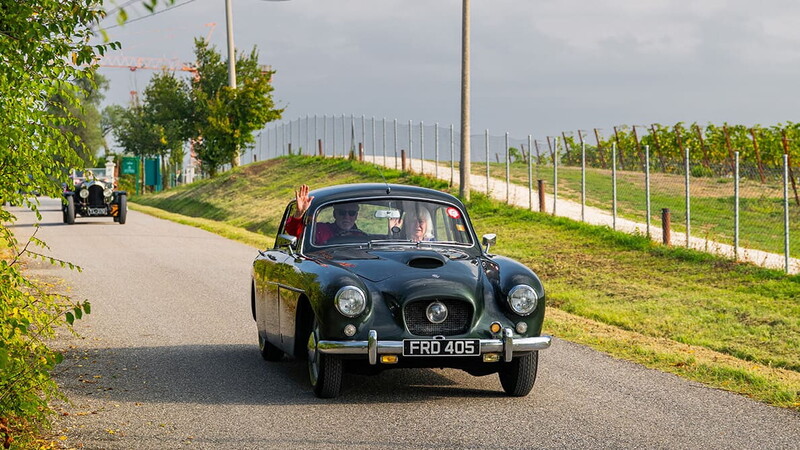
A journey must begin with faith. Travelling 3,500km across Europe in a car that left the factory 69 years ago is a calculated exercise in defying the odds. It is reckless, romantic, unnecessary and essential. An exhilarating adventure for some, for others, an accident waiting to happen. My wife, the ‘Chief Navigator', who over the years has enjoyed, or perhaps endured, several continent-crossing missions in Frieda, my beloved 1956 Bristol 405, would probably add some other sentiments, too. Hope, dread and maybe even a dash of fear.
Some of these sentiments I overtly disagree with and discount (the predictions that we will break down); others I covertly agree with and fully expect to materialise (the predictions that we will break down). But the journey must begin in a spirit of optimism, for this is the ancient and immutable first law of travel.
There are other reasons for high spirits. A private invitation to the Concorso d'Eleganza Varignana 1705, one of Europe's most prestigious car shows, held in a converted palazzo south-east of Bologna. My Bristol, veteran of several long-distance tours, including a 10,000km run from our home in the UK to the Syrian border and back in 2022, wears its miles with pride – amid a constellation of chips, dents, dinks and the occasional chrome strip held in place with tape. Frieda's natural milieu is a fast A road, not a neatly trimmed palazzo lawn populated by an international jury.
But Stefano Pasini, founder of the Varignana Concorso and president of the jury, an ophthalmologist per eccellenza, Villa d'Este judge, collectorand author of many books assured us we would be welcome: he is a Bristol aficionado and former owner.
So there we were, flying through France on four new Pirelli Stella Bianca tyres. Morale could not have been higher.
From disappointment to despair
Optimism when driving a very old car very long distances is a delicate bloom, however, and can wither quickly in my experience. This is especially true for those of us who are classic car enthusiasts but have few, if any, of the technical skills required to sustain the journey, and therefore the optimism. One must follow the other.
The first chink of disappointment came on day one, roaring down the A26 from Calais to Saint-Dizier. The heavens had opened. Frieda's exuberant windscreen wipers were struggling to cope with the deluge when suddenly there was a sharp, metallic explosion – PINGGGG! – followed by the nerve-jangling sound of metal on glass. One of the wiper blades, inevitably on the driver's side, had flown into the gathering storm after 16 years of loyal service. Within moments, visibility had disappeared under a torrent of water and the bladeless wiper arm had gouged two pretty arcs into the windscreen.
Disappointment descended into despair on day two. We had been having a heavenly time of it, pressing south-east to the Gasthaus zum Rössli in the Swiss town of Triengen, Frieda's booming six-cylinder symphony providing an irresistible aural accompaniment. And then, all of a sudden, for it must always be all of a sudden – the second immutable law of classic car travel – I found myself uttering the words: “I've lost power!” The Bristol had shuddered to a halt.
We were outside Colmar in Alsace, close to the Tunnel Maurice-Lemaire. Within minutes a crew of sympathetic sapeurs-pompiers had arrived and were showering orange cones along the road like confetti. An hour later, we were recovered to a local car dealership.
I ran through my basic Breakdown 101 checklist. High-tension cable functioning, check. Distributor cap clean and uncracked, check. Rotor arm fine, check. Sparks sparking, check. But Frieda wouldn't start. I put in a prayer to the great mécanicien in the sky.
The hours were draining away with the rain. Was it all over? The whole mission to Italy – our holiday, in fact – was on the brink. But as KC and the Sunshine Band intuited back in 1975, that's the way, uh-huh, uh-huh, I like it, uh-huh, uh-huh, for what is a journey without a real and present sense of jeopardy?
Hope restored
Intrigued by my predicament, one of the mechanics came to assist. Together we traced the problem through the fuel line (functioning) to the fuel pump (not functioning). The carburettors were being starved. Removing the pump revealed that the steel rocker pin had worked itself free and the rocker arm was unable to function. A slug of very serious glue and it was back in situ, with a new gasket for good measure.
Frieda fired up instantly, shocking the technicians with her thunderous baritone. The rumble of the Bristol two-litre, straight-six has been likened to a squadron of Lancaster Bombers, and with good reason. Three hundred Lancasters were powered by the Bristol Hercules engine. We were back in business.
The driver's morale, if not yet that of the Chief Navigator, was soaring. Strong scientific evidence, together with hard-won personal experience, suggests that if the Fates have punished you early on a long-distance Bristol tour, the rest of the journey will be untroubled. This is the third immutable law of travel.
With technical angst relieved, we were now able to enjoy our surroundings, together with the sensory pleasures of driving a 1950s Bristol. “A good run can be like traversing the earth with winged feet,” Christopher Balfour, a serial Bristol owner and aficionado, writes. Not for nothing does Pegasus adorn the Bristol Coachworks badge. When reviewing the car in 1955, Autocar magazine admired how the 405 flowed through corners “as uncompromisingly upright”.
Peter Campbell, who used to run Spencer Lane-Jones, Britain's leading Bristol specialist, rhapsodises over the 405. “All the 405 owners I know are, if not besotted, then completely in tune with that car,” he says. “It's a wonderful driving experience. The poise and agility of the Bristol and the way it drives is a revelation. It's a staggeringly good car even now.”
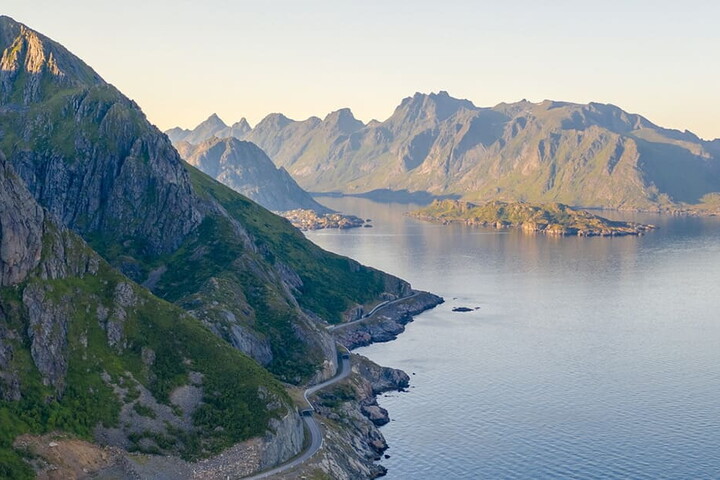
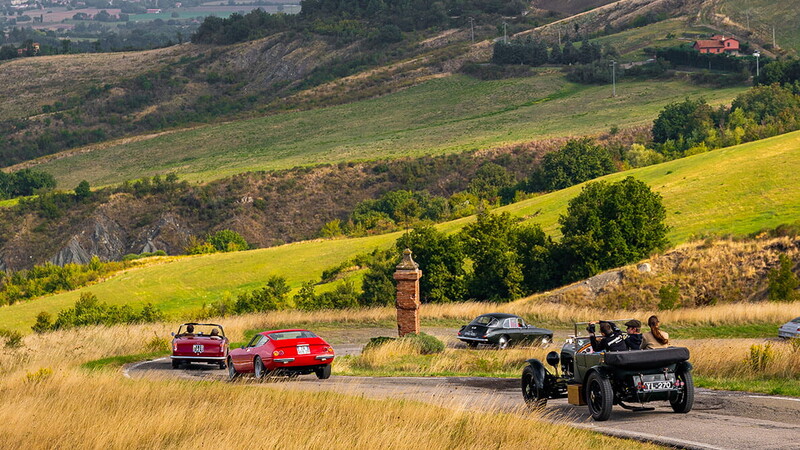
From a prettified, cloud-smothered landscape of green meadows, tidy farms, gentle hills and the occasional clang of a cowbell, the road south led us up into a rugged, wooded Alpine world. Cliffs clad in moss and loaded with lichen loomed menacingly above, as the serpentine road twisted and threaded its way through mountains dashed chiaroscuro across the skyline. Blue-foaming streams clattered down into the valleys as we ascended into the clouds.
Turning heads
Filling up in Bellinzona, a Swiss town in the Alpine foothills, guarded by three mighty castles, Frieda caused a sensation in a car park seething with modern vehicles. This is normal. You learn a lot of things when you keep a treasured car for many years. You discover that people often smile when they see this feline shape, those howitzer wings, the bonnet scoop suggestive of speed, and those diminutive rear fins. Where else have you seen an air intake like that? The grille was modelled on an aero-engine nacelle. Of course it was.
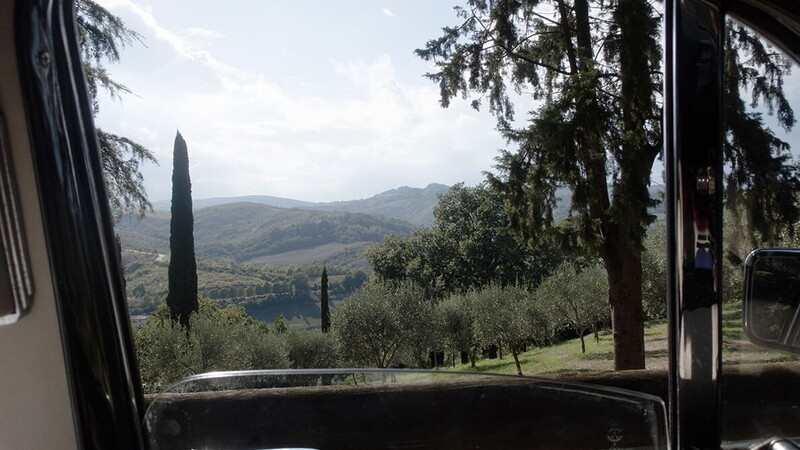
Down into Italy we drove, ears popping during the descent. After the mountains, the plains. Sprawling farmland, ragged and haze-blurred, a departure from the ordered delineations of the Swiss landscape. From Lombardy it was a last overnight stop at Lodi and up into the heartland of Emilia-Romagna and, on the brink of Bologna at last, sun-warmed hills furry with chestnuts and cypresses, oaks, olive trees and orchards teeming with apples, pears, apricots and cherries.
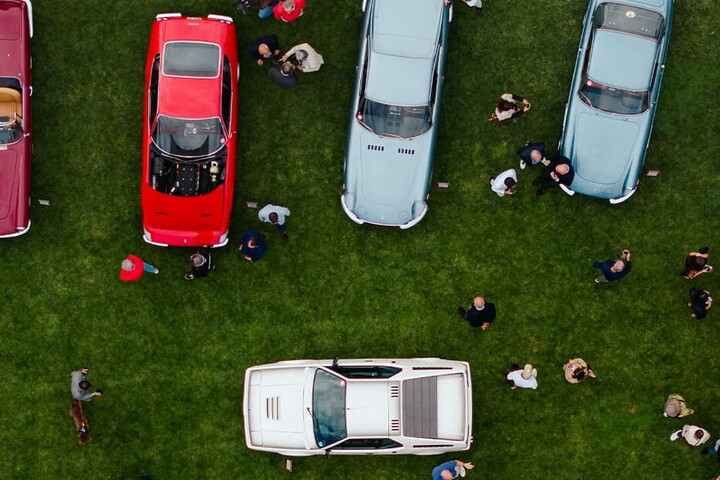
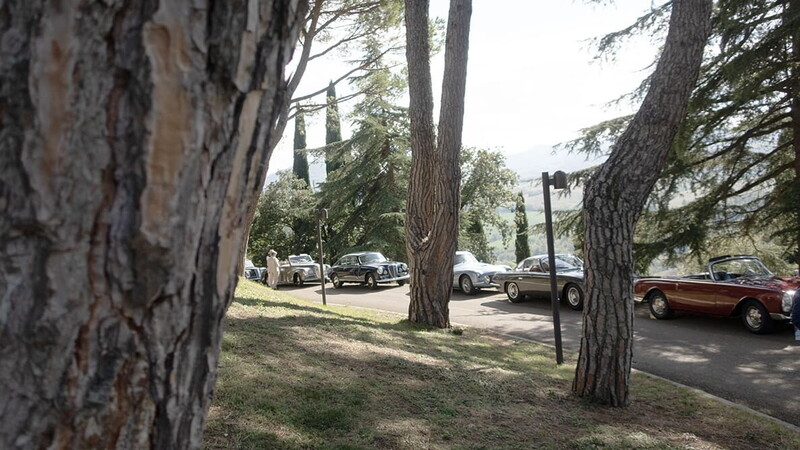
We plunged straight into exalted company, taking our place on the baize-like lawn unfurling in front of the Palazzo di Varignana. To our right, a howling 1964 Iso Rivolta Grifo A3/C racing car, to our left, the heartbreakingly beautiful 1949 Alfa Romeo 6C 2500 Super Sport Cabriolet, former plaything of the film star Rita Hayworth, and the sublime 1950 Alfa Romeo 6C 2500 SS Berlinetta Pinin Farina owned by Corrado Lopresto, one of the greatest Italian collectors. Ferraris were joined in this Italian-flavoured pageant by Lamborghinis, here a Bugatti, there an Alfa Romeo, Lancia and Fiat.
We had made it. Ours had been the long and winding road of 1,640km. Most of the other were being unloaded from transporters. Different approaches, different philosophies, but united by a shared love of motoring heritage.
The next 48 hours dissolved into cocktails, hilarity and laughter. There was exceptional Italian hospitality and cuisine, and foot-stomping music from a riotous brass band. Frieda won a rosette, as did a 1960 Ferrari 250 Cabriolet Pinin Farina, a Lamborghini 350 GT, the ear-shredding Iso Rivolta and a 100-year-old Bentley 3½ litre. Lopresto's one-off Alfa ruled supreme: Best in Show.
Lasting memories
Then it was time to go. A new, homeward itinerary lay before us. A route of grey-ribbon motorways, high-speed A roads and blissful B roads, allowing Frieda to find her own pace as the mood took us: tearing, flashing, freewheeling, hurtling, barrelling, purring, cruising, gliding, mooching, pootling.
To Asti, where we fuelled up with spumante, then up again from Piedmont into the cool, wide mountain air offered by the E70, past the 1,000-year-old Sacra di San Michele monastery thrust high into the sky on the jagged rock of Monte Pirchiriano. Spumante gave way to crémant as we charged north into France, paying our respects to the war dead at the Vimy Memorial before pushing on to stoutly ramparted Montreuil-sur-Mer. Not to be left out, for she has elevated tastes too, Frieda binged her way through several litres of oil, picking up the pace like a horse sensing the stables. She did not put a fin wrong.
The miles raced by beneath our racing tyres. The weather gods decreed there would be no more rain.
After 3,516km we crunched into the drive. Home. Engine pinging with contracting metal, neck creaking from hours behind the wheel, car scented with Reblochon de Savoie, raclette, Chaussée aux Moines, prosciutto, coppa di Parma, Parmiggiano Reggiano and a boulder-sized lump of Fiocchetto Valtellina.
It had been glorious motoring. To update and amend St Augustine's adage on the benefits of walking (solvitur ambulando) for the automotive age: solvitur gubernando. It is solved by driving. Our faith had been repaid.