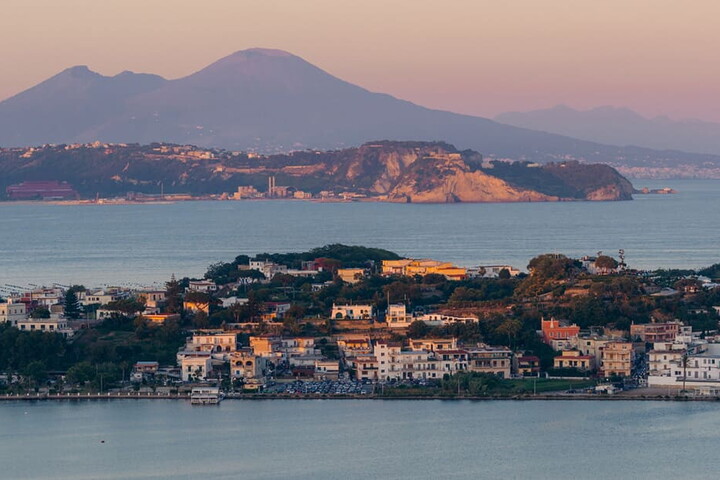
When Goethe, in Italian Journey, described his Neapolitan stay in 1787, he defined the volcanic landscape of the Phlegraean Fields as “the most prodigious land in the world”, amid “boiling waters” and “sulphur-exhaling crevices”. A fascinating and unique environment, characterised by the presence of a vast caldera, a basin formed following great explosive eruptions that occurred over the course of tens of thousands of years. Located 15-20 km from Naples, in a few months this coastal stretch will be in the international spotlight, given that the regional capital of Campania has been chosen to host the 38th edition of the America's Cup, the oldest and most prestigious sailing competition in the world.
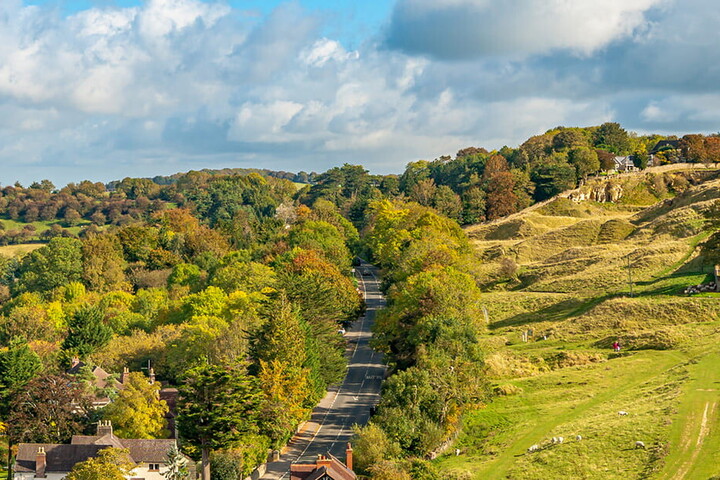
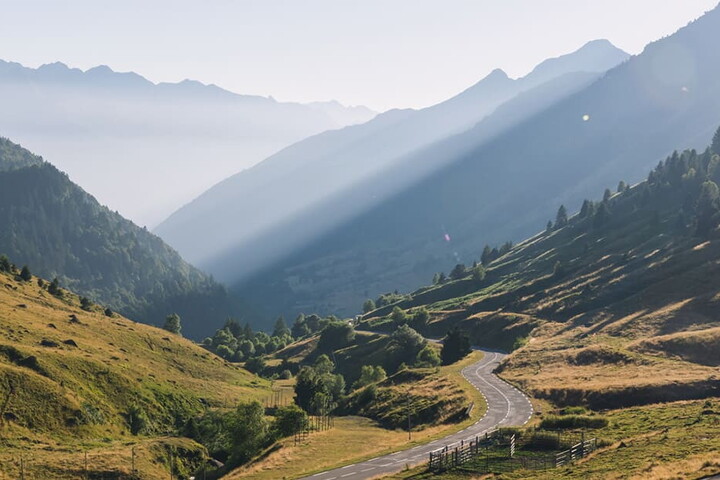
Whilst awaiting this prestigious sailing event, which will also contribute to the remediation and regeneration of the nearby Bagnoli, set to host the bases of the seven competing teams (defender New Zealand and challengers from Italy, Great Britain, France, Switzerland, the United States and Australia) –, the nearby Phlegraean landscape deserves to be rediscovered, as it offers, from Pozzuoli to Bacoli, passing through Lake Avernus and Monte di Procida, an adventurous driving route and surprising vistas.
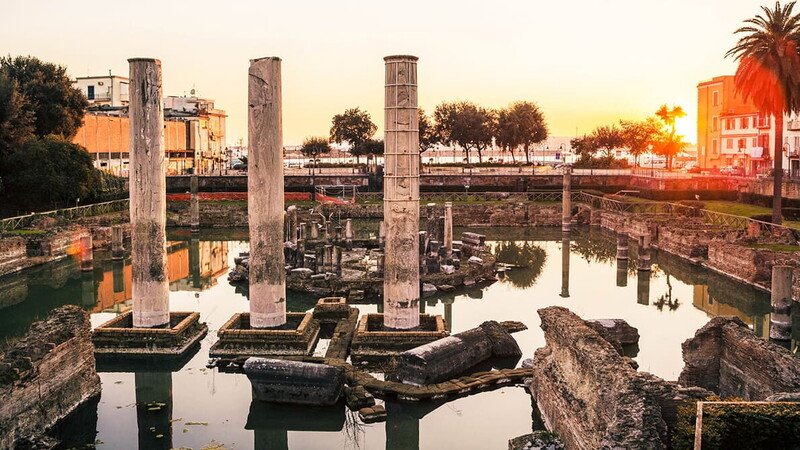
For those arriving by car from Naples, the road to take is the Tangenziale di Napoli, exiting at Pozzuoli for the town centre and the Amphitheatre, and at Agnano for the Solfatara. Alternatively, you can take the SS7 Quater. In Pozzuoli, a visit to Rione Terra is well worth it – the original nucleus of the coastal town, whose tuff promontory extends out over the gulf. The district was evacuated between 1970 and 1984 due to the intensification of seismic activity, but the restoration works which started in the late 1990s brought to light an entire Roman city that is virtually intact beneath the foundations of the medieval and baroque buildings. At the summit, a stroll along the restored alleyways offers a magnificent view over the harbour and the islands of Ischia and Procida. Outside the town lies the Roman Flavian Amphitheatre, the third largest after the Colosseum in Rome and the amphitheatre at Capua, built between the 1st and 2nd centuries AD and with an original estimated capacity of around 40,000 spectators. The state of preservation of the underground sections is impressive: the underground tunnels designed to house the wild animals and the stage machinery are still fully accessible and offer an extraordinarily rare perspective on the logistics of gladiatorial spectacles.
Nearby is a highly sought-after destination for enthusiasts of nature trails, namely Monte Gauro - from its crater rim, you can admire the full expanse of the Phlegraean Fields, with a view that stretches as far as Vesuvius, the Partenio mountains and the Roccamonfina volcano. Start at the entrance to the Campiglione Crater, skirting Carney Park, or from the slope of Monterusciello / Cupa delle Fescine, or at Castagnaro via Monte Corvara.
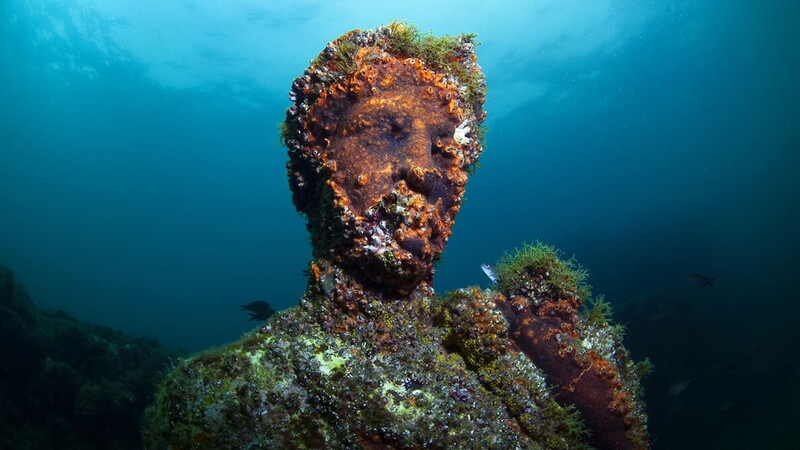
As you press on, it is impossible to stay unmoved by the view of the Aragonese castle of Baia with its star-shaped plan, built in the 15th century and extensively remodelled by the Spanish Viceroy Pedro Álvarez de Toledo after the eruption of 1538. This is the home of the Phlegraean Fields Archaeological Museum and the adjoining Park: extending over 30 hectares, it includes the Roman bath complexes of Venus, Sosandra and Mercury. Baia is also famous for its sunken city, situated at a depth of between 1 and 7 metres in the waters of the Underwater Archaeological Park of Baia, where paved streets, mosaics, sculptures and amphorae have remained intact on the seabed, protected by the water, and reveal themselves in all their splendour to visitors who wish to admire them from a glass-bottomed boat, perfect for families, or through scuba diving for those who hold a diving qualification.
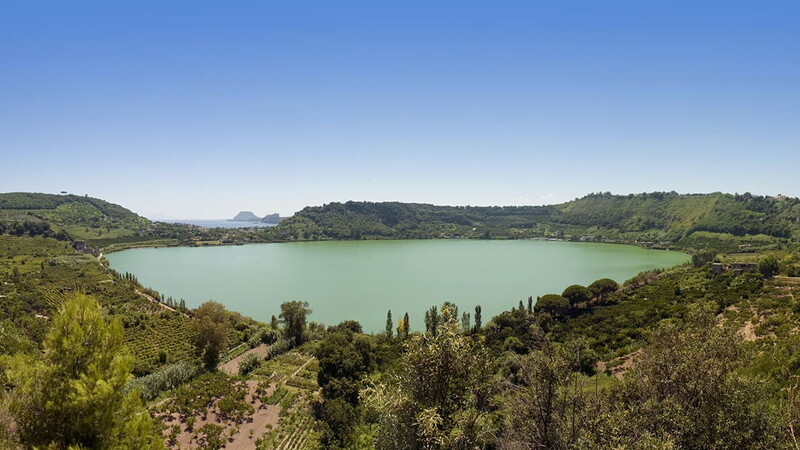
Leaving the coast for a moment and turning inland, you find Lake Averno. Situated in the crater of an extinct volcano, this almost circular body of water was identified by the ancient Romans as the gateway to the Underworld, on account of the vapours rising from the lake, so poisonous that they were said to kill any bird flying overhead. Today the lake has been drained and restored and the lush vegetation on its banks provides a backdrop to the gravel paths around the perimeter of the crater.
Those wishing to observe the active volcanism of the Phlegraean Fields can instead head towards the Solfatara Area. Here the fumaroles and gaseous emissions are visible even from some of the area's scenic roads. Alternatively, you can visit the Montenuovo Oasis in Lucrino, a nature park that stands in the crater of the youngest volcano in Europe, formed by the aforementioned eruption of 1538.
If you follow the Gulf coastline from Baia, you will reach Bacoli, which is home to the famous Piscina Mirabilis, the largest freshwater cistern of ancient Rome, built in the 1st century AD to supply drinking water to the imperial fleet stationed at the nearby port of Misenum. The acoustics are extraordinary, as even the slightest sound is amplified throughout the space. It is not difficult to imagine why the Romans called it the “wondrous pool”.
The route ends at Monte di Procida, at the southernmost tip of the peninsula, a small town on the promontory facing the namesake island. Thanks to its elevated position, it is known as the ‘Terrace of the Phlegraean Fields' and offers a panoramic view over the Gulf of Naples. From here, a walk through the Torrefumo Nature Oasis is a must — it owes its name to the presence of a tower, used in the past to communicate with the hinterland by means of smoke signals; as is a siesta on the beaches of Miseno and Miliscola. The final destination of a road trip that combines geology, history, and coastal landscapes.