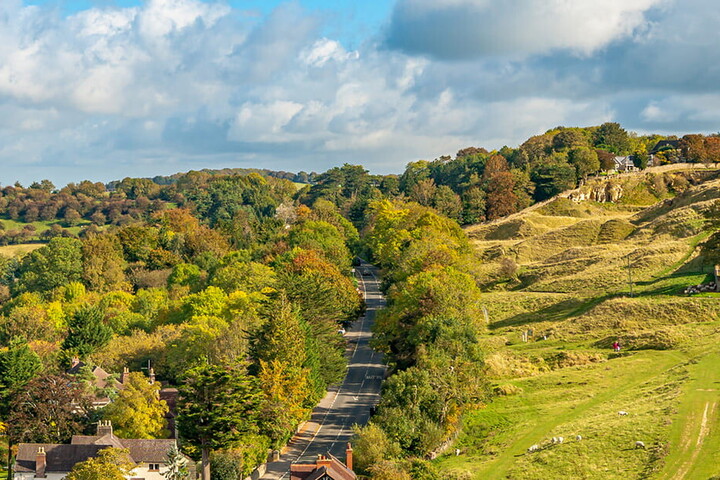
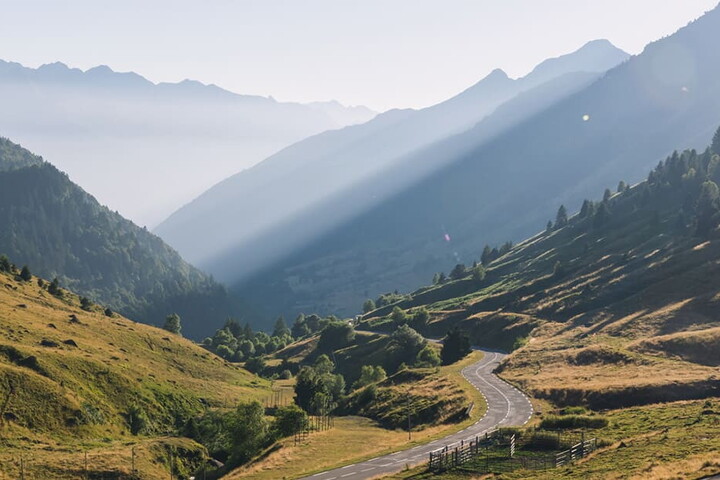
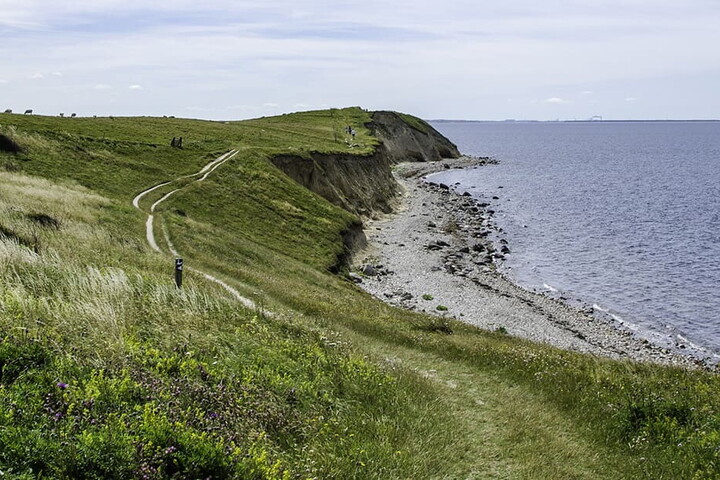
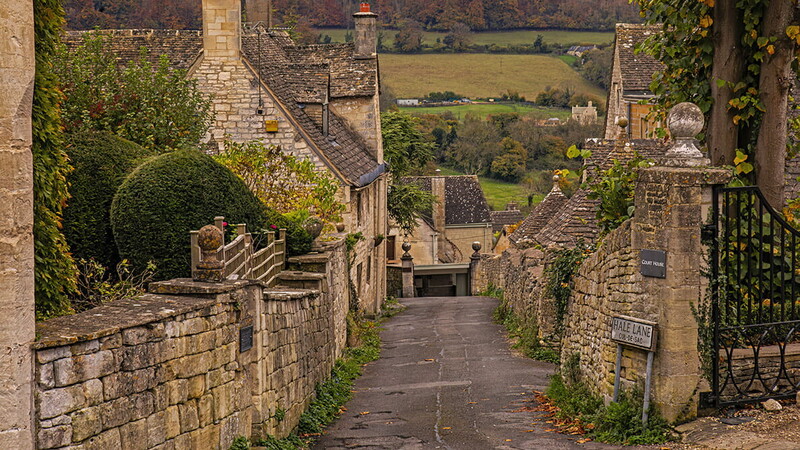
The English writer and artist William Morris described the Cotswolds as the perfect place in which to lose oneself because, when he walked among its picturesque villages or admired the lush landscapes, time seemed to stand still. This quality has remained intact over the centuries, so much so that this fascinating hilly region in central-southern England is the perfect destination for those who love to travel without haste and rediscover the value of time, whilst being enchanted by panoramas that look like oil paintings. But before setting off on this journey, it is worth being prepared for the features that make this area unique, such as the country lanes. These are narrow country roads surrounded by dry-stone walls or dense holly hedgerows: not exactly ideal if you own an SUV or a vehicle of similar size. So, hire an agile and compact vehicle to move effortlessly along these lanes, which are known for their loose gravel, damp patches and, in autumn, wet leaves.
The journey could start in the refined Regency town of Cheltenham, which became famous for its spa waters in the 18th century and remained a favourite British destination well into the 20th. Leaving it behind and continuing along the B4632 you proceed up a gentle incline towards Cleeve Hill which, at 330 metres above sea level, offers a spectacular view over the Severn valley. Here you can stop at the magnificent Sudeley Castle, located near Winchcombe: through some of the finest gardens in the United Kingdom, you reach a Renaissance chapel where the remains of Queen Katherine Parr are preserved. Continuing northwards, you can choose to take various detours that are worth a few extra hours. For instance, you can go to Stanway and visit the lavish Stanway House and its fountain with a record-breaking ninety-metre water jet, or Stanton, with its period lanterns and Jurassic stone cottages draped in climbing roses. A few minutes from this village you will come across Broadway, often described as the "gem of the Cotswolds": it is well worth spending a few hours here, strolling along the High Street amid art galleries and antique shops. Resuming your journey, continue along the A44, towards Fish Hill, heading up towards Beacon Hill to admire from Broadway Tower the panorama that takes in as many as sixteen counties. The road climbs steeply, with gradients of up to 12%, a characteristic that requires more careful driving, so drive with extra care and keep an eye on your brakes.
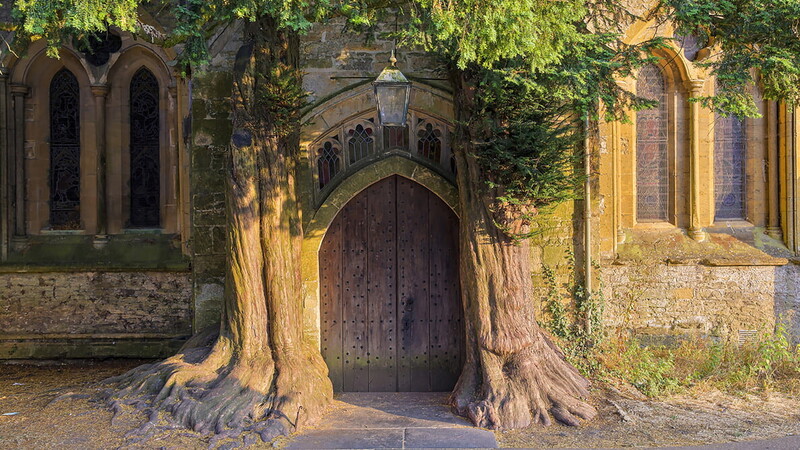
Continue, turning off towards Snowshill to admire the eccentric antique collections of Snowshill Manor and the fragrant summer fields of Cotswold Lavender. In this area, the road becomes aa single-track lane. On these roads, it is important that you remember the age-old courtesy etiquette that prevents traffic from becoming congested and keeps it flowing. At passing places, pull in to let oncoming vehicles through. And you carry on this way until you reach the Fosse Way, an important Roman road today known as the A429, which leads to the lively town of Stow-on-the-Wold. Among its narrow lanes you can stop at one of the historic bakeries, such as Huffkins, to taste classic scones served warm with clotted cream and jam, before admiring the north door of the church of St Edward, nestled between the trunks of two ancient yew trees. Here, for a few seconds, you will feel as though you might be a character in a fantasy novel.
The journey through the Cotswolds can also become a romantic itinerary, if you choose to stop in the villages of Lower and Upper Slaughter, travelling along Copsehill Road and stopping near an ancient stone mill, dating back to the 1700s, and lapped by the waters of the River Eye. A short distance away, there is another picture-postcard village: Bourton-on-the-Water, which welcomes visitors with its tree-lined banks along the River Windrush, the famous stone footbridges and the fascinating Cotswold Motoring Museum, a must-visit stop for all motoring enthusiasts. You then continue towards Bibury, described by Morris as "the most beautiful village in England". In these areas, given the limited space, it is advisable to download some practical parking Apps and above all to remember that cattle grids, the metal bars covering certain ditches, may suddenly appear and could be dangerous if crossed at speed.
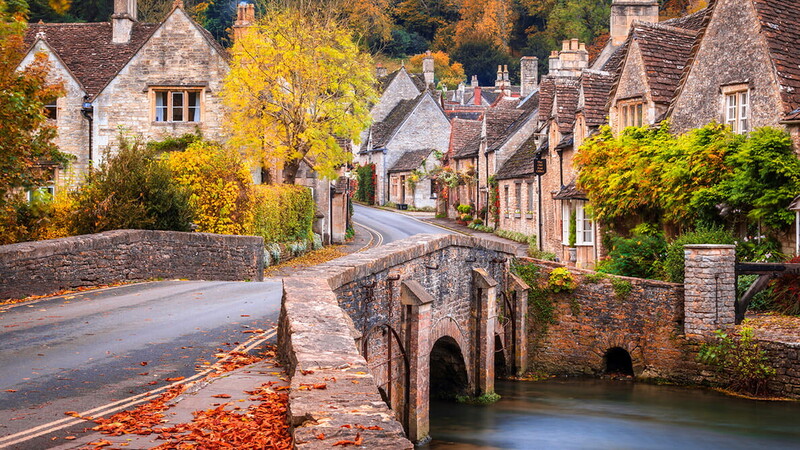
The final stops on this itinerary may include Burford, which opens onto the Windrush valley where the scenic High Street winds, Painswick, also known as the “Queen of the Cotswolds” for its renowned rococo garden and the 99 yew trees surrounding the church of St Mary, or Castle Combe, in Wiltshire, a medieval village that has remained practically intact where the Bybrook flows under old stone bridges. And here, as you stop to watch the clear water flowing, enjoying the silence and surrounded by nature and the human presence that has never been intrusive, you will know that you have discovered one of the most distinctive places in Europe. Here the roads, which wind between villages and hills, restore a sense of peace that is hard to find elsewhere.