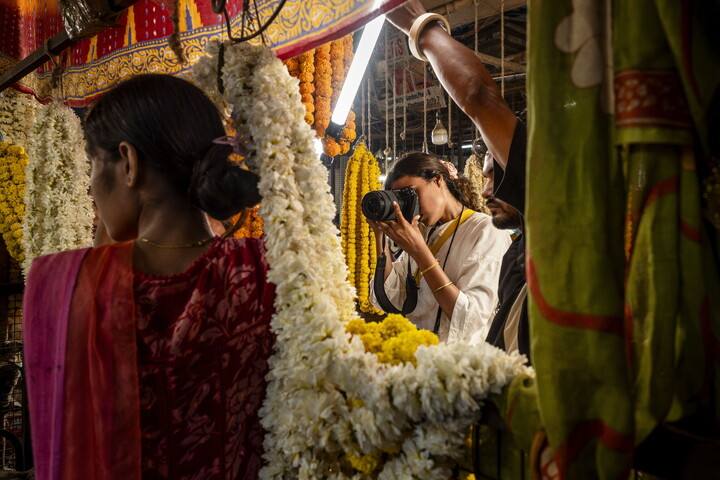
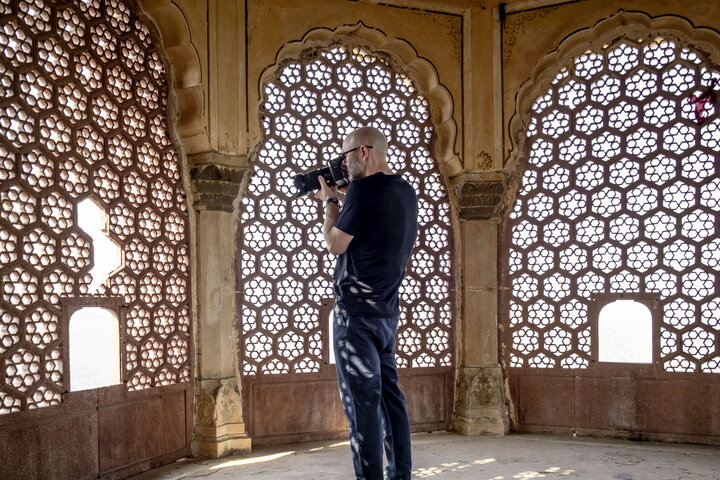
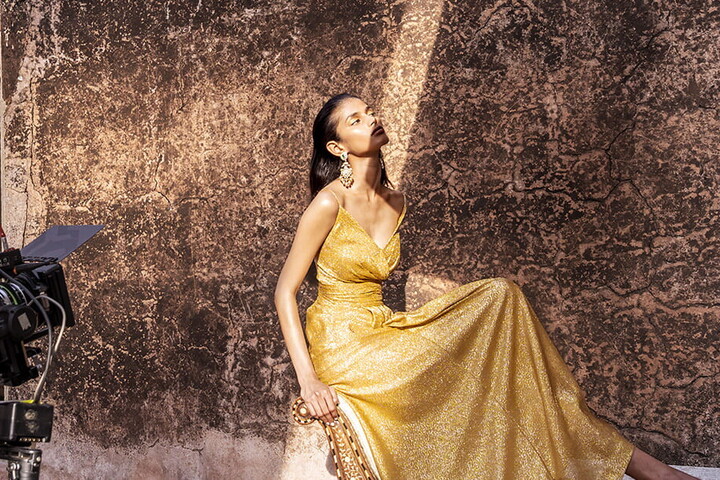
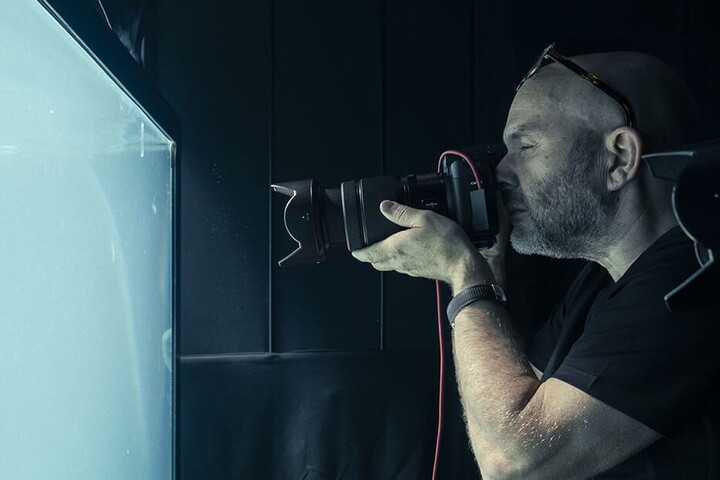
The vision of Sølve Sundsbø, who also shot the 2026 edition, is joined by that of Raghu Rai, the master of Indian photography who passed away in April 2026, and of his daughter Avani Rai, who took up her father's legacy and carried the project forward after his passing. “I didn't feel I could try to represent India in all its complexity. I didn't have the right to do so. I left Raghu and Avani Rai the task of capturing the country's deepest essence. I chose instead to focus on portraits of extraordinary Indian women, playing with the textures of the garments, with colours and contrasts”, says Sundsbø, who portrayed nine women with ties to India, between Jaigarh Fort in Jaipur and Ajabgarh, in Rajasthan.
After the 2026 Pirelli Calendar dedicated to the elements, what led you to turn your gaze to India for the 2027 edition?
India is a place of extraordinary cultural, human and creative richness. From the very beginning, it was essential for me to work alongside someone who knew it intimately. Collaborating with Raghu Rai, who devoted much of his life to portraying India through his lens, was a privilege. I like to think that this Calendar was born precisely from the meeting of different perspectives: mine, focused on people and their stories, and that of Raghu –and then of Avani, who carried the project forward – able to capture and convey the most authentic soul of the country.
How did you build the cast for this edition of the Calendar?
I wanted to bring together women from India or with Indian roots who had made their mark in their respective fields. The result is a group of nine protagonists, each with a unique story to tell.
How did you choose the locations for the shoot?
One of the most complex aspects was finding a place that could evoke the richness and diversity of India without claiming to represent it in its entirety. I looked at images from many locations and considered various settings, but Jaigarh Fort, in Jaipur, Rajasthan, immediately stood out as the ideal choice. It was exactly the place we needed: a place where very different atmospheres, light and architecture coexist within the same space. This visual richness made it possible to create different images while maintaining a strong narrative coherence.
How would you describe the visual language of this Calendar?
These are images built around colour, light and contrast. There are luminous fabrics, flowers floating on mirror like surfaces of water, intense colours and the shadows cast by the geometry of the stone. Each portrait has its own identity and is born from the encounter between the person photographed and the environment around them.
Did you try to capture the essence of India through these shots?
That would be impossible. India is too vast, complex and ever-changing to be contained in a single definition or a series of images. It is a reality so rich in stimuli and references that the real work lies in taking away, in simplifying, in understanding what to leave out of the frame as well as what to put in it.
What has this experience left you with?
It made me want to explore India much more deeply. I had visited it before, but I feel as though I have been travelling there all my life through my imagination. It is one of those places that live deep in people's minds. And when you finally get there, everything you had imagined comes to life in a surprising way.