Close your eyes and think of India. What do you see? A colour, a face, a crowded street, a landscape, a ritual..? India is never one thing alone: it is the colours of Jaipur and the streets of Delhi, memory and change, the multitude and the individual, what endures and what never ceases to transform. Some places seem to ask the photographer to find the right position and remain there. India, by contrast, compels the photographer to move.
How, then, could the first Pirelli Calendar set in India be shaped by a single gaze? The project takes form between these movements: stepping back to allow the present to inhabit the past; moving closer with the care required to grasp the singularity of a face. The photographs do not confine India to a single vision. Rather, they show that every image is also a position: the place from which the photographer looks and beyond which the world continues.
A place to return to
Raghu Rai began photographing India in 1965. For more than 60 years he moved through its streets and changing cities, observing public life, private moments and the everyday. He knew the country intimately, yet that familiarity never made it a settled subject. India remained a place to which he returned. Each photograph could reveal a fragment of it, but none could establish a definitive form.
For the Calendar, Raghu had imagined bringing images from his archive into dialogue with contemporary India. Photographs separated by decades would share the same space, allowing what time had transformed, and what continued to live, perhaps in another form, to emerge.
He had been working on the project for several months when he passed away in April 2026, aged 83. His daughter Avani Rai, herself a photographer, took up his idea, but did not simply complete it. To remain faithful to it, she had to find her own distance.
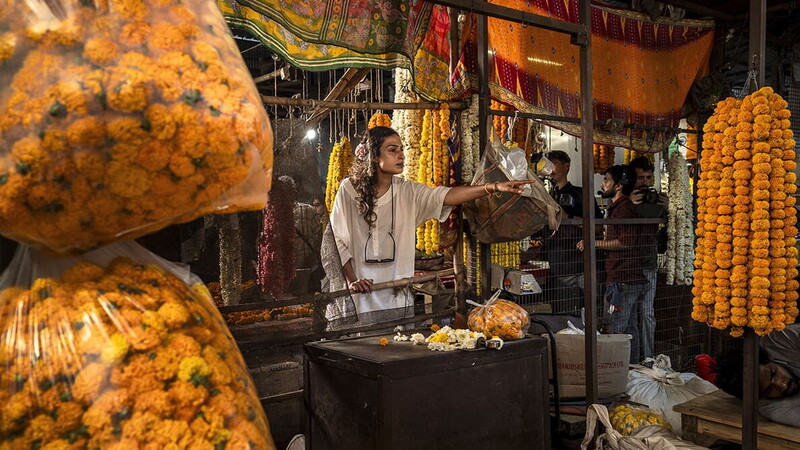
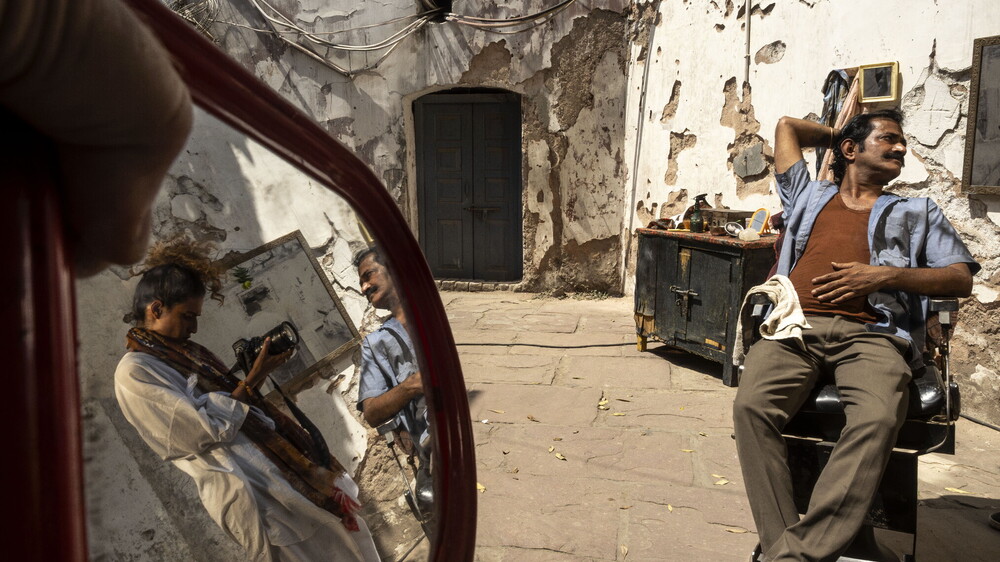
The project had originally been intended as a studio shoot. Avani chose instead to take it into the streets of Old Delhi, to places her father had photographed throughout his career, from Kinari Bazar to Yamuna Ghat.
“He belonged to the streets,” she says. “So I took the idea he was working on into the streets and to the people he had photographed all his life.”
Avani selected images made by her father and returned to the places where they had been taken. She did not try to recreate them, but instead placed them before the camera, then stepped back, photographing the original image together with the reality that surrounds it today.
“I stand back in the spiritual, actual and literal sense. I stand behind him,” she explains. “I frame him, his work and the reality that exists 30, 40 or 50 years later.”
More than 200 people enter the new frame: residents, dancers, performers, artisans and Avani's mother. The photograph from the past remains at the centre, while life continues to flow around it.
Raghu is no longer there, yet he remains within the work. His gaze is still visible, but that of Avani reveals the time that has accumulated around it. Father and daughter do not look at India from the same position, but their images come to inhabit the same present.
“The past will always exist in the present,” Avani says. “It is everywhere, in the nuances.”
Moving closer
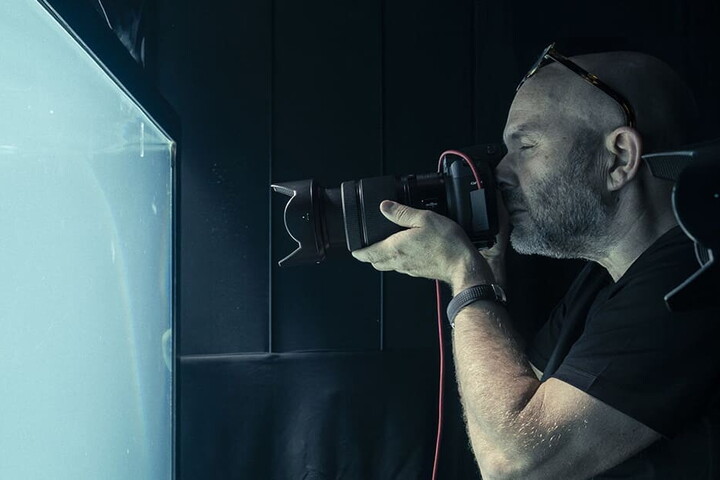
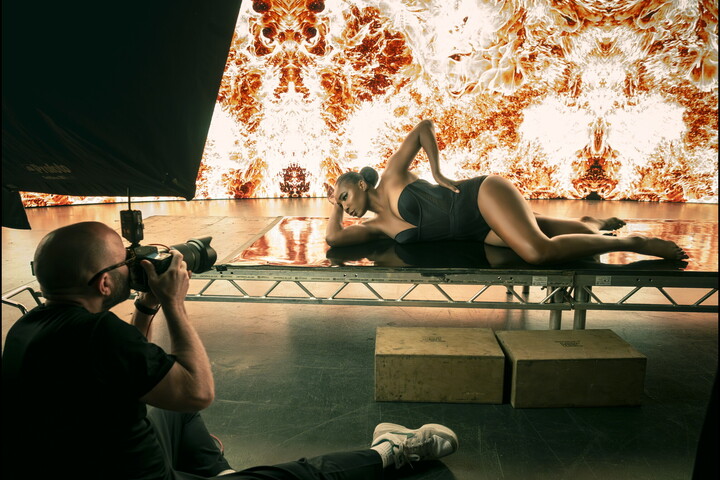
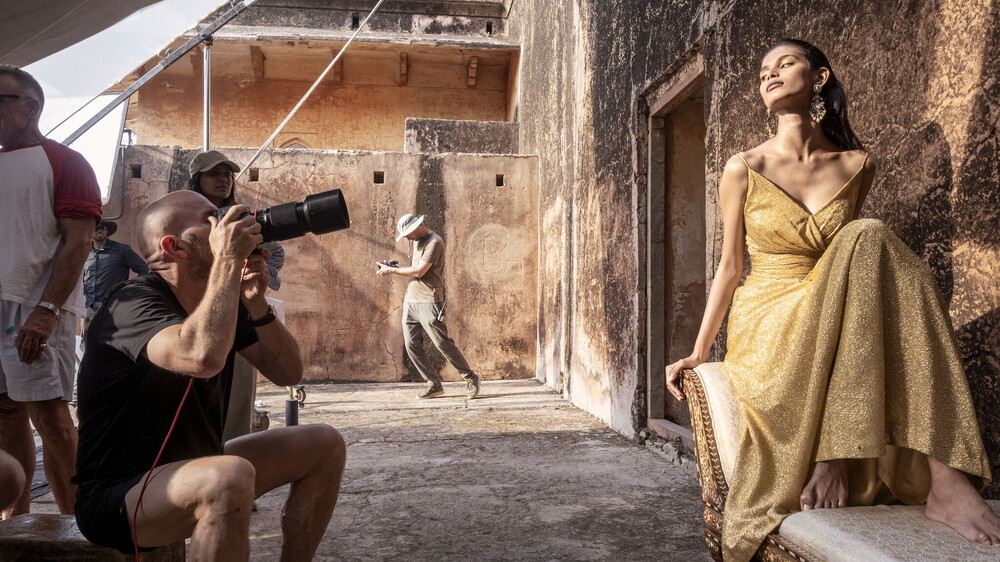
Sølve Sundsbø, too, had to find the distance from which to look at India. His, however, is the distance of someone arriving. The Norwegian photographer does not try to conceal that position, nor to turn his gaze into something neutral. He makes it the starting point of the work. “It was very clear to me that I couldn't do this project on my own,” he says. “I had no right to do it on my own.” The collaboration establishes a necessary balance between different perspectives. “Working with someone who has been the eyes of India since 1965 would allow him to focus more on the soul of India,” he explains, while Sølve Sundsbø's own gaze could remain centred on people from India. “For me, the key to the Calendar is the people.” The decision not to represent India in its entirety does not narrow the project, but gives it its form. Instead of searching for a single image capable of containing the country, Sølve Sundsbø focuses on nine encounters. “We wanted to bring together a very diverse group of talents,” he says. “Poets, musicians, architects, models, actresses.”
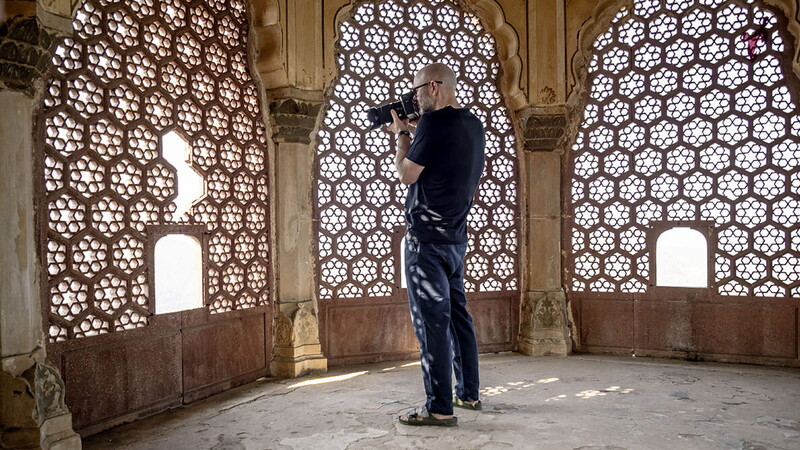
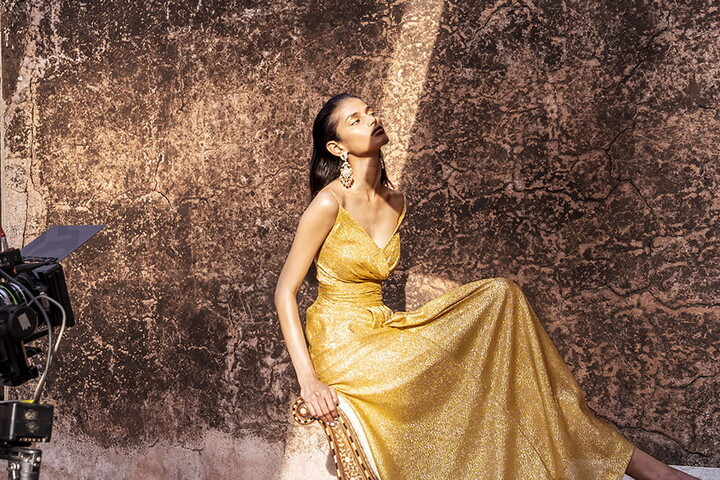
At Jaigarh Fort in Jaipur, and in Ajabgarh, Village Alwar, Rajasthan he photographs women whose lives and work are connected to India: actresses Aditi Rao Hydari and Avantika Vandanapu; actress and producer Freida Pinto; musician and composer Anoushka Shankar; poet and performer Rupi Kaur; models Lakshmi Menon and Bhavitha Mandava; author, producer and television presenter Padma Lakshmi; and Avani Rai, who appears in the Calendar both behind the camera and, at the same time, before Sølve Sundsbø's lens.
Each portrait retains its own identity and carries Sølve Sundsbø's visual language, shaped by fashion photography, experimentation and portraiture. The women are not asked to become symbols of India. None is expected to represent the country as a whole. They are individuals, not allegories: each brings her own story, talent and way of occupying space into the image.
This is how India enters the portraits: not through a general definition, but through the precision of a face, a posture, an encounter. Sølve Sundsbø moves closer but does not cross the distance of respect that separates the photographer from the person before his camera.
A country beyond the frame
The two movements do not lead to the same image.
Raghu and Avani Rai look at India through time: he by returning to its streets for more than 60 years; she by stepping back to reveal how much of the present has gathered around her father's photographs. Sølve Sundsbø encounters it through nine contemporary women. He moves closer to their faces without asking any of them to become the face of an entire country.
On one side, the past continues to live within the present. On the other, the present reveals itself through the singularity of each encounter. The perspectives remain distinct, because the aim is not to resolve them into a definitive vision. India emerges through distance and intimacy, memory and immediacy, continuity and change: in the archive and the street, in inherited photographs and new faces.
Each image reveals where the photographer stands, the distance they choose and what becomes visible from that position. Yet every time India seems to enter the frame, part of it inevitably continues beyond the edge.