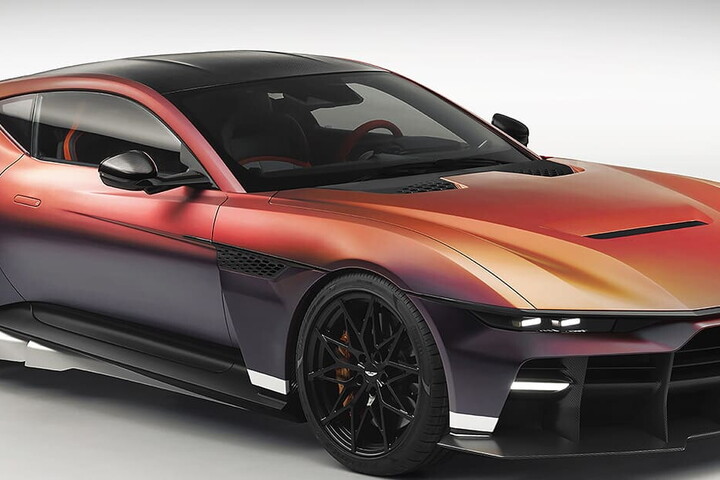
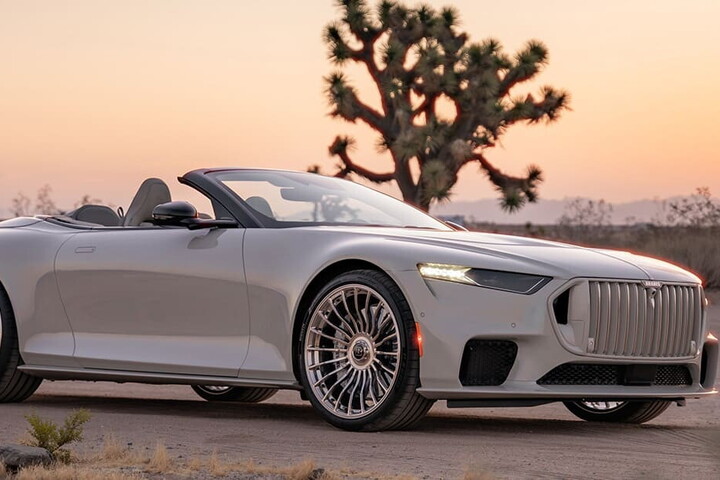
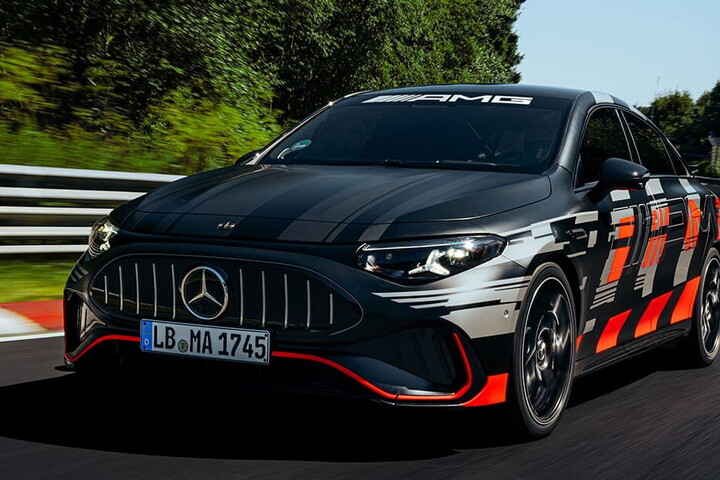
Pirelli Cyber™ Tyre has reached another important milestone. Pirelli's most advanced technology now equips the new Aston Martin Valen, the latest V12 special edition from Q by Aston Martin. Following the Pagani Utopia Roadster, another ultra-high-performance model has adopted the system as original equipment, in line with the agreement to introduce Cyber™ Tyre announced by Aston Martin in September 2025.
A car that puts its tyres to the test
The Valen pushes every parameter that places demands on a tyre to the limit. Its 5.2-litre twin-turbocharged V12 delivers 850 PS and 1,000 Nm of torque, enabling it to accelerate from 0 to 60 mph in 3.0 seconds and reach an electronically limited top speed of 214 mph (approximately 344 km/h). At the same time, the use of materials such as carbon fibre, aluminium, titanium and magnesium reduces the car's weight by up to 110 kg compared with the benchmark V12 platform. Its chassis set-up is stiffer and more responsive, with steering and braking systems calibrated to deliver immediate reactions and precision.
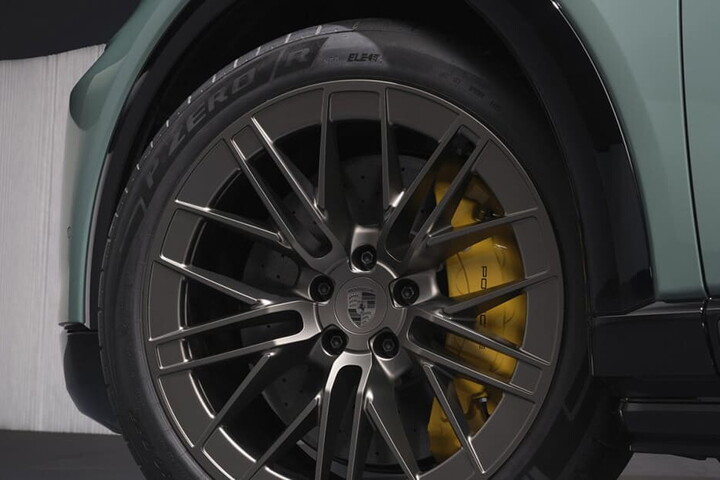
For a tyre, this means managing intense acceleration and load transfers, ensuring stability at high speeds and transmitting substantial torque to the road, while keeping the car's behaviour predictable for the driver. Pirelli has developed two tyre fitments for the Valen: the P Zero R (275/35 ZR21 at the front and 325/30 ZR21 at the rear) and the P Zero Winter 2 (275/35 R21 and 325/30 R21) for winter driving. Both are fitted to lightweight magnesium wheels, which reduce unsprung mass. The tyres were developed alongside the car to strike the optimum balance between everyday usability and track capability.
Developed with the car, not for it
The Valen is a Perfect Fit for Pirelli's approach: rather than adapting tyres to a car that has already been designed, the tyres are developed alongside the vehicle through close collaboration with Aston Martin's engineers. Cyber™ Tyre has been part of this process from the outset and forms an integral part of the car's digital architecture.
The system is unique in its ability to make the tyre communicate with the car's electronic systems. A sensor inside the tyre, combined with Pirelli algorithms and software integrated into the vehicle, transforms the data collected by the tyre into new functions for real-time dynamic control.
A car that adapts to its tyres
Cyber™ Tyre is integrated into the Valen's control systems. The electronic stability programme (ESP), anti-lock braking system (ABS) and traction control continuously adjust their settings according to the tyre actually fitted — identified through the so-called ‘Tyre ID' — and its real-world condition, including temperature, wear and pressure, to optimize control and safety.
The car can therefore calibrate itself to the specific characteristics of the P Zero R or P Zero Winter 2 tyres, delivering direct performance benefits. The same data also powers a dedicated interface on the onboard display. The screen identifies the type of tyre fitted and provides a real-time indication for each individual tyre, showing whether it has reached its optimum operating window, needs further warming up or needs to cool down. This is valuable information, particularly on the track, but also on the road when using winter tyres, where the risk of operating outside the optimum temperature range is greater.
Pirelli engineers at the company's Bicocca headquarters in Milan conducted dedicated tests to establish the operating ranges for each tyre type. The result is a truly adaptive relationship between car and tyre, enabling the driver to know when it is possible to push harder and get the best out of the tyres in different conditions.
Cyber™ Tyre: beyond the vehicle
The Valen debut confirms the continued development of Pirelli Cyber™ Tyre technology, which extends beyond original equipment applications into a second field: road-condition monitoring. Following projects with Movyon, part of the Autostrade per l'Italia Group, and Region Apulia, which help road operators plan maintenance, the technology is now also at the heart of a trial with Arma dei Carabinieri. The trial involves selected vehicles from the Rome Radiomobile Unit and aims to assess the condition of the capital's road infrastructure and identify potential risk factors, helping to improve road safety. Tyre data is combined with information from onboard cameras and analysed fully automatically using artificial intelligence algorithms developed by technology partner Univrses.
Looking ahead, the technology is set to play an increasingly central role in smart roads and autonomous driving, giving vehicles a ‘sense of touch'. This is supported by Pirelli's collaboration with RIDEsense, which combines physical and virtual sensors, and its involvement in Niulinx, a start-up originating as a spin-off from the Polytechnic University of Milan and specialising in autonomous driving. Industrial-scale production is also expanding geographically, with manufacturing now under way at Pirelli's Rome plant in the United States.