For Pirelli, biodiversity is about strengthening the connection between business, nature and local communities. That is why collaboration is a key element of the company's biodiversity initiatives. In Romania, this commitment took shape through a partnership with the local environmental association Asociația EcoAssist to transform degraded land into a new forest and reconnect people with nature.
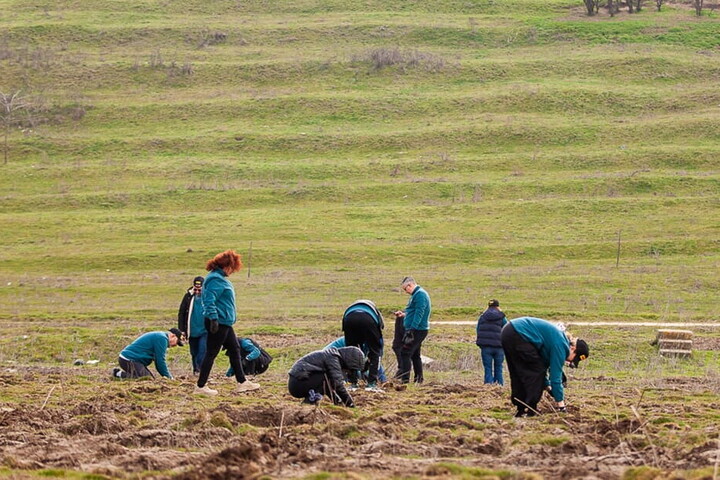
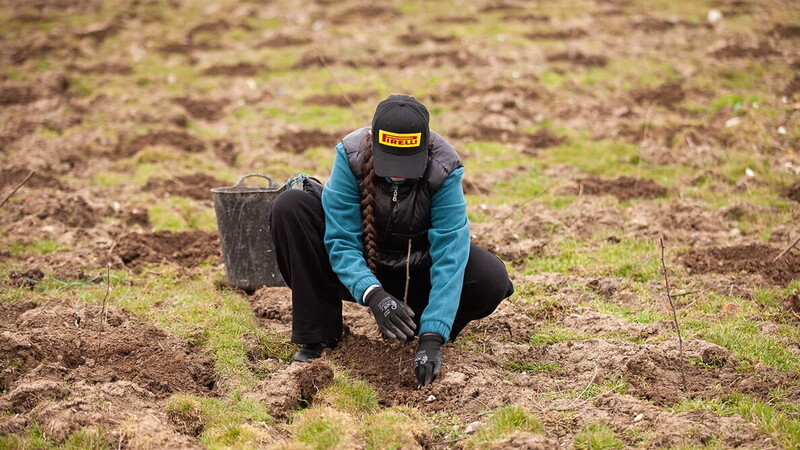
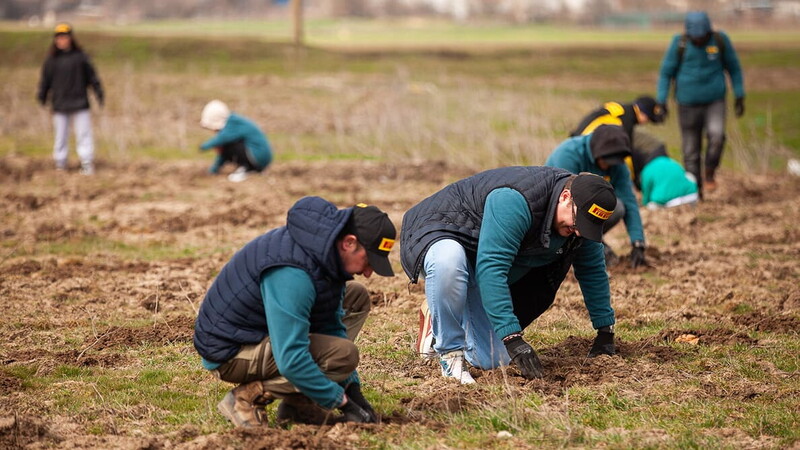
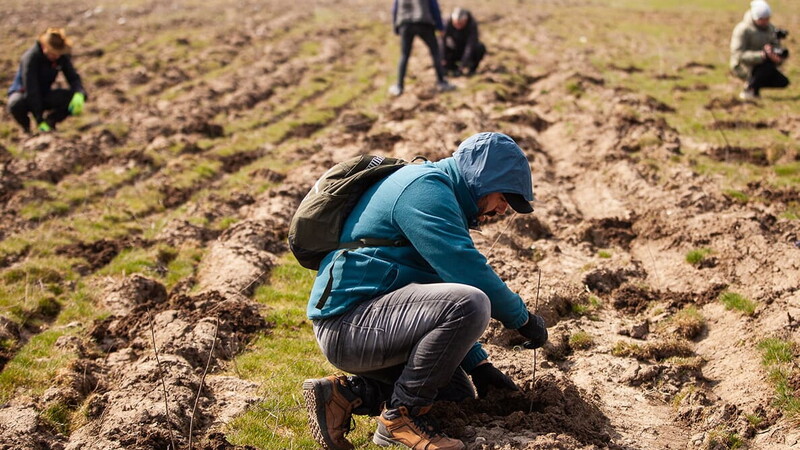
The afforestation project is located around 28 km from Pirelli's factory in Slatina, in southern Romania. Around 70 Pirelli employees and their family members took part in the initiative, helping to plant 5,000 trees across one hectare of degraded land. The project aims to improve soil quality, enhance biodiversity and strengthen the area's resilience to climate change.
We spoke with Marin Toma, President of Asociația EcoAssist, and Georgiana Porumbel, Head of Sustainability at Pirelli Romania, to learn more about the project and its long-term objectives.
Marin, what's the background of this project with Pirelli and how will you manage it in the future?
The project was established on environmentally degraded land, where soil quality had been compromised by low nutrient availability, intensive agricultural practices and grazing in surrounding areas. The site is located close to the sandy soils of the Oltenia region and has experienced increasing drought conditions in recent years.
Following the planting phase, the area will be actively monitored and managed over the next four to five years to support the establishment of the new forest. Management activities may include supplementary planting where needed, removal of competing vegetation, pest control and the replacement of saplings that do not survive. This year alone, we have already carried out two maintenance interventions to remove competing vegetation.
Once the forest reaches maturity, responsibility for its management and protection will be transferred to the local forestry district, which will maintain the area in accordance with applicable forestry legislation.
How will the forested area be used in the future? Is there a commercial dimension?
No, the aim of the project is not to create a commercial timber plantation, but to restore degraded land through afforestation and establish a new forest ecosystem. The objective is to gradually transform the site into a forested habitat that can provide shelter, breeding areas and food resources for birds, insects and other wildlife.
As vegetation cover increases, the project is also expected to improve soil conditions, enhance habitat quality and strengthen ecological connectivity, supporting the movement of species across the landscape. These biodiversity benefits will develop progressively as the forest matures and the ecosystem becomes firmly established.
Why did you choose to plant black locust trees?
Romania has a long history of using black locust in afforestation and land restoration projects, and the species today accounts for more than five per cent of the country's forest area. Over time, Romania has developed extensive expertise in the cultivation and management of this species, particularly in areas affected by drought, poor soils and land degradation.
The species was selected based on local forestry expertise and its suitability for the site's environmental conditions. Black locust is known for its adaptability, rapid establishment and ability to contribute to soil stabilization and vegetation recovery when used in appropriate contexts.
We planted 5,000 seedlings per hectare to account for natural mortality and to promote the rapid development of vegetation cover. This approach helps the canopy close more quickly, creating a protective microclimate that supports the establishment and long-term development of the new forest ecosystem.
Georgiana, how did you choose a partner for the project? And how does the collaboration work?
We wanted to work in an area close to our factory so we could see the results over the years. We chose the non-profit Asociația EcoAssist because of its experience in biodiversity and its focus on engaging volunteers and local communities. With this national project, Plantam fapte bune în Romania, they've planted more than a million seedlings over 230 hectares in the past two years. They invited us to one of their sites to see what they were doing and how they worked so we could assess in person how they organise and manage the events and we liked what we saw. Another key point for us was that they take responsibility for managing the area for five years.
As part of our collaboration, we also organised an educational event with children from a school in Slatina, helping them learn more about biodiversity and the importance of caring for the environment.
Part of this collaboration was an intensive day of planting involving Pirelli employees. Who took part from Pirelli and what was their feedback from the experience?
Around 70 people took part – employees from the Slatina plant, and their families, including children. We had people from across Pirelli – R&D, legal, technical, purchasing, HR. Having employees and their families participating certainly made us feel more involved and it reinforced the connection between Pirelli, the local community and the territory. It was a very cold day, but everyone was happy to take part. People said they were really keen on these kinds of activities and would be happy to do it again. The children were also very positive. People like doing things that have concrete results.
What has Pirelli learned from working on the Slatina project? What are the success factors? What are the pitfalls?
It's clear that biodiversity initiatives need strong local partnerships and long-term care. Planting trees is just the first step. To have a lasting impact, you must ensure they grow! I think the involvement of experienced local partners, employees and other stakeholders was key to the project's success. It showed us how important it is to raise awareness and reinforce the connection between people and nature. But it also showed that you have to think long-term. For example, we have a contract with Asociația EcoAssist under which they will maintain the newly forested area for at least five years, replacing any trees that don't survive, and then once the forest reaches maturity, it will be managed and monitored by the local forestry district.
What impact do you think this project will have on people?
We're not going to see change after just one day, but what we're doing is reinforcing personal commitments to biodiversity and encouraging employees to play an active role in the community. People can see that here you had some waste ground and in five or 10 years it will have become a forest. That's a fantastic benefit for the ecosystem and it's something you can see with your own eyes.
Data and information reported in this article are based on monitoring reports and technical documentation from the Slatina afforestation project, developed through the partnership between Pirelli Romania and Asociația EcoAssist, with data updated to 2026.