When choosing a new motorcycle, the decision often hinges on the type of transmission you prefer. Most models, from small displacements to large-capacity bikes across every segment - be it adventure tourers, customs, or supersports - feature a traditional gearbox. However, an increasing number now offer automatic options. But how do these different systems work? Which is the best choice?
Understanding them is vital, as the gearbox transmits the pure essence of mechanics, making the rider feel part of the bike's rhythm. Ultimately, it is up to the individual to decide which path delivers the greatest thrill.
Years ago, riders faced a simple crossroads: scooter or motorbike. Scooters use a CVT (Continuously Variable Transmission). This means you don't feel gears engaging because the ratio is achieved through the varying diameters of pulleys, making the operation 100% automatic. Is it convenient? Absolutely.
If the goal is maximum comfort without a worry in the world, it is the ultimate choice: you simply manage the throttle and brakes. From a pure motorcycling perspective, however, something is missing. This brings us to motorcycles.
The allure of the manual gearbox
Why do we love the gearbox so much? Perhaps because it establishes an emotional connection with the engine. You click into first with a mechanical "clang", the clutch lever is in your hand, and the machinery is yours to command. When setting off, a direct link is forged between rider, engine and road. With every shift, you feel the gears bite and engage; as the revs rise, the engine's character, its rhythmic climb and the power of its surge come to life. It is the thrill of hitting the power band. Sensations that a smooth, comfortable automatic transmission simply cannot replicate.
The precision of the quickshifter
An electronic gearbox (quickshifter) allows you to change gear without using the clutch, which is then only needed for pulling away or manoeuvring. Here is how it works: the system detects pressure on the gear pedal and momentarily cuts the ignition and injection. This removes the load from the gears, allowing the next ratio to engage almost instantly.
The effect is exhilarating without losing that mechanical feel: you experience a sharp, rapid click with virtually no interruption in power. It is perfect for spirited riding but equally convenient for touring, as it removes the need to constantly operate the clutch lever.
Some systems also work on downshifts (blippers), automatically providing a "blip" of the throttle. In certain situations, you can still use the clutch if the technique or preference requires it. The only trade-off is that quickshifters perform best at mid-to-high revs and under load; otherwise, the shift can feel less fluid.
Automatic transmission: comfort that makes room for the journey
Automatic transmission eliminates the need for manual intervention; the system's control unit selects the correct ratio based not only on speed but also on riding style. Generally, multiple modes are available, ranging from "Touring" - which shifts at lower revs - to "Sport", which exploits the engine's full potential.
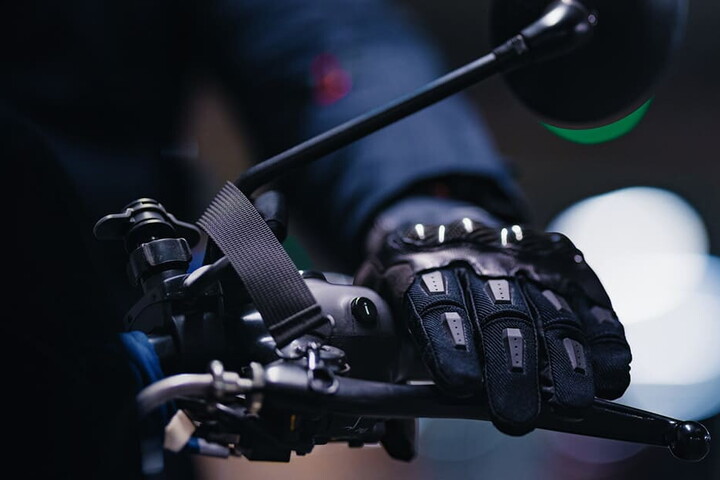
The advantage of an automatic is that if the programmes do not meet your expectations, you can take manual control using handlebar paddles or a foot lever. Unlike an electronic gearbox, the connection here is not mechanical; these are switches that send a signal to the control unit to execute the shift. There are two main types of automatic systems: DCT and automated manual.
DCT: advanced power control
The DCT (Dual Clutch Transmission) consists of two coaxial primary shafts (one inside the other), one for even gears and one for odd gears. Each shaft has gears engaged with the secondary shaft (which transmits torque to the final drive: the sprocket, chain, and rear sprocket) and is operated by a clutch. While riding in one gear, the next is already pre-selected; the shift is executed by opening one clutch while simultaneously closing the other. The control unit decides when to shift based on the selected mode. It can be used manually, but there is no clutch lever—the clutch is automated even when pulling away.
The shift is incredibly fast and fluid, occurring without any perceptible interruption in torque, making it smoother than a quickshifter. This results in a more flowing ride, especially on tricky surfaces, though it does reduce the raw perception of gears engaging. That's where the automated manual comes in.
Automated manual: tradition with a new face
Mechanically, an automated manual gearbox is identical to a traditional one, but fitted with two electromechanical actuators, one for the clutch eliminating the lever) and one for the gear selector. The mechanics remain unchanged; only the "operator" is different. Internally, its operation mirrors a manual: upon command, the system reduces torque, disengages the clutch, shifts the gear, and re-engages the clutch. Because it is mechanically a traditional gearbox, it retains that classic feel.
As with the DCT, it offers automatic modes or manual control via paddles or a foot lever - all without ever needing to touch a clutch.