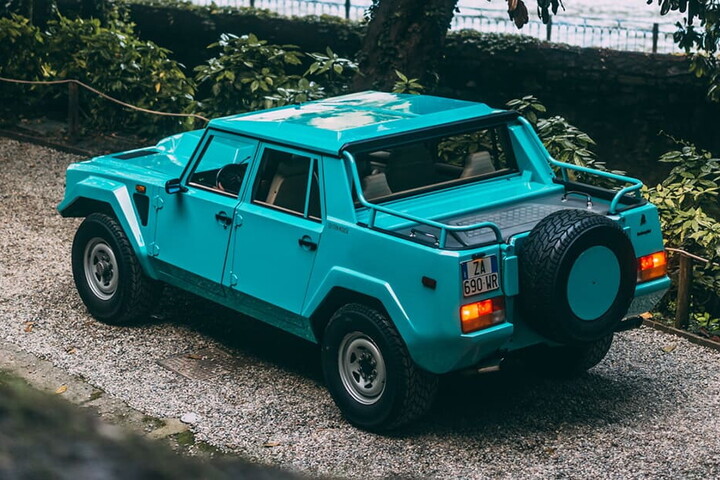
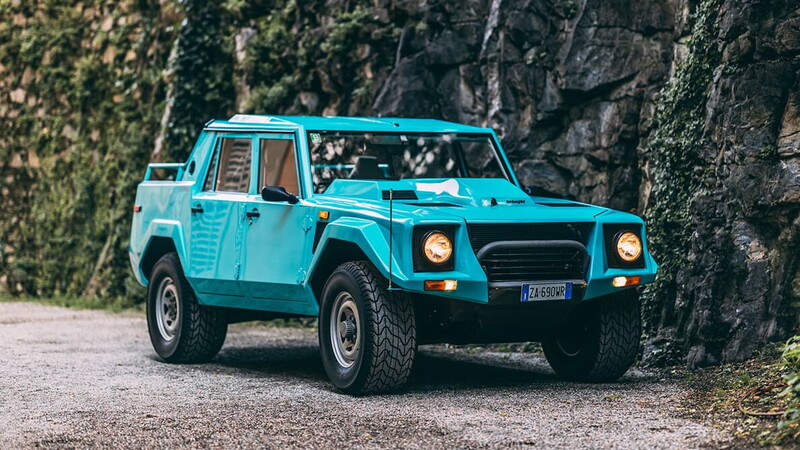
How do you build an icon? By taking a V12 engine from a super sports car, raising it off the ground, and unleashing it in the desert. That is how, in 1986, the Lamborghini LM002 was born: an object out of scale, outside convention, and unlike anything the automotive world had ever known up to that point.
A revolutionary model, it combined the super-sports DNA of the House of the Bull with an unprecedented off-road vocation. Its debut at the 1986 Brussels Motor Show left the public speechless. Today, four decades later, the LM002 remains the symbol of a pioneering vision that anticipated the global success of high-performance SUVs, a success now confirmed by models such as the Urus, the LM002's heir.
The Technical Challenge: The Birth of the Scorpion BK
From the very beginning, such an extreme project required equally innovative solutions. It was in this context that the collaboration with Pirelli took shape, with the company called upon to develop special tyres for a vehicle unlike any other. From this challenge came the Scorpion BK: a tyre that, at the time of its design, was cutting-edge both in terms of size and resistance, but above all because of its “ears” — lateral fins that allowed it to “float” over the desert sand for which Lamborghini's first high-riding vehicle was intended.
In addition to providing strong road holding, these enormous tyres had to operate in the high-temperature conditions typical of desert regions, withstand the vehicle's weight of approximately 3,500 kg, cope with the high speeds delivered by the V12 engine, and ensure sporty performance even on asphalt. They were therefore designed with an extremely robust carcass and aramid anti-cut reinforcements, which also gave them the ability to absorb impacts and deliver quicker reactions during sudden manoeuvres.
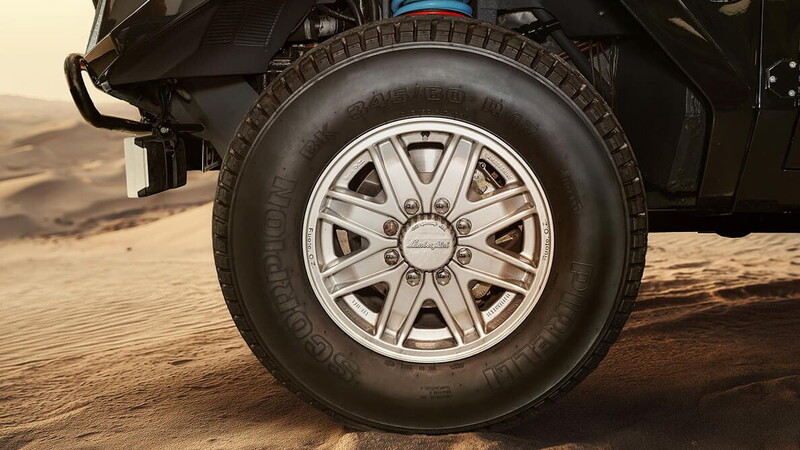
Subjected to extreme endurance testing, the Scorpion BK was one of the earliest examples of technology transfer from motorsport to the road. Its tread pattern, in fact, was derived from the Montecarlo Intermediate carved into slick tyres for the rally cars of the time, while many of the technologies used for this tyre also came from those competitions, where Pirelli had already won several world titles.
Today, the Scorpion BK is part of the Pirelli Collezione range, dedicated to the most iconic cars built between 1930 and 2000: a bridge between past and present, with products that preserve the original aesthetics while incorporating modern technologies and materials.
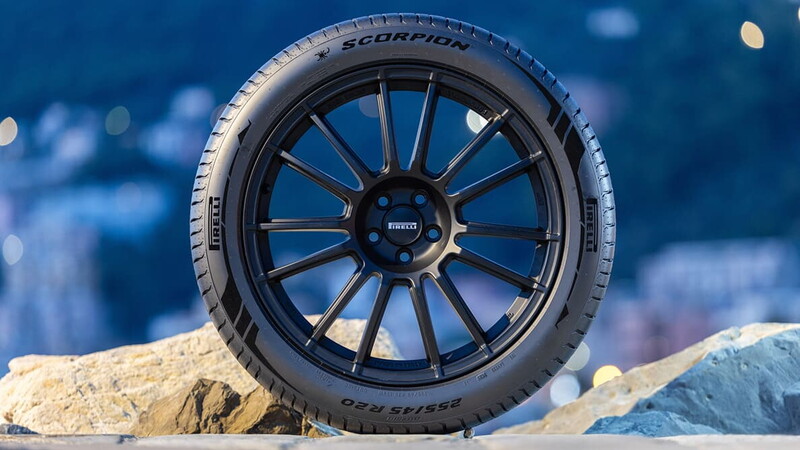
The Scorpion Range: A Constantly Evolving Family
The Pirelli Scorpion BK is also the forefather of the Scorpion family, Pirelli's tyre line dedicated to Sport Utility Vehicles, which has recently reached its third generation. The new Scorpion stands out for its excellent qualities on both dry and wet surfaces, certified by the independent body TÜV¹, which awarded it the Premium Quality Mark. Its distinctive features also include comfort and long-lasting performance. In developing the new Scorpion, Pirelli's R&D team adopted the most advanced virtual modelling techniques.
From the LM002 to its heir, the Urus, Lamborghini SUVs have one common denominator: Pirelli tyres. This historic partnership brings together performance, technology, and vision. Celebrating the 40th anniversary of the LM002 means telling not only the story of an extraordinary vehicle, but also that of a shared innovation that continues to look to the future, following a path that began in 1963.
¹TÜV Premium certification no. 713384205. Tests conducted in September 2025 by TÜV using tires size 235/55R19. For more information: https://www.pirelli.com/tyres/en-ww/car/catalogue/product/scorpion-s3