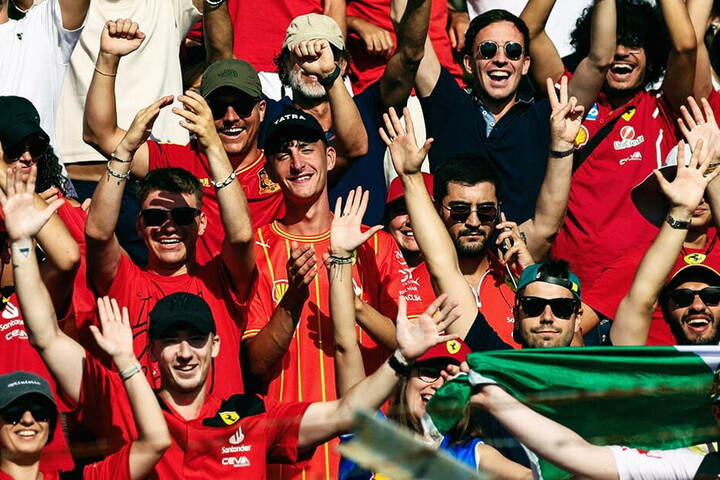
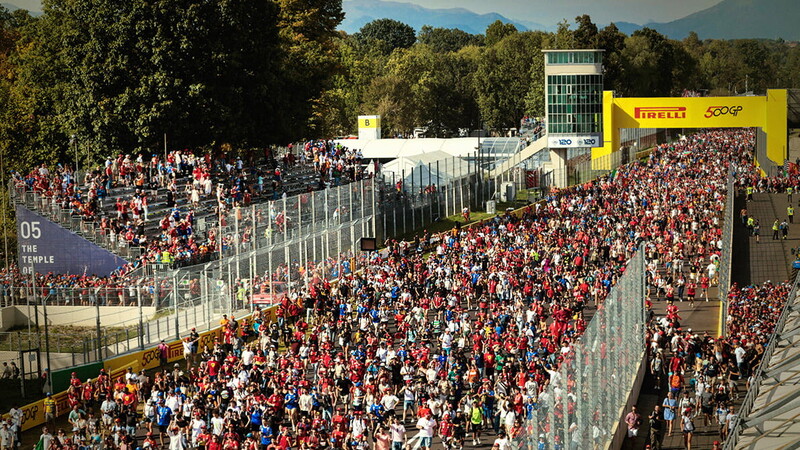
Red, blue, pink, orange, green and grey. England, Sweden, Italy, India, Mexico, Australia. The crowd gathered at Monza to watch the qualifying sessions that will decide the next day's starting grid is a kaleidoscope of colour and allegiance – expressed through caps, T-shirts and flags – and comes from every corner of the world. The event is, in every respect, global: in reach, in popularity, in following and in fascination. It has been seventy-five years since Giovanni “Nino” Farina won the first Grand Prix in history at Silverstone, driving an Alfa Romeo fitted with Pirelli tyres, and Formula 1 doesn't seem to have aged a day. Technologies, regulations, drivers and teams have all changed over time, yet the euphoria and adrenaline of watching a race – especially live – remain untouched. You can sense it among the colourful, international crowd moving in an orderly but unstoppable flow along the avenues of the Parco della Villa Reale di Monza, on their way to the Autodromo, the ‘Temple of Speed.' Some places seem destined to distil entire experiences. Monza's circuit – third in the world to be conceived – its distinctive layout and the special bond between track and grandstands, strengthened over decades by the famous post-race “invasion,” make it the perfect stage on which to experience the spectacle of Formula 1 – and its fans.
From the Grandstands
For some, it's a family matter: Sunday afternoons spent watching tiny cars on a bar TV in a provincial town. For others, it's a more recent but all-consuming discovery, often linked to a specific face and name. Either way, Formula 1 inspires a form of passion all its own.
“I've always considered myself a sports lover, but I had never travelled to watch a sporting event before,” says Baren, who came all the way from India. “For Formula 1, I crossed a continent. It's my first time inside a circuit, and the atmosphere is incredible – second only to the sound of the engines that fills the space almost physically.”
2005, 2014, 2019, 2023: Richard and Nick – Londoners, sixty and thirty, father and son – have returned to the Autodromo for the fifth time. They live the competition through the circuits that, to them, define its legend: Monza and Silverstone. The enthusiasm typical of fandom here blends with the curiosity of study. Dates, anniversaries and trivia are exchanged to help pass the time. Some recall the sport's 75th anniversary; others, Pirelli's milestone of 500 Grands Prix. As Laurel from England puts it, “It's no coincidence I chose to see this particular race weekend in person. 2025 is full of meaning for Formula 1, and I wanted to celebrate it in the place that somehow brings all those stories together.”
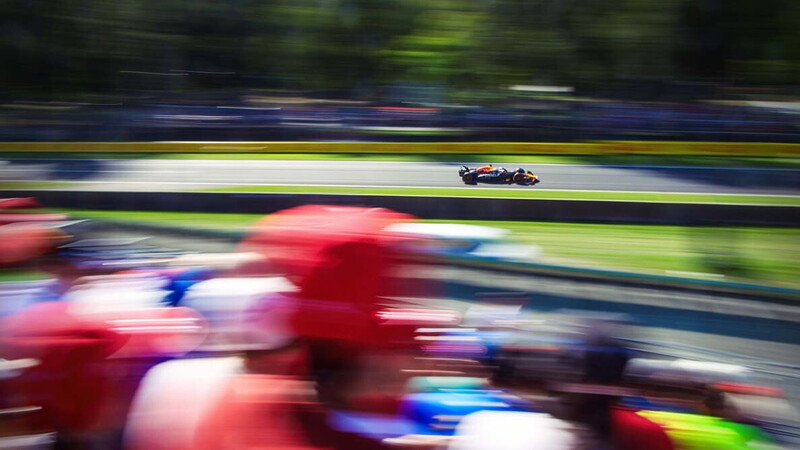
The crowd on the stands, the single-seaters on the starting grid, the engines roaring to life – this is the image many summon when describing what makes this sport special. “The air is quite literally electric; the smell of asphalt and tyres mix together; you can hear the roar of the cars from kilometres away,” says Niccolò, a university student and motorsport fan. For him, the essence of Formula 1 lies in the senses. Sight, smell and hearing all come alive when watching a Grand Prix in person. For fans, it's almost impossible to separate a driver's performance from the emotions of seeing them race. Gilles Villeneuve, Nigel Mansell, Ayrton Senna, Michael Schumacher, Fernando Alonso, Lewis Hamilton, Max Verstappen – when naming their favourite, everyone seems to relive the instant when Formula 1 became more than just an interest. Whether it was a head-to-head duel or a masterful drive, the memory remains vivid and renews itself every time one has the chance to return to the track.
Marianne, from Sweden, who has loved those sleek, brightly coloured cars since childhood, sums it up perfectly: “I've followed Formula 1 all my life, but this is my first time seeing it live – and my expectations were far exceeded. Beyond the racing itself, the live experience allows you to feel the deep sense of togetherness that defines this event. You see it in everyone's expressions – beyond the colours.”
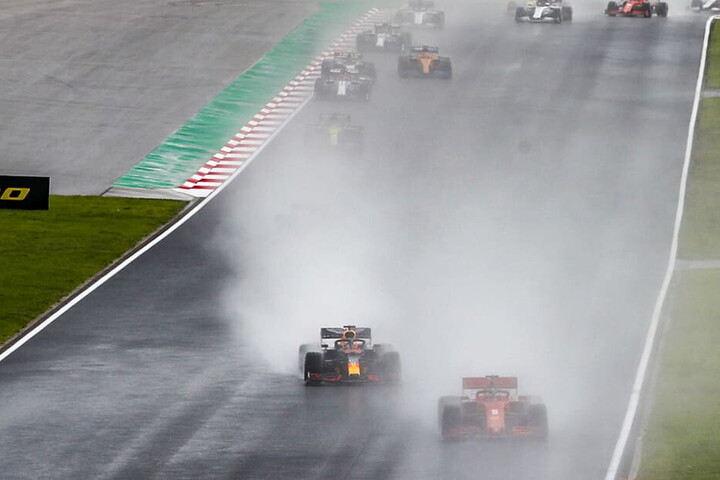
Beyond Allegiances: that ability to transcend loyalties is, according to everyone, the defining trait of Formula 1 fandom. There are drivers and there are teams, but what unites fans is a shared passion for the sport itself – the ability to command the track, even under difficult conditions, blending human instinct and technological power.
The crowd applauds whichever driver finishes first, and the celebrations belong to all. At Monza, this spirit of collective joy takes on a physical form: the famous “track invasion,” when fans flood the circuit after the Grand Prix. It's a ritual that takes place regardless of the result – because what's being celebrated is Formula 1 itself.
From the Track
Enrico Mapelli, a journalist from Monza who has covered the Autodromo for over fifty years and knows its geography by heart, confirms as much. “The post-race invasion has existed at Monza for fifty-five years, and over time it's been adopted by many other circuits. The drivers – whatever their team – step onto the podium knowing there are hundreds of fans gathered beneath, waiting to cheer them.” The relationship between the grandstands and the track is a constant in Formula 1 – a dialogue of mutual exchange. The latter offers exhilaration, speed, awe, and sensory intensity; the former returns it with unrestrained energy and passion. “Circuits aren't easy places,” Mapelli continues. “The noise fills your ears, the crowd is everywhere, and though time isn't short, it never offers rest. Experiencing a Grand Prix live – especially the Italian one – is a choice. And one that more and more fans are making. This year's race weekend, including Thursday, will mark the highest attendance in the circuit's history, with 70 percent of spectators coming from abroad. Formula 1, yesterday as today, continues to draw fans of all generations. I attended my first race in 1968, and the one I remember most vividly is the 1979 Grand Prix. In the future, some fans will say the same about this season.”
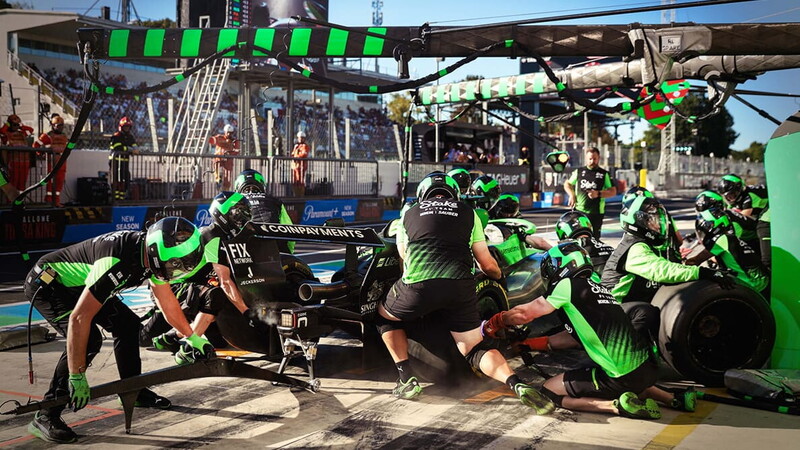
If the event still manages to preserve – and even amplify – its power of attraction, it's because it knows how to evolve while telling the story of that very evolution. Monza proves it once again. “The circuit has changed in many ways,” Mapelli explains. “The track layout evolved with the introduction of chicanes in 1972, designed to reduce speed; the race weekend schedule has become more spread out; the pit lane now hosts fan and sponsor activities; and communication no longer flows only through official channels – drivers themselves share their daily lives from the paddock and beyond.”
It's a revolution that has, nonetheless, kept the heart of the sport intact.
Single-seaters, asphalt, speed, tyres, chicanes and straights: Formula 1 will always remain true to itself – and always one lap ahead.