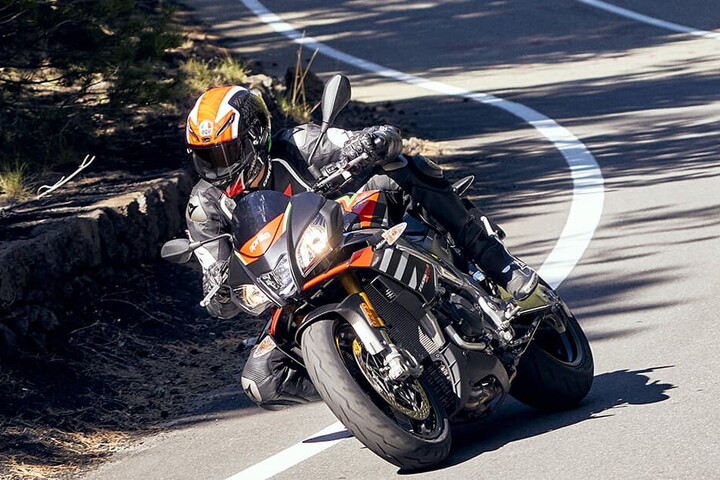
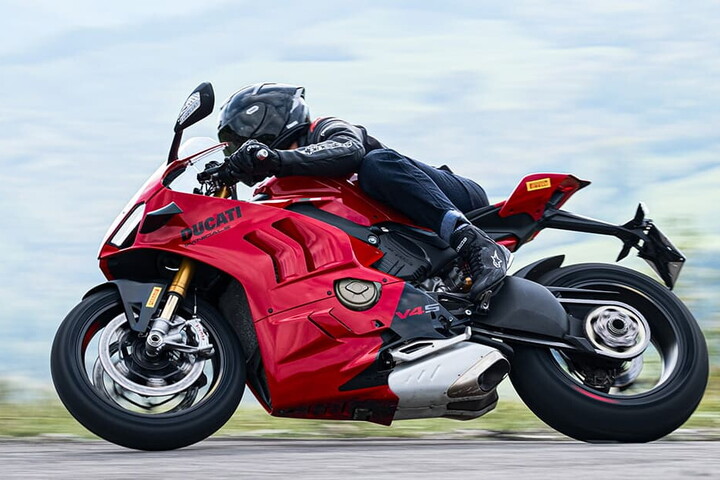
To improve your riding, one of the fundamental steps is to start with braking. This is where you understand how well you know your motorbike: by the way it responds, how it settles, and the amount of grip the tyres communicate.
Several factors come into play during braking, making this phase highly technical, and it is necessary to apply the brakes effectively for speed, precision, and safety. There are also mistakes that are very important to avoid, as mastering good braking can make a significant difference on two wheels.
The techniques and main areas of focus can be summarised into three major groups, which we will analyse below.
Braking must be balanced
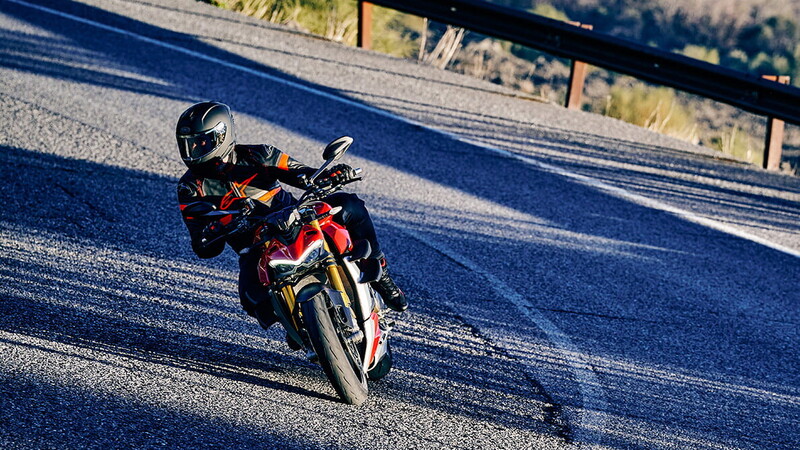
During hard braking, most of the weight transfers to the front wheel, and in some limit situations, the rear wheel almost floats. This is why you sometimes hear people say: “Don't use the rear brake, because in this situation it's useless”. But this is a mistake: even though the front brake does the bulk of the work, the rear brake is crucial because it stabilises and increases control of the motorcycle.
When braking, it is therefore best to use both brakes, applying 70-80% of the force to the front and the rest to the rear. To do this, it is necessary to know your braking system well so that you can effectively modulate the braking power on each individual brake. You must know precisely how much and how both the front and rear brakes slow the motorbike.
Apply a soft initial touch (the attack)
The 'attack' is the first phase of braking, the moment you apply the control. Consider the front brake: the initial touch must be soft, otherwise the system's response will be too abrupt. This will cause the forks to dive too quickly, resulting in a sudden rebound of the suspension. This action unloads weight from the front wheel and will consequently reduce grip. In the worst cases, the front suspension could chatter, further reducing braking performance and stability.
The most effective action therefore begins with a gentle first touch that gradually transfers the load to the front tyre, allowing it to offer maximum grip. Following this initial touch, you can apply more force, modulating the pressure on the lever progressively, in line with the tyre's available grip.
Correct posture and look ahead
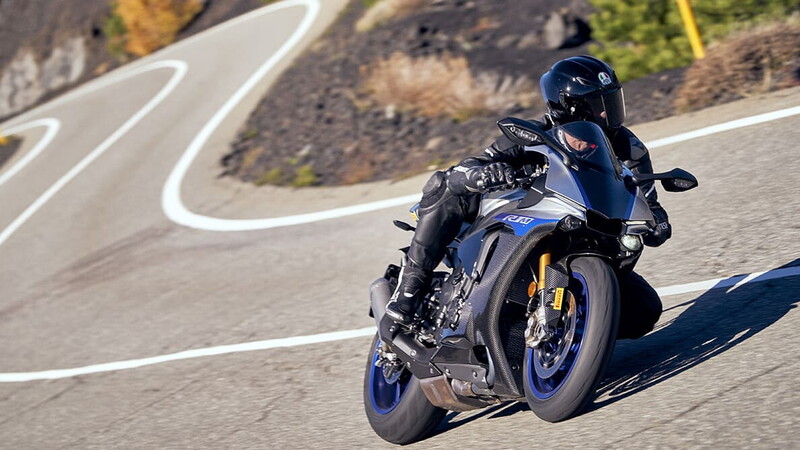
When riding, it is always appropriate to assume a correct position: your legs should grip the tank, your arms should be relaxed, your body stable, and your gaze always forward. This always applies, not just during braking. Correct posture allows you to maintain stable balance, distribute your weight, and react better to any unexpected event. It also reduces fatigue because you are working in harmony with the motorbike, not fighting against it. Gripping the tank with your legs provides more stability, acts as an extra anchor point, and allows you to keep your arms relaxed so you can steer with precision.
Looking far ahead is a fundamental safety principle because it gives you time to adapt your riding and prepare for what will happen next. It is also important because the motorbike tends to go in the direction you are looking, as your body and hands subconsciously follow your gaze, setting the trajectory accordingly.
Ten points for further insight
1. ABS. Modern anti-lock braking systems are highly efficient and guarantee a high level of safety. However, ABS does not completely eliminate the possibility of a fall: it assists and corrects, but it cannot nullify the laws of physics.
2. Cornering ABS. High-end motorbikes feature a system that detects the lean angle when cornering, adapting the ABS intervention to optimise braking performance mid-bend.
3. Control. ABS works for safety and should be considered an ally, but braking should always be performed in a controlled manner, respecting the limit of grip, and allowing the system to intervene only in an emergency. It should not be used as a 'limit': if it engages frequently, it means the braking is too harsh or poorly managed.
4. Power. Any recent motorbike has a braking system that ensures powerful stopping. Coupled with quality tyres, this allows you to minimise stopping distances in any situation, even on difficult, slippery, or wet tarmac. The most important quality, therefore, is not power, but modulation.
5. Modulation. The best braking systems offer a soft, progressive control and allow you to modulate the braking power optimally.
6. Panic stop. In emergency cases, for example, when a car pulls out in front of you, the emotional, self-preservation response prevails. In this situation, braking will rarely be measured; you will instinctively 'grab' the brakes and rely on the technology. It is important that the motorbike is the latest generation and fitted with tyres in good condition.
7. Rear brake. With experience, you will be able to apply the rear brake a fraction of a second before the front, to prepare the motorbike for braking by pre-loading the front end, making corner entry more composed.
8. Trajectory. The rear brake can be used mid-corner to correct the line and slow down in case of excessive speed. The ABS prevents wheel lock-up and the danger of falling.
9. Experience. To get comfortable with your motorbike's brakes, especially if it is new, the easiest and safest method is to use the brakes one at a time, at low speed, starting with light applications and then gradually increasing the intensity.
10. Tyres. The saying, “Power is nothing without control”, also applies to braking: ensure your tyres are in good order, with sufficient tread depth, and always at the correct pressure.