From aircraft runway to Pirelli Proving Ground
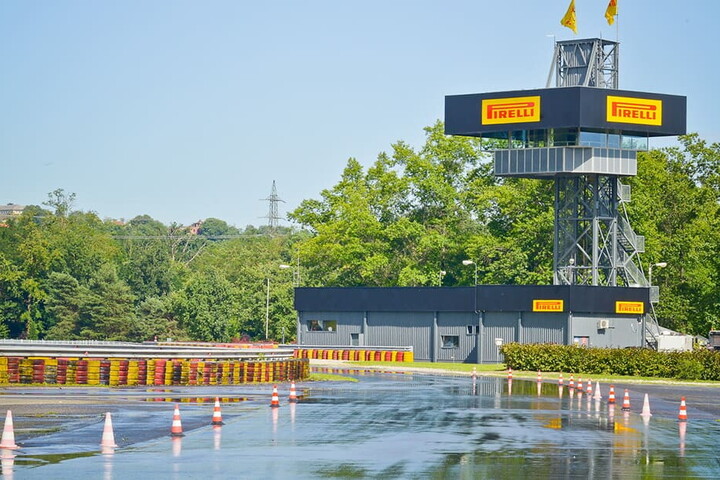
The Vizzola Proving Ground was established in the late 1960s. Originally, the site served as the primary runway for an aviation company, consisting of a one-kilometre straight used for instrumental aircraft testing. As aeronautical engineering evolved, the facility became insufficient for its original purpose. This presented Pirelli with the opportunity to acquire the site to expand its outdoor testing capabilities. The official transition to automotive experimentation took place under Pirelli's stewardship between 1969 and 1970. Today, the facility spans 266,000 square metres. It maintains a strategic logistical position due to its proximity to Malpensa Airport on the outskirts of Milan.
Real-world surface saturation as a defining factor
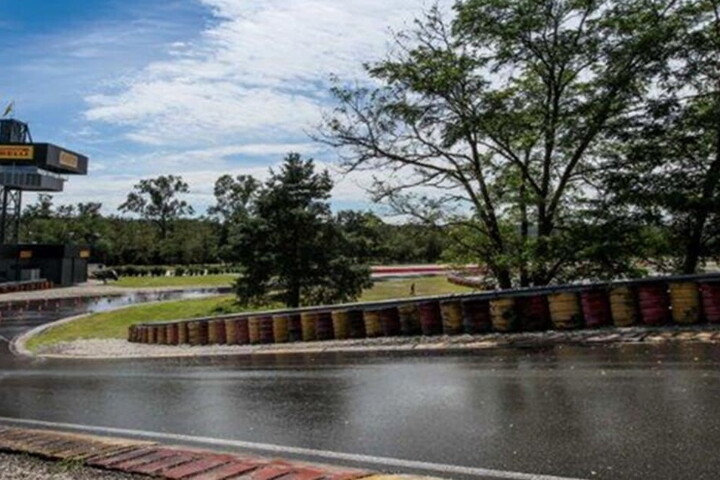
With a length reaching 2,850 metres, Vizzola houses the largest wet-handling track in Europe. “It is considered the centre of excellence for wet-weather testing”, explains Alessandro Pileri, the facility's track manager. He adds that “this specialism makes it the benchmark for prestigious car manufacturers, who choose Vizzola even when they have private circuits or closer facilities at their disposal”.
The secret lies in the quality of the surface saturation. Whilst other circuits create a constant film of water, Vizzola reproduces the genuine conditions of a rain-soaked road. Pileri notes: “We have a type of saturation that offers the most realistic feedback for public roads; this is precisely why car manufacturers prefer testing at Vizzola”. This ability to recreate ideal physical contexts allows tyres to be tested in conditions that closely mirror day-to-day use.
Engineering collaboration and the balance of values
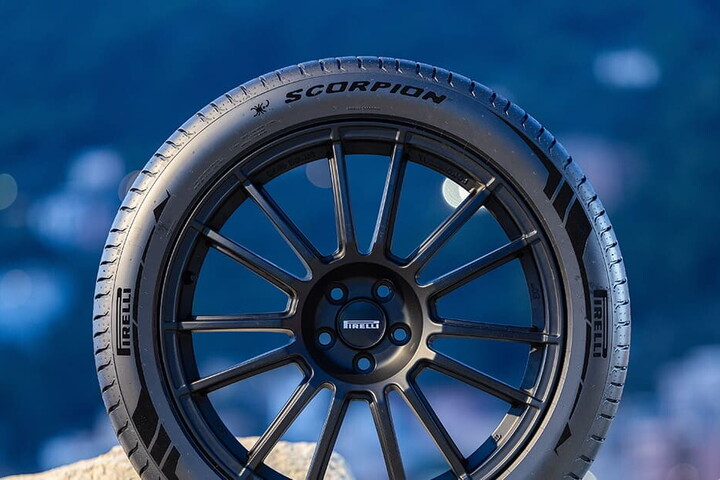
Tyre development at Vizzola is a collaborative process involving engineers and test drivers from both Pirelli and the vehicle manufacturer involved in the project. The evaluations conducted range from wet-weather handling and braking to internal and external noise levels, as well as aquaplaning resistance. The ultimate goal is to find the optimal equilibrium between various, often conflicting, requirements. According to Pileri: “At the end of the process, we must find the best balance of performance to satisfy the needs of both manufacturers and motorists”. This involves calibrating the product to specific requirements, such as when a manufacturer chooses to prioritise comfort and refinement over pure wet-weather performance.