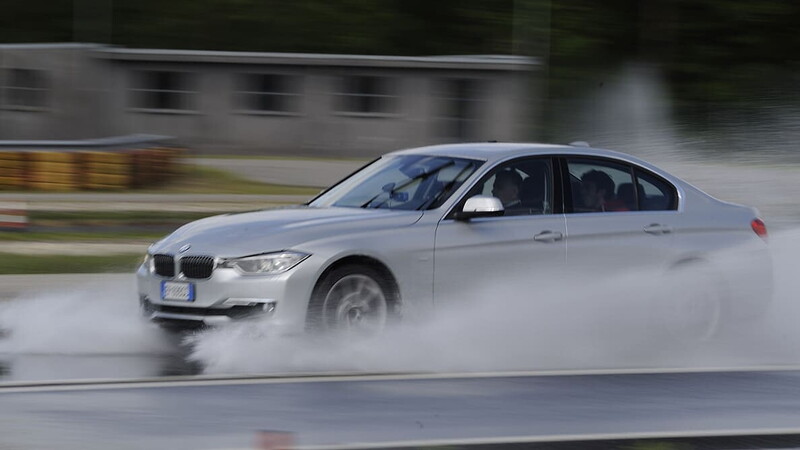
A test driver is not a racing driver. At Pirelli, this concept is so clear that it forms the very foundation of their method. “The racing driver seeks performance; the test driver seeks the problem”, to put it simply. It is a cultural difference before it is a professional one, which explains why certain figures excel while others do not. “We have test drivers who came from completely different trades. One of our best, in Germany, was previously an electrical maintenance technician. He had never driven a racing car. Over time, he developed an incredible sensitivity”. The skill lies not so much in going fast, but in understanding what happens to the tyre when it is pushed beyond the limit. It is an art that requires training, discipline, and patience. “There are extremely talented racing drivers who do not choose this profession. They cannot help themselves: when they feel under-steering, they correct it. The test driver, on the other hand, must let it play out to understand how and when the car recovers”, explains Eros Fumagalli, a Pirelli test driver.
An unparalleled internal school
Becoming a test driver at Pirelli is not a standard path; there is no “typical” CV. What does exist, however, is one of the longest and most structured training periods in the industry.
“I did a year and a half of training”, says Eros. “Pirelli invests time, people, and resources on a scale rarely seen. You must learn to control the car beyond the limit, then how to read the tyre, and then how to recognise every nuance of behaviour across a vast range of conditions - dry, wet, snow, and ice”.
The difficulty of this profession, they say, is that “you provide the numbers”. It requires a level of sensitivity that cannot be bought or improvised. This is why the company not only trains its test drivers but also maintains the highest standards over time through refresher courses and targeted internal training.
“Every year, for example, we conduct cross-blind tests. I might test a set of tyres without knowing what they are, a colleague does the same, and then we compare our evaluations. This creates our brand identity: anyone driving on Pirelli knows what to expect, because behind every product lies a consistency of feeling and judgement”.
The comparison between road and simulator
Simulation has become a pillar of new tyre development at Pirelli. But this does not replace the test drivers: it expands their possibilties. Yet, this transition is not always straightforward.
“The first time I got into the simulator, I turned it off after two minutes”, says Fumagalli, who has decades of experience in Pirelli testing. “The brain sees braking, but the body does not feel it. The same goes for cornering: in a car, you turn your head into the bend; in the simulator, you have to look straight ahead. Initially, the body is not used to it”.
It is a physiological matter: the simulator provides the image of deceleration, but the real force does not reach the body. “When you brake, the platform moves backwards to mimic the load, but it is not the same thing. You have to learn to separate what you see from what you feel”.
Once that hurdle is cleared, the simulator becomes a powerful ally. “When you get used to it, you find the same sensations as the real car. That is when you realise how useful it can be for even more precise and refined development”.
The future of testing starts here
Simulation allows problems to be anticipated, prototypes to be reduced, and development cycles to be accelerated. However, the essence of the craft remains human. This is why Pirelli continues to invest in this direction. “The ideal background? A bit of vehicle dynamics helps”, he explains. “Mainly because the next step for the most experienced drivers is moving to the simulator. But you do not need to be an engineer: you need a sensitivity that must be built and refined over time”.
The point is that technology does not replace the test driver: it makes them more powerful.
In turn, the test driver provides technology with their contact with reality. A phrase circulating in the halls of Pirelli R&D sums it up perfectly: simulation develops the tyre; the test driver gives it a soul.