Building a winter tyre today does not simply mean making it “work on snow”. It means developing a product capable of functioning in opposing and often irreconcilable conditions: ice, rain, dry asphalt, and rapidly changing temperatures. In short, it means finding innovative solutions to overcome the compromises typical of new tyre development.
A MATTER OF COMPROMISE
“It's a zero-sum game”, explains Sven Schaedler, a Pirelli test driver. “If you improve traction on snow, you risk worsening performance in the wet. If you reduce rolling resistance, you might lose grip. Our job is to make performances coexist that, by their nature, would tend to exclude one another.” The heart of development today is virtualisation. Even before a prototype is produced, the tyre is tested through simulations that reproduce compounds, deformations, and reactions to variations in temperature and road surfaces.
THE ROLE OF SIMULATION
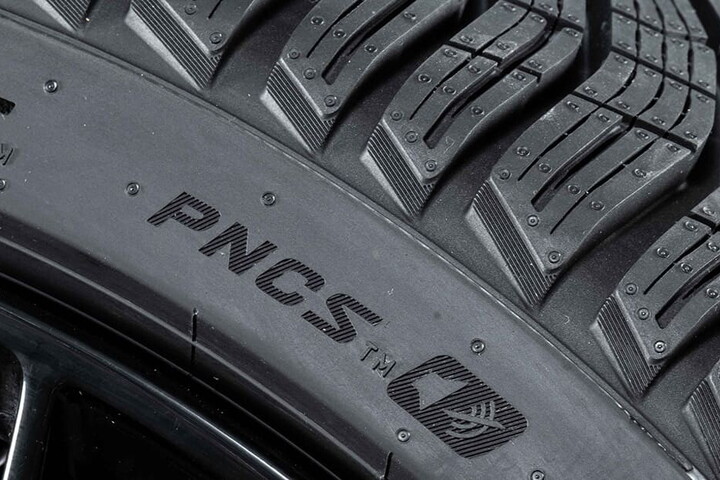
“Simulation allows us to understand what happens even when changing the smallest detail”, they say at Pirelli. “We no longer rely solely on driving sensations; today we can analyse physical phenomena and anticipate their effects.” The result is faster development, fewer physical prototypes, and greater technical precision. But materials alone are not enough. The tread design is equally crucial. The new adaptive tread features a network of micro-claws that deform and open on snow and ice, increasing traction without compromising other performance areas. "Today we are not just innovating tyre chemistry, but the mechanics of shapes”, explain Sven and engineer Paolo Artesani, Site Director of the Pirelli Sottozero Center. “Every sipe has a precise function: drainage, traction, or stability.”
THE TESTING GROUND
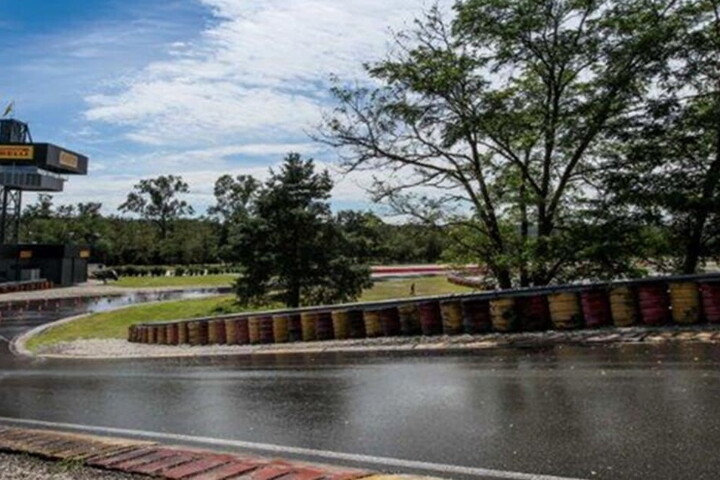
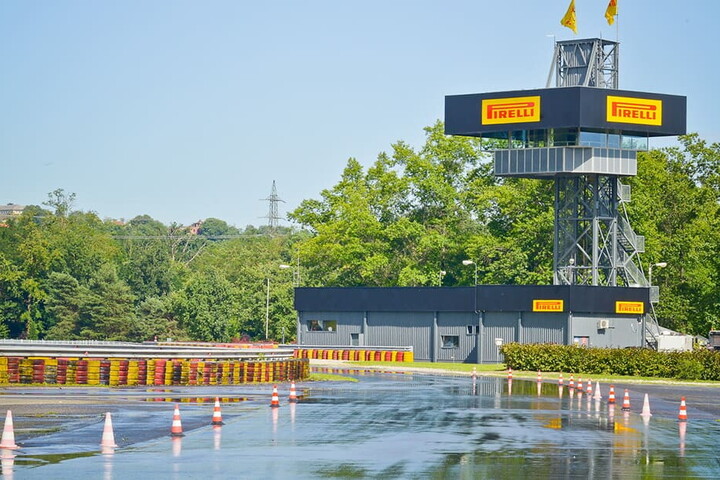
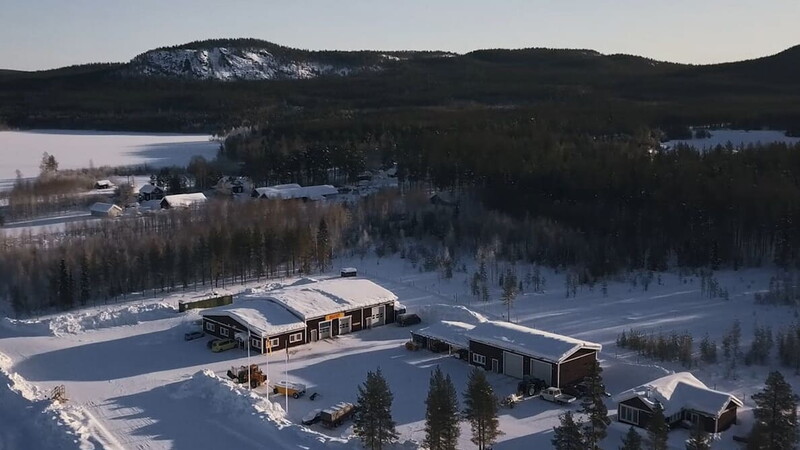
When the project leaves the screen and becomes a real tyre, the most spectacular phase begins: field testing. The heart of winter testing is the Sottozero Center in Sweden, where Pirelli can test tyres on snow and ice all year round. “We can test the same tyres within a few hours on ice, snow, wet, and dry surfaces”, explain the staff at the testing centre. “It is a unique condition that allows us to truly compare the product's behaviour.” Alongside the data, there is the judgement of the test drivers. Tyres are pushed to the limit on snowy, icy, and wet tracks.
A MATTER OF SENSITIVITY
“We drive them beyond the limit”, says the test driver. “We need to see how they react when they lose grip and how controllable they are. Safety is born from this, too”. The development of a winter tyre lasts years, and numerous variants are tested in the final stages. Each specification is a different combination of compound, structure, and design. The result is a tyre designed not only for the mountains but for a world where winter is no longer a stable season. “Today you can set off on dry asphalt and find snow after just a few kilometres”, he explains. “A modern winter tyre must work at all times”.