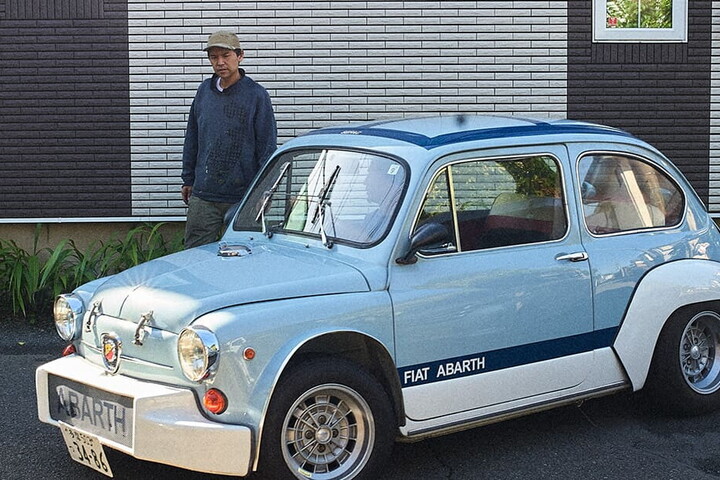
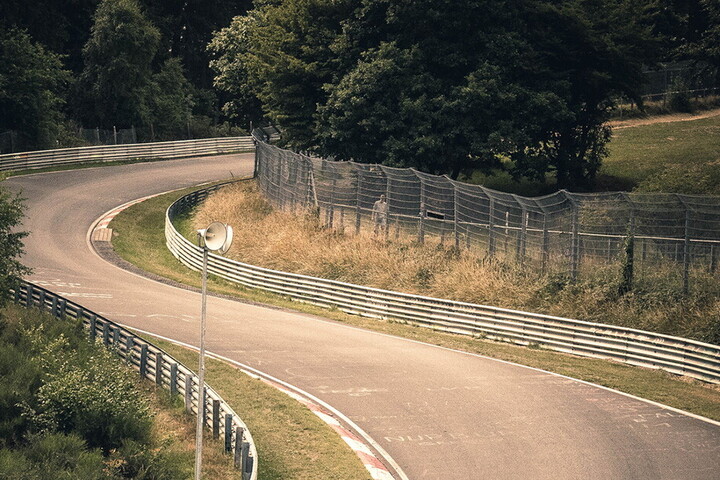
Japan's car culture is so rich and bizarre that the Japanese have invented at least a dozen words to describe its different aspects. Dajiban is a transliteration of Dodge Van and describes a subculture dedicated to kitting out and racing these cult objects. Shakotan is the art of lowering a car's suspension deliberately and exaggeratedly for reasons of aerodynamics and aesthetics. Time attack is not only the name of a competition, but now also that of the vehicle in which to take part, a car modified to complete a lap on the track as quickly as possible. VIP is an aesthetic invented in the 1980s by people wanting to avoid the attention of the authorities. Instead of driving luxurious but flashy European cars, they chose the discretion of one of the many nationally produced sedans. Kanjozoku is the pagan religion born within the Osaka Loop Line, where Honda Civics are worshipped. Itasha, blending cars and anime, is a design school that transforms a car into a cartoon character through intricate decorations made of hand drawings and LED lights. And on it goes: Kei Truck, Dekotora (if Mad Max's trucks really existed, they would look like these), Bosozoku (modifying a car for the pleasure of modification – functionality and aesthetics be damned) and Kyusha (vintage cars, restored and modified as little as possible).
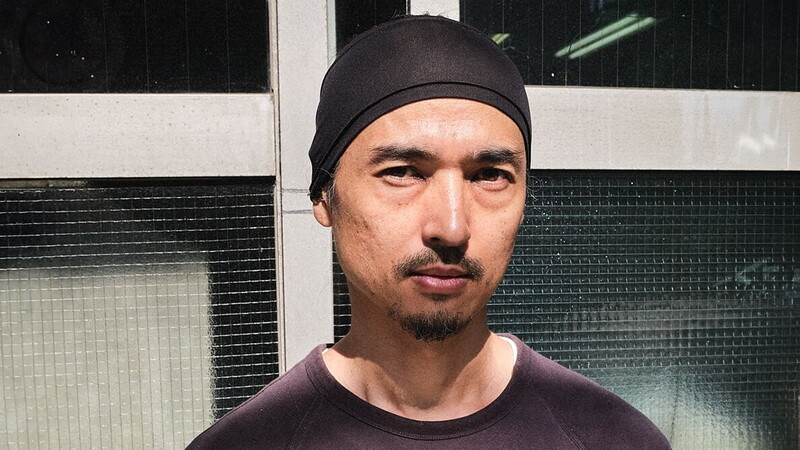
In this rich vocabulary, of which only a small part can be reported, there is also a word celebrating a shop that has become a temple over the years. This establishment is called Naito Auto Engineering, located in Higashikurume, a city in the west of the Tokyo metropolis. It is a family-run company passed from founder Shinichi Naito to his grandchildren So and Kei, and it does only one thing: repair vintage cars. But it does it so well, with such precision, attention and dedication, that the word “repair” is inadequate. What Naito Auto Engineering truly does is restore.
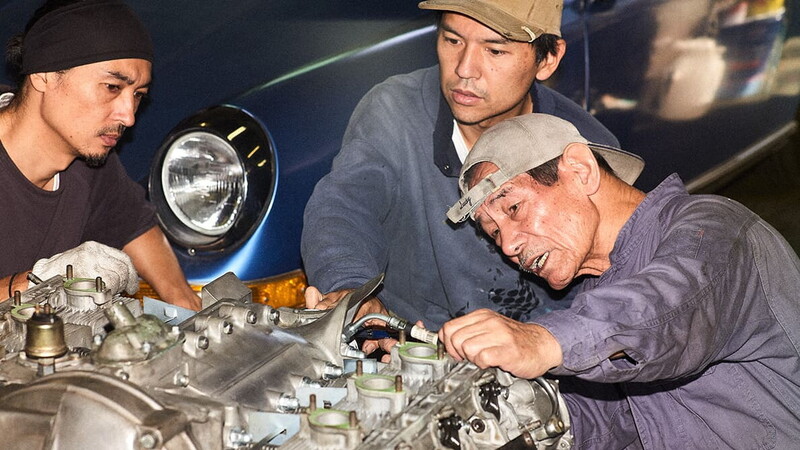
We meet So in the same place that his grandfather Shinichi and his father Masao spent their working lives: the Higashikurume workshop. A Westerner in Japan always runs the risk of falling into the trap of techno-orientalism, imagining the country as a gigantic time machine perpetually travelling towards a hyper-technological, almost cyberpunk future. Here, this is clearly not the case. The Naito Auto Engineering workshop has preserved everything possible from the “artisan workshop” opened by grandfather Shinichi in 1952. The place is a time capsule, a kind of warp in the space-time continuum where the futurism of excellence is protected by the patina of tradition.
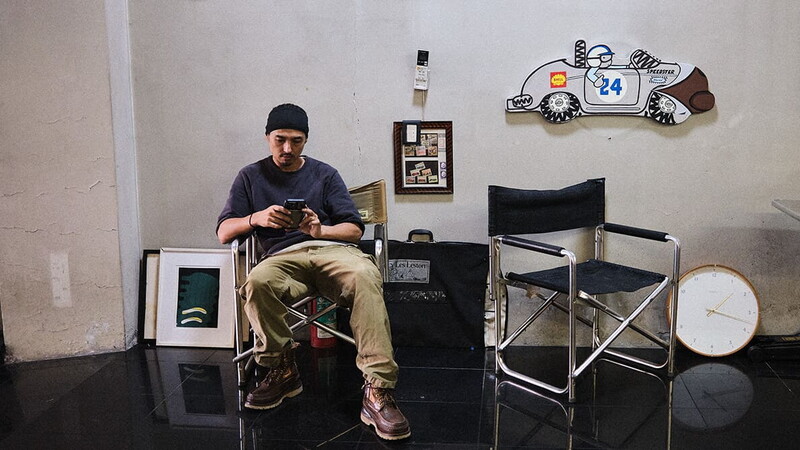
So and his brother Kei are now responsible for safeguarding this sacred place of car culture. And guard is what they do, quite literally. They have hardly changed anything in their grandfather and father's workshop, everything remains as it was and where it was. Even the work tools belong in almost the exact same positions that Shinichi first placed them in 1952. The brothers treat the place almost like the cars they restore; everything that can be preserved, must be preserved. “But we had to change the roof once,” says So with amusement. “When it rained, water would come in.” The workshop, by his own admission, is boiling hot in summer and freezing cold in winter, and for this reason they recently decided to renovate it a bit, trying to do what they do with cars: preserving it, making it a little more modern, without altering its identity. The heat and the cold, after all, are not important. In fact, they help: “In here you really learn to be stoic,” he says, joking but just a little.
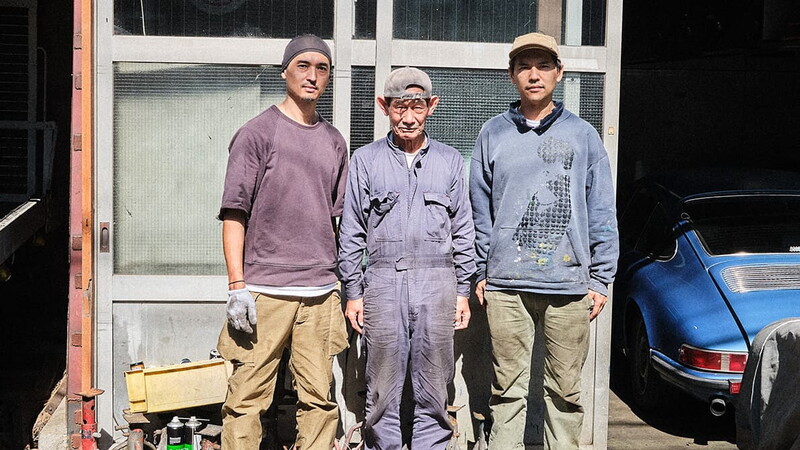
Stoic is a good adjective to describe the shop's founder, Shinichi. “He was a mechanic for military aircraft, but after World War Two ended he found himself without a job,” explains So. “The easiest thing for him to do was to start repairing machines. He was a really good mechanic and it's amazing to think that he was self-taught. He never attended an engineering school. He learned everything by himself and managed to do all this.”
Shinichi's early passion was for motorcycles – he had a BSA and a Ducati. It was when he saw the American GIs racing through the streets of Tokyo in their European sports cars – Porsche, MG, Mercedes-Benz – that he came to think of cars as the most beautiful objects in the world. And he ended up selling his motorbikes to buy a workshop.
Today, that workshop is a place of worship, but the credits must be divided between grandfather Shinichi and father Masao. It was the latter, in fact, who transformed the workshop into a company. And even more, into a brand. During the Japanese economic miracle, Masao began to make frequent trips to the United Kingdom and the United States, where trusted friends – a word that comes up often in this story – would point him towards the richest auctions and most interesting sellers. Masao, with an impeccable eye for cars and a very favourable exchange rate at the time, began importing and restoring cars in Japan. He often made profits of 200 or 300 per cent. Masao is now retired but continues to go to work every day. So and his brother learned and inherited everything from him and from grandfather Shinichi, passing the very strict training necessary to become a shokunin, a word that is impossible to translate exactly into English but whose meaning is roughly “master craftsman”. “At first, it was like being one of those sushi-master apprentices, who spend 10 years just washing dishes before they start making sushi,” says So. “For years, I was only allowed to wash the cars. But it was worth it, I learned a lot that way.”
It's such an incredible story that it's hard to believe it really happened. It sounds like a movie script, one of those classics in which the unlikely heroes end up pulling off the impossible. Indeed, the story of Naito Auto Engineering has become a film: it is appropriately titled One of One, directed by documentary filmmaker Ben Bertucci. After the release of the film, distributed on several streaming platforms in 2025, the mystique surrounding the firm has expanded, and from “Tokyo's best-kept secret” the workshop has become almost a tourist destination, attracting streams of curious visitors.
So says that one of the most annoying problems he must face and solve every day is the content creators, who climb over the entrance gate and wander around the family property in search of good material to put on social media. “You can't do that,” is the obvious feeling that a disconsolate So is forced to emphasise. Who knows what his grandfather would have done in his place: Shinichi was the archetype of a Shōwa-era Japanese man: “Very quiet and very strict with himself,” says So. “I remember as a kid he always told me, ‘I'll rest when I'm dead.' He always wanted to learn, right up to his last day.”
Not that troublesome content creators are in any way justified, but the desire to see and know more about this very unusual headquarters is understandable. The word “exclusivity” is not even remotely enough to describe the relationship between Naito Auto Engineering and its customers, which is truly two-way and equal: it's true that customers choose the workshop, but it's equally true that the workshop chooses them. In some ways, Naito Auto Engineering is reminiscent of a club that you can enter only if you are recommended by a member – and only after a very thorough background check. Obviously, So cannot name names or explain the “bureaucracy” of his work, even if he shows that he knows all the laws, rules and procedures that allow him to navigate the import-export process: he knows how to get a vintage car from Europe, the United States or Australia in the quickest time, with the least possible hassle. So has no problem admitting that “it's not like we have all these customers. We have five or six clients, excellent clients, with whom we have a very close relationship, almost as if they were friends. They know our philosophy and they understand both cars and car restoration. They know how we work.”
When talking about the market in which the family business operates, So often uses the word niche. It's true that the classic car restoration market is a niche one, but it is also worth a sizable €25 billion to €30 billion in annual revenues, according to the consultancy McKinsey. And it's not just a matter of fashion or upcycling. Vintage cars are certainly wonderful objects to show off on social media as well as in real life, but it is naive to think that buyers act only out of pleasure and/or vanity. In a world economy characterised by constant uncertainty, volatility and frequent shocks, vintage cars can be seen as an investment. McKinsey points to “sustained value increases and consumer interest” in classic cars, or “collectibles”, in the 2020s.
So is aware of this, even if he doesn't like to think of cars as fashion statements or as investments, limited to their market value and deprived of their function: “A car is made to be driven, otherwise it breaks down,” he says. “Although, of course, you have to be careful when driving the cars we work on, because damaging them is like damaging a Picasso.” The other thing So knows well is that if he were to expand the boundaries of his business, if he were to start multiplying and then raising the volume of his work, Naito Auto Engineering would continue to exist but would cease to be what it is. “Stress doesn't go well with our work,” he explains. “We don't want our company to get bigger, then bigger again and then even bigger. We want to work with the right people and maintain our quality standards. If I had 100 customers, or even 50, I wouldn't be able to manage. There are only a few cars in our garage.”
The workshop's customers buy all the time necessary for So and Kei to do their job, take care of the smallest detail, and satisfy every whim. “It's a great challenge for both me and my brother because we have to be engineers, but also workers, painters and salespeople. We have to do everything ourselves and it's hard, but that's how we've kept this company going for 70 years.” So explains that his customers understand this. They participate in the restoration process, which is essentially a creative process, but they don't get in the way. They observe a lot and sometimes comment on it. So likes to listen to his customers' opinions. He says that it makes everything easier, and he works much better, because what he provides is, in essence, a service, and in the service industry, the only way to avoid having to run for cover later is to listen first. “And that's how I've improved my tastes,” he says.
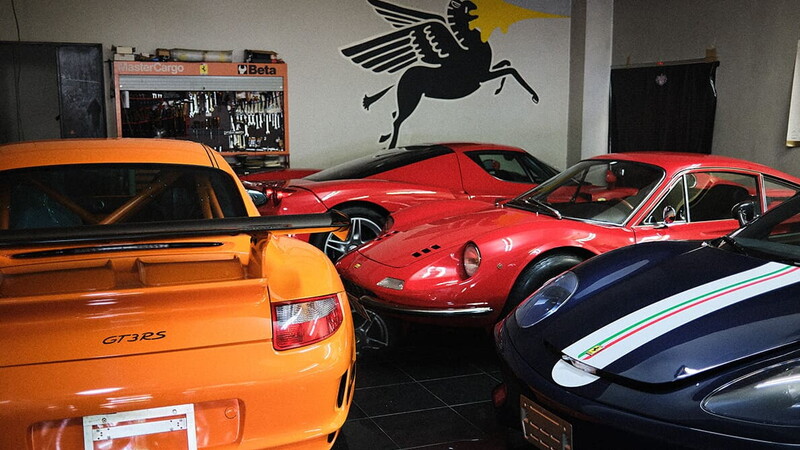
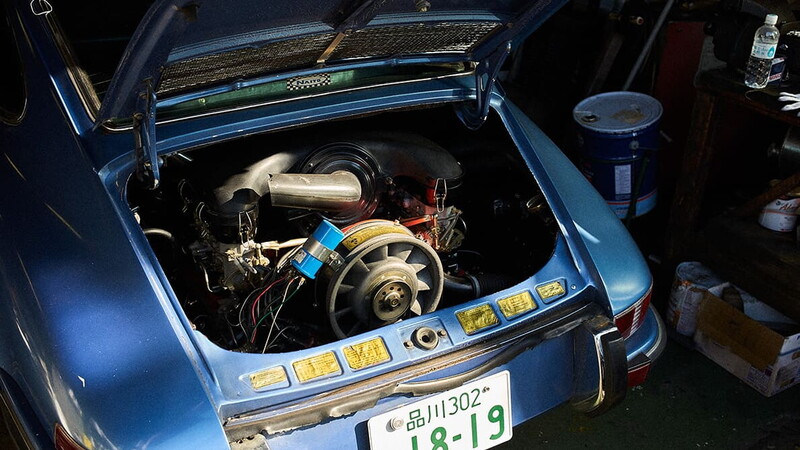
Of course, there are subtleties in his work that are not easy to explain even to the most attentive and receptive of customers. For example, the difference between a restored and a refurbished car. To explain it, So starts talking about painting, one of the many things he has had to become an expert in since he decided to start working for the family business. “For someone who restores a car, it's much easier to remove the original paint and apply a new one. There's nothing wrong with that, it's a job that gives good results. But the moment you remove the original paint, the original car ceases to exist. That's why we try in every way not to replace anything, but to restore everything.” When this involves the kind of cars that the Naito brothers work on – just to give you an idea, here are a few examples: Ferrari 250 LM, Ferrari F50, Ferrari Enzo, Porsche 907, Porsche 911 R, Porsche 356 – this radicalism can turn into a very difficult challenge. On this topic, So has a wealth of anecdotes, but there is one customer and one car that he considers the most difficult of his career: “A few years ago, I went to Monterey, California, because one of my clients had just bought a Porsche 356 Speedster at an auction. It was a wreck. I'll just say that it didn't even have an engine, and the customer told me that I had to “bring it back to life”. It was a real challenge. It took me 10 months to finish the job, but I managed to keep the original paintwork and restore the interior. And in the end, we were all happy and content.”
But what happens when a part, a piece of the car no longer works or, as in the case of the Porsche 356 Speedster, is completely missing, and you can't do anything but change it? “Fortunately, we keep everything, so we have a lot of spare parts. And then there are suppliers we can contact to send us original parts to use in the restoration.” But as time goes by, it becomes increasingly difficult to remain faithful to this creed of literal and figurative authenticity. For example, using a 3D printer to make replacement parts is now common practice among those who do So's job. But it always comes back to the same point: nobody does what Naito Auto Engineering does, the way Naito Auto Engineering does it. So is honest and aware, stubborn and resigned about 3D printers: “Sooner or later we will have to compromise, but not now.” Compromise is a word that often comes to mind when So thinks about the future: “It's a very difficult thought for me to formulate. Both my father and my grandfather were geniuses, both in restoration and in sales. [My brother and I] want to run the company in the same way, we want to respect their legacy, but we must also find a path that is our own. Both Kei and I speak English, but Dad and Grandpa only spoke Japanese. Perhaps the solution for us is to start thinking about doing things abroad.”
It's at this point, when So tries to imagine the future, that the word he has used several times to tell the story of his family and his company, his father and his grandfather, returns: “friends”. “If we want to make it,” he says, “we will need good friends to help us.”
Credits:
Photo: Federico Radaelli
Art Direction: Elena Papageorghiou