In conversation with Felix Lowe
When Pascal Gabriel set off from his home in Provence on a ride in early July 2017, he had no intention of climbing Mont Ventoux. Returning over four hours and 90 kilometres later, he consulted the data from his bike computer and saw that he'd managed to scale the “Giant of Provence” in a personal best time. Little did he know that this ride – the feelings and numbers behind it – would form the basis of an emotive concept album some years later.
“I had a bad knee, and I didn't have a gilet,” Gabriel recalls about that day, a nod to the chilly mistral gales that can buffet the exposed summit of a mountain whose name derives from the French word for windy – venteux. “I hadn't planned to do it at all, and I certainly had not planned to make an album out of it.”
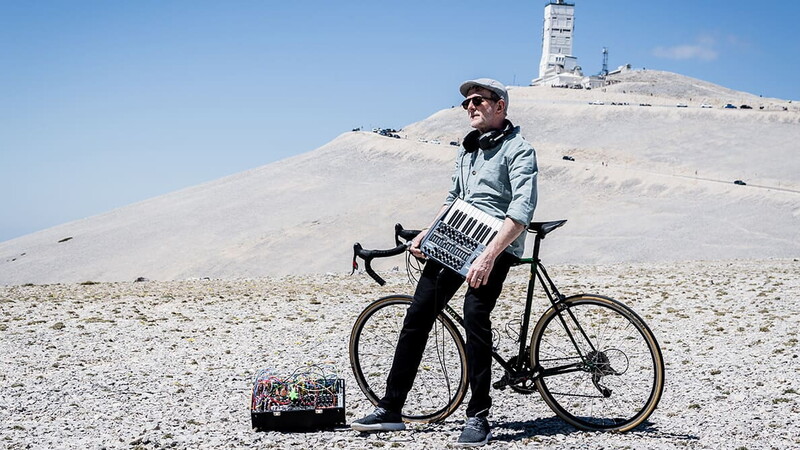
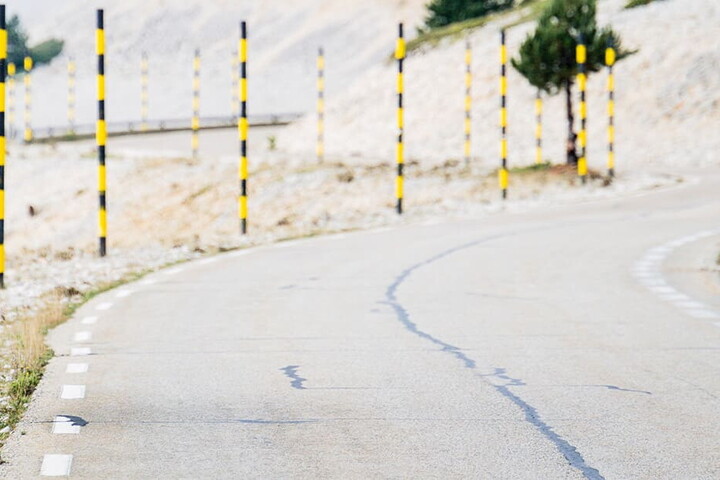
But after pedalling through the picturesque local vineyards, Gabriel reached the small town of Bédoin, at the foot of Mont Ventoux, had a change of heart and began the daunting 21-kilometre climb. “I thought I'd just go up to Chalet Reynard,” he says, referencing the restaurant above the treeline at the foot of the ski resort. On he rode, testing his fresh legs during the bucolic opening section where the gentle gradient is “not terribly hard”. This, in time, would form the basis of the first of three movements in an album still a long way from inception.
The essence of the second movement would be found in the “very unmotivating and unpleasant” part of the climb that emerges in the dense, claustrophobic woodland after the “sharp turn to the left, at Saint-Estève”. It's here, where the road straightens and the gradient ramps up, that “the most introspective and meditative moment” of the climb plays out. Although Gabriel says there is usually “less distraction in your struggling” during this “hellish” phase, on this day, the cloying presence of another rider fuelled him forward.
“I got a little bit angry in the woods,” he admits, citing a heavy-breathing German who kept overtaking him before stopping at the side of the road. “I'm not being judgemental, but he kind of wound me up a bit.” When this happened for a third time, Gabriel thought enough was enough and decided to lose him. “So I went out of my comfort zone because I just wanted him gone.”
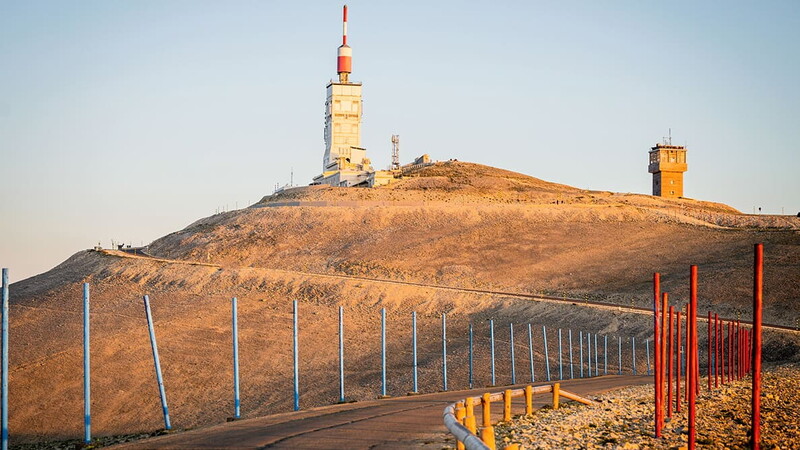
Spurred on by this sideshow – “anger is energy,” he muses – Gabriel reached Chalet Reynard, but still refused to throw in the towel. “I saw that I'd done a really good time, so I thought I might as well go to the top.” He could now see the weather station at the summit as he slowly zigzagged up the scree-lined road, the air thinning with every pedal stroke. But the job was far from over.
“You're out of the woods, but you're back in the sun, you're hot and tired. It's still really hard in places, [with a gradient of] between five and 12%, and you never seem to get nearer the summit,” he says. It's this lunar landscape that has earned Mont Ventoux the nickname of “Bald Mountain”. And while some of cycling's biggest stars have triumphed on its brow – including Eddy Merckx, Marco Pantani and Chris Froome – it also tragically claimed the life of Tom Simpson during the 1967 Tour de France.
For Gabriel, there was no fanfare at the top. He simply took in the view, turned around, then plunged back down to Bédoin. His time of one hour, 46 minutes and 43 seconds remains his fastest ascent of an iconic mountain that makes huge demands of any rider's body, spirit and mind. And when the idea came to him, in 2019, to integrate his biometric data from that ascent into his music, it would provide not only the name, but also the beats, rhythms and inspiration behind this beautifully crafted articulation of the experience of riding up Mont Ventoux.
“It's a symphonic work for a mythical mountain that builds on recurrent themes,” Gabriel says of 1:46:43 – The Ventoux Trilogy, his immersive auricular exploration of an uphill struggle unlike any other.
FL - When did the idea come to you for The Ventoux Trilogy?
PG - After 35 years doing mainstream pop, I wanted to experiment with weird stuff. I'd been a backroom boy – producing and writing with artists since the mid-80s – and it left me a bit frustrated. So I set up Stubbleman and wrote an album inspired by a coast-to-coast road trip across the United States. For my second album, it was always my intention to marry my love of cycling and music. I wanted to find a way of inspiring musical elements from the feelings you get from a long, hard ride. At first, I did some outings on Mont Ventoux with a Go-Pro. Then, on the playback, I put certain notes when I rode past a tree or something man-made. But it didn't quite work.
FL - When did the breakthrough come?
PG - I came across some software called Photosounder, which transfers visual artefacts into musical drones. I thought I could use my data from my bike computer – the heartrate, moving speed, cadence and power. So I individualised each of them, fed them into Photosounder for one hour, 46 minutes, 43 seconds, and played around with the results. I chose my best time on the Ventoux simply because I'd have to write less music!
FL - How did you integrate the sensations behind the numbers during the creative process?
PG - Initially, it was quite a good, interesting technical experiment – but it didn't reflect the emotional element of what I wanted to create. I remembered meeting Tom Simpson's daughter, Joanne, at a gathering for the 50th anniversary of his death. We had all ridden to the top of the Ventoux. Afterwards, she gave a speech at his memorial stone and said: “I really wanted to do the last 800 metres that my dad never did, see the views that he never saw.” It was really moving. Recalling this made me think how my music had to reflect the emotion of the climb.
I went back to the drawing board with those four [musical] drones and basically experimented on the piano and synths to see what stuck. Eventually, from one long piece I had 18 pieces spread across three movements. The last song on the album – An Everlasting Universe of Things – is dedicated to Tom. Every time I pass the memorial, I tip my virtual cap to him. I always imagine that his shadow – his angel, if you like – picks me up, and we do the last few hundred metres together. That's a wonderful thought.
FL - Is there a precise moment in the song that corresponds to the moment you passed Simpson's memorial?
PG - There is, actually – when a sustained counterpoint melody cuts through the percussion. I played it on the theremin, an ethereal instrument that you play without touching – quite magical and fleeting. I previewed early composition sketches of the piece at the London Jazz Festival and people started crying. I hadn't realised it would be so powerful.
FL - Why Mont Ventoux? What makes it so special?
PG - It's a solitary mountain in the middle of a plain with nothing touching it for 200 kilometres. Through the centuries it's become something of a demi-god for the locals. There's something spiritual about the climb that I haven't experienced on any other mountain. It's deeper and more magical. The song On The Edge of Presence captures the point when you feel so small compared to the great nature of the Ventoux. You're suddenly non-existent – on the edge of being at all – because you are surrounded by such magnificence.

FL - Why is cycling so important to you?
PG - I got into cycling 15 years ago and now my wife and I own 17 bikes between us! Cycling is a wonderful sport. You can ride on the playgrounds of the great, on their hallowed ground. Every time I do the Ventoux, I'm reminded that Pantani was there, Merckx was there, all the greats were there, and you do it for free. You experience the same roads, the same pain as the greats – albeit a little bit slower.
FL - How important was it to get validation from the cycling community?
PG - I tried to create a completely personal, selfish work. I did it to please myself and if people love it, that's brilliant – even better. My intention was never to sell a million copies – rather, to make an album that I was happy with. But I was always hoping that the cycling community would get it. Thankfully, the reaction has been fantastic. I always wanted other riders to say, “I get this, I'm there, halfway up the Ventoux.”
You can listen to The Ventoux Trilogy as a superficial piece of music while you're cooking, but you can also sit down in your favourite chair, put the headphones on, and you'll hear a lot more details and discover other parts. Things change very subtly over a long period of time. And you'll be, “Oh, how did I get here? I didn't hear that coming.” That's the idea, really – to have a sonic trip, a journey, that transports you there.
FL - Is your love of cycling enhanced by being a musician?
PG - Yes, there is something musical about the cross-rhythms and repetition of cycling, but the zen and meditative aspect is also quite important. I've often resolved musical issues from the studio while I'm riding. I'll have the rhythm of the track in my head, you know, kind of vaguely merging with the cadence or with my speed or heart rate, and I'll think, “Oh, yeah, maybe if I do that, and I could just cut a beat there…”
FL - Could going down a mountain ever elicit the same feelings for you as going up?
PG - No, because descents just stress me out. I'm on the brakes, trying to keep relaxed and whistling to myself so I stay soft and don't crash. I also have no musical ideas when I descend. But when you dig deep physically on a climb, emotions take over. You stop worrying about all your problems. It releases emotional content that I keep buried deep. And I think the Ventoux draws it out more than other climbs.
FL - Cycling and Mont Ventoux are at the core of the album. But what else is The Ventoux Trilogy about?
PG - It's about the human condition. How efforts affect your feelings, and how nature and effort combine. It's about life and death, as well. It's one of those mountains where weird stuff happens. Tom Simpson died on it, Froome had to run up it [after crashing]… it's so tough and people often misjudge it.
There's a part of the climb before you get to Chalet Reynard that, for me, is always the hardest moment. It's still quite steep, it's clearing up a little, but you are really alone. That's when I always think of friends and family members who have died. I don't know why. It's odd. That's what [the song] Alone for Nine Minutes is really about. It's about feeling a little bit alone in the world. Why am I here? Where are they? It's quite a sad piece. My third album, Symphony for the Departed, will expand on this. The pieces are based on cities, villages or places that I associate with people that I have known who are no longer here.
FL - Would you recommend listening to The Ventoux Trilogy while in the saddle?
PG - I never listen to music when I cycle. I like to be aware of the birds, the wind, the sound of your wheels on the tarmac. To me, that's part of the beautiful experience of cycling. I like to hear my heart and breathing – it's all part of the vibe. Music is to be experienced afterwards, as a memory – or even before. A guy sent me an email and said, “Next week I'm having open-heart surgery, and when I come out, I want to do the Ventoux, and this record is really taking me there.” As a creator of music, that kind of payback is the best. You work in a void in your little studio for two years to do an album – then you influence someone like this, you give them hope to just go out and do that thing.
Photo: James Startt