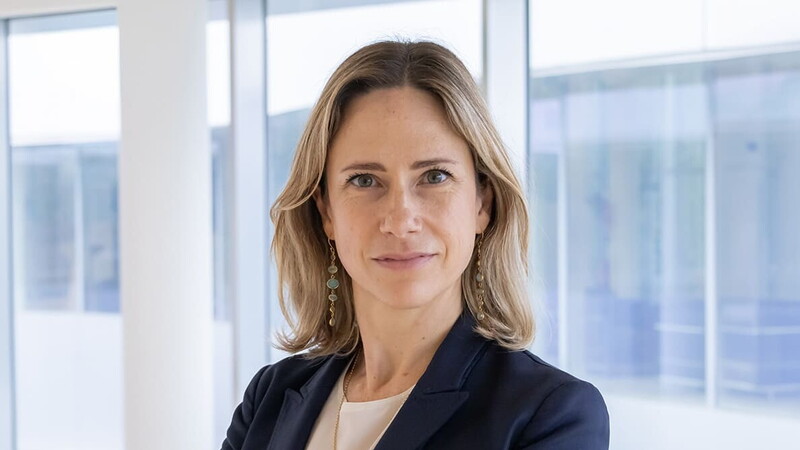
«Inclusive leaders do not exist. A good leader, by definition, is someone who leads everyone — men and women alike — bringing the whole team along and valuing the skills, experiences and individuality of those who work for him or her». These are the words of Clio Gressani, Executive Fellow in the Strategy and Operations area at SDA Bocconi School of Management, who in her webinar “The Power of Allyship” highlights the importance of gender allyship. This is not merely an abstract commitment to equality or equal opportunities, but a set of tangible, observable actions designed to reduce and disrupt asymmetries and biases linked to gender.
How can allyship move from an abstract principle to a concrete responsibility in everyday behaviour?
«Most men say they support gender allyship, but what matters is how this intention — this ethical, values based stance — translates into daily behaviour. International research shows that some men are indeed recognised by women for their active allyship, but they are still few. This gap between intention and action emerges in day to day interactions, and it depends largely on men's ability to notice unequal behaviour, spot issues, and understand how to address them».
What are the “invisible frictions” between men and women that typically surface within organisations, and what impact do they have?
«I find the idea of “invisible frictions” very powerful, because it is often the small, everyday gestures — making a joke, cutting a colleague off mid sentence — that have a significant impact on the confidence, credibility and psychological safety of those on the receiving end. Meanwhile, those who act in this way often perceive their behaviour as trivial.
Research shows that women are interrupted more often and are more frequently judged on style than on substance or performance. This happens because leadership is still associated with traits linked to traditional masculinity, while women are expected to embody caregiving roles. Yet when a woman demonstrates the same leadership traits, she is often considered too assertive.
How can women share their views — or their vision — if they are consistently interrupted, if their ideas are questioned, or if credit is given to someone else? It is an unavoidable question».
How do these frictions influence engagement, performance and innovation?
«All these behaviours have a direct effect on team and corporate performance. When certain perspectives are dismissed, organisations lose talent and miss opportunities to co create, innovate and develop new solutions. When we discuss allyship, we are also talking about team performance — about the ability to ensure that diverse voices are equally represented and equally empowered».
In this regard, what are the essential elements of a strong team built on gender allyship?
«A study by Anita Woolley and her colleagues at MIT identifies three core elements of highly effective teams. The first is “airtime”: the space available for each member to contribute. When only one voice dominates, collective intelligence drops dramatically — even if that person is the most knowledgeable. It is not about giving everyone the same amount of time, but about allowing each person to speak in the way that suits them best. The second is social sensitivity — the ability to read the emotions of others. This is crucial in allyship because people often do not realise when a comment has hurt someone, or when a colleague feels excluded. Social sensitivity enables deeper, more human support. The third pillar is psychological safety, the sense that everyone can speak up and contribute without fear».
What role do leaders and organisations play in making allyship a structural, measurable and widespread practice?
«Our cognitive system is driven by biases. We receive around 11 million bits of information per second, but consciously process only around 40; the rest is handled by the unconscious mind.
Instead of trying to change our subconscious associations, it is far more effective to remove bias from systems. This means creating structures that counterbalance unconscious prejudice: rewriting team norms to ensure that everyone can contribute ideas and feedback; amplifying colleagues' voices; ensuring that all feel comfortable speaking up.
Another strategy is the rotation of “non promotable tasks” — activities that do not support career progression, such as taking meeting minutes. These tasks are often given to women regardless of seniority. Rotating them helps challenge this pattern and also improves the distribution of “promotable tasks”, supporting fairer workload allocation.
Human Resources plays a critical role: data analysis can reveal inequities in recruitment, promotion and access to training, enabling targeted corrections.
To foster long-term wellbeing, teams can also rethink their daily routines, balancing meetings, operational work and social interactions.
Senior male leaders have a particularly important role: they must champion inclusive behaviour, for example by openly taking time off to care for children. When a manager states that he is taking paternity leave, it helps normalise less rigid gender roles, reducing the fear of judgement that still prevents many men from embracing these responsibilities».
What cultural (and other) barriers still hinder allyship, and how can they be overcome?
«I my opinion the most significant barrier is not ideological. The real obstacle is the fear of making a mistake — of being seen as someone who calls out sexist behaviour and therefore risks creating tension within the team. In recent decades, people have become wary of being labelled either the feminist or the sexist of the group, and many prefer not to speak up at all.
Psychological safety is the antidote. Rather than branding a comment as sexist, it can be more constructive to give direct but non judgemental feedback, trying to understand the intention behind the remark and opening a dialogue. It is about developing “situational awareness”: helping people understand the impact of their words and how to choose them wisely, instead of listing what cannot be said. Processes, norms and systems help fill the gaps — because when a gap exists, bias steps in, and patterns of inequality are more easily perpetuated».