In conversation with Shane Richmond
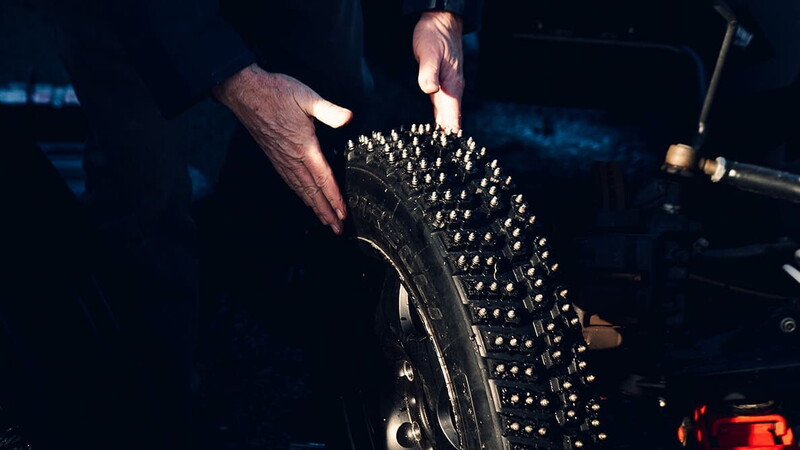
Finding a spiked tyre in your father's garage wouldn't lead most people to launch a global motor-racing brand. If your surname is Porsche, however, and your father chairs the company that bears the family name, then cars and racing are in your blood. So when Ferdi Porsche asked his father, Wolfgang, about the tyre, he learned that his family once had close ties to an annual car race on a frozen lake in Zell am See, Austria.
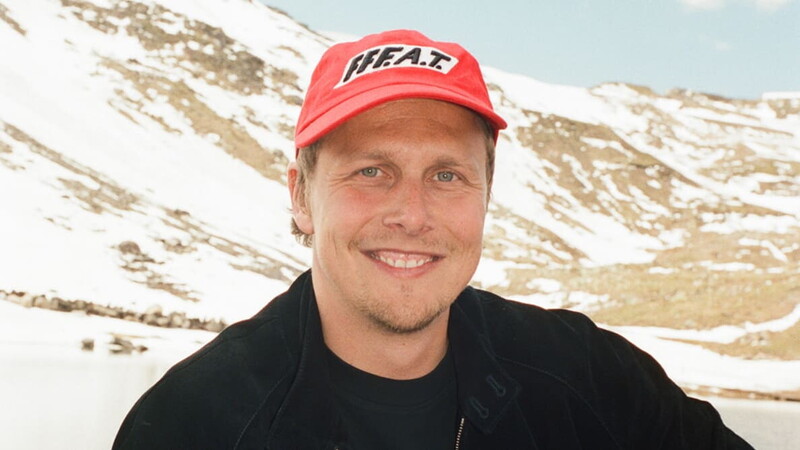
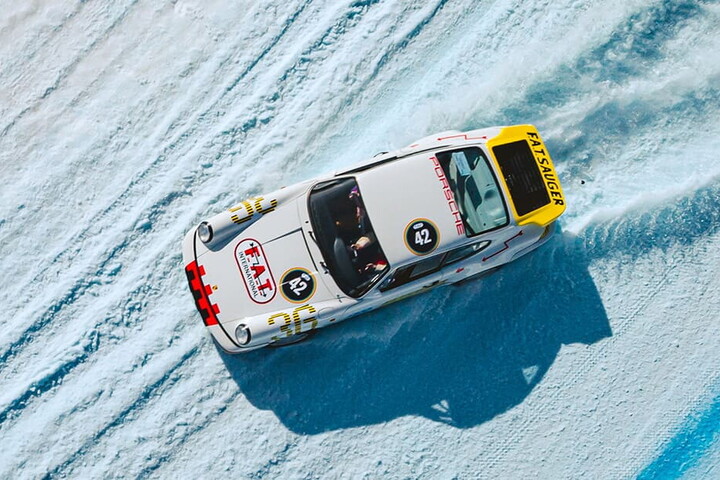
Ferdi was 26 and training as an architect at the time, keen to forge his own path away from the world of cars. But the ice race fired his imagination and led him to revive the tradition, staging a new ice race for cars at a disused airfield outside Zell am See. Enthusiasts came from all over the world and have now raced the circuit in everything from vintage racers to Formula 1 cars.
Today, the project stretches far beyond the Alps. Under the banner F.A.T. International, Ferdi has created a global team that hosts races in Austria and the United States, produces its own clothing and supports a grassroots karting league designed to open racing to more young people. His vision encompasses heritage, design and, most of all, fun.
When did you first try ice-driving yourself?
My first time doing it was a boys' trip to Finland with my dad and brother. It was a birthday present for my brother, but I think my dad also wanted to teach us how to drive safely on ice. We drove four-wheel drives and two-wheel drives and had the best three days, ripping cars around. It was one of the nicest trips ever and that's probably why I jumped at this opportunity of the ice race, because I already knew the fun of it.
The original Zell am See races stopped long before you were born. What did you learn about that period and your family's role in it?
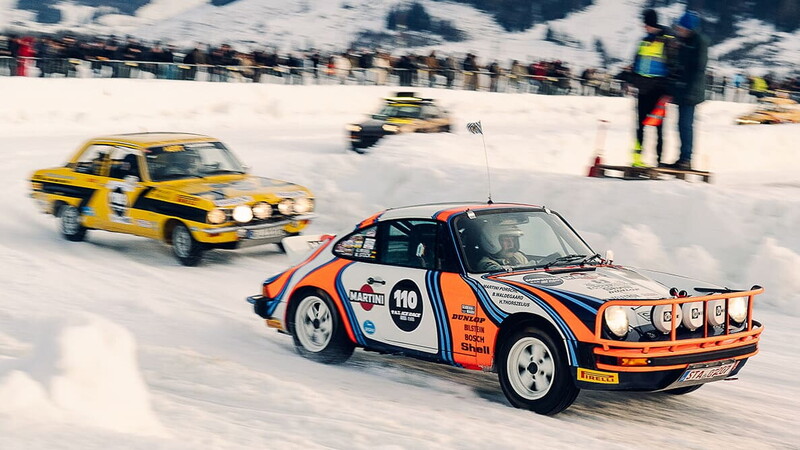
The race was first held in 1952 in honour of my great-grandfather, who was already seen as a pioneer in the automotive world. My family had a second home in Zell Am See, so they were involved, but my father never went because it was in school term time. In the 1950s and 60s, 10,000 people gathered every year on the frozen lake to watch Porsche 550s, 356s, Volkswagen Beetles and other cars towing skiers behind them. If the lake wasn't frozen, they would go to the airfield where we do it now. It was a crazy, dangerous, exciting thing but it disappeared in 1974.
You launched your ice race in 2019 and describe the event as prioritising “fun over speed”. What makes it special?
It's hard to make ice racing competitive because the track changes with the temperature through the day. You're not super-fast on the ice, you are dancing over it, the car is never stable. It can never be the fairest event, but that's also the beauty of it, so that's why I say it is fun over speed.
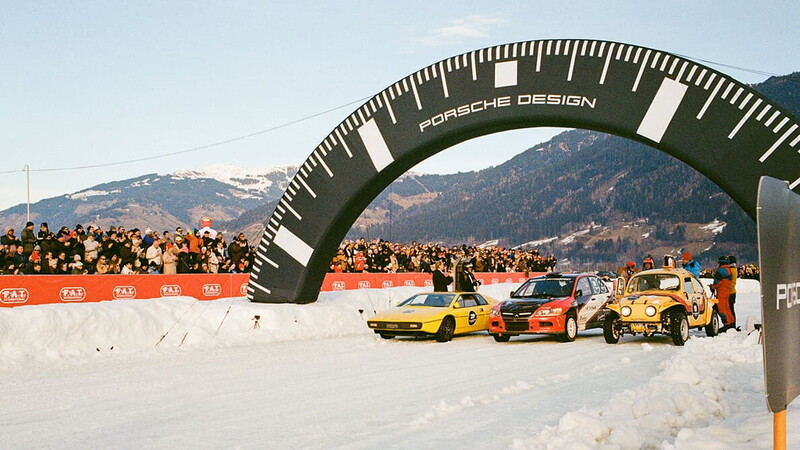
We try to have as many different cars as possible. We've had everything from a Trabant to Max Verstappen in his Red Bull F1 car, so it covers the whole automotive range. It's still a competition, but I think it's about using the car as a conversation starter and then building something fun, exciting and loud around it, so it's more of a festival than a race. It's about getting people into it who are maybe not excited about cars yet and doing that through culture, music, arts, just trying do a young take on a car event.
How can people take part?
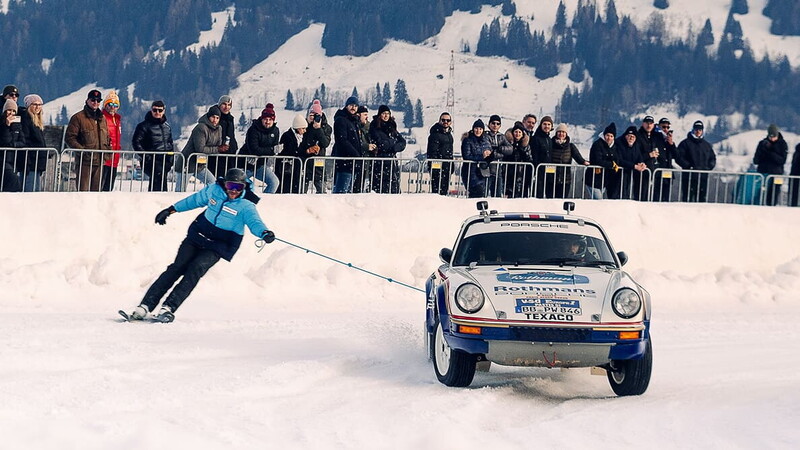
Anyone can apply with any car. We select the best or coolest cars each year, around 120 across different classes: four-wheel drive, two-wheel drive, historic cars and buggies. There's even a skijöring class, where a skier is towed behind a car. Speeds are moderate, maybe 90 to 100 kph, and the barriers are made of snow. The best thing is the mix: complete newcomers can line up alongside seasoned racers and have a chance.
Can you be “good” at ice-racing?
I think it's a matter of training. I can only tell from my own experience and I have got a lot better over the past few years. It is a talent as well though – we had [F1 driver] Valtteri Bottas on the ice, I was next to him in the car, and it took him half a lap to figure out how to do it and find the perfect line!
How did F.A.T. International come about?
When Covid hit, I had the chance to think about what we were doing more strategically. I wanted to create something that would allow me to do more than just ice-race. The first thing I did was look at all the old Porsche Le Mans cars because I wanted to find something with heritage to build out this idea I had in my mind. I stumbled across F.A.T. International, a logistics company that didn't exist anymore. They were truckers who sponsored Porsche Le Mans cars and won it twice. It's the underdog story. And that encapsulated what I wanted for the brand. Two years later I launched it and it's a collection of different pieces that together create a version of what I think the car world should be.
You've expanded to the US and built a global following. Why does it resonate so widely?
Partly because the car scene in the US is so creative, but also because people everywhere want experiences that feel authentic. The first year we ran the event in Austria, I was amazed by how many people turned up. Now we have one race in Austria and another in Big Sky, Montana. Competitors come from all over; it's become a community stretching across continents, united by the idea that driving can be playful again.
F.A.T. International has grown far beyond the ice race. Tell us about the karting league.
Yes, that's one of the projects I'm most excited about. Traditional karting is incredibly expensive: families can spend up to €250,000 a season to have their 15-year-old compete. This is a joint venture with Rob Smedley [a former engineer at Ferrari and Williams], who had the idea of building a talent-based system, an arrive-and-drive karting league that cuts the cost by 96 per cent. A season now costs around €5,000. The idea is to make racing accessible, as normal a choice for young people as piano lessons. It's merit-based: every driver gets a randomly assigned electric kart, so the focus is on pure talent. We can adjust the power, so it's easier for younger children to learn to drive. Our plan is for the best drivers to graduate to higher levels, and the goal is to take them all the way to Formula 4 in our own team. It's about giving young people a path that hasn't existed before.
Attention to detail is part of the Porsche DNA. How does that show up in what you do?
One reason motorsports used to be so popular is that everything looked good. But if you look at motorsport today, everything looks bad. Not a single livery looks nice, and every car has 300,000 logos slapped on it. We want to bring attention back to graphic design. Our endurance car for the World Endurance Championship is white with a neon-green wing and a single red logo. Although we've still ended up with some stickers that are not exactly where we designed them to be, so in the end maybe it's more about the detail in the engineering than the stickers on the car!
Photo Credits: Car&Vintage