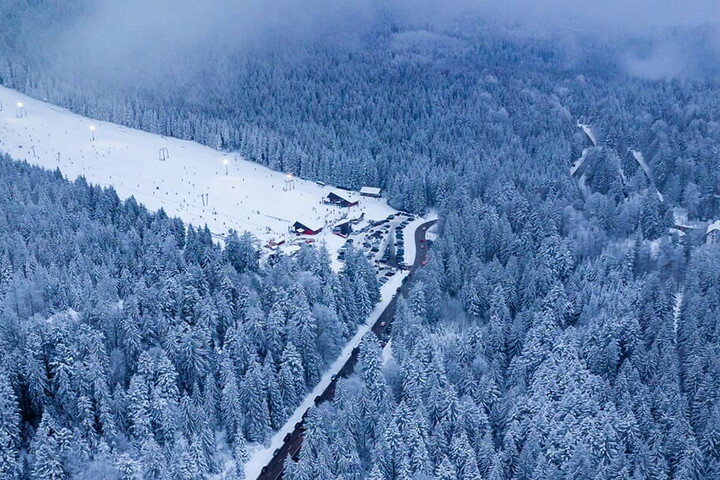
There is a place where reality and fantasy blur, where forest legends and fairy-tale worlds mingle to create a truly unique atmosphere. This is the Black Forest (Schwarzwald in German), a mountainous region in South-Western Germany renowned for its dense evergreen forests and picturesque villages, as well as its spa towns and the cuckoo clocks that have been produced here since the 18th Century. Extending approximately 150 km in length and 50 km in width along the border with France and Switzerland, it is an ideal destination in every season. However, in winter, it transforms into a snowy paradise perfect for winter sports enthusiasts, who can alternate their activity with pleasant wellness sessions in the famous resort of Baden-Baden.
Imagining an ideal four-wheeled itinerary crossing the region from north to south until reaching Lake Constance, the recommendation is to start in Frankfurt. This city of art is famous for St Bartholomew's Cathedral, which features a characteristic red hue as it was built from sandstone; its 96-metre high tower offers an incredible panorama. From here, a car can be easily rented, serving as the privileged means to explore the area through a slow journey where the rhythm of the curves and valleys allows one to fully perceive the silence, lights, and scents of the season.
Taking the A5 and driving South for an hour, the first stop is Heidelberg, home to the first German university founded in 1386. Situated in the Neckar River valley, the fascinating ruins of its castle make it one of the most beautiful and romantic cities in Germany. Nearby, one can find the longest pedestrian street in the country, the Hauptstrasse, which stretches for almost two kilometres, connecting the modern core to the ancient one and ending at the Karlstor, the city gate. Continuing for another hour's drive, you arrive at the pearl of the Black Forest: the town of Baden-Baden. This renowned spa resort was once the haunt of kings, princesses, and illustrious figures who came to enjoy the therapeutic properties of its waters, which were appreciated as far back as Roman times. A favourite holiday spot in Belle Époque Europe, as revealed by the Art Nouveau style of its villas, it still features ancient Roman baths, including the Caracalla Therme, which has become a luxurious wellness centre. A visit to nearby traditional villages is essential, such as Baiersbronn, a centre of gastronomic excellence; Freudenstadt, famous for its market; and Alpirsbach with its abbey, all nestled within the hilly and wooded landscape of the area. Also notable for their refined interiors are the former monastery of St Blasien, as well as the abbeys of Sankt Trudpert, Sankt Peter and Sankt Märgen.
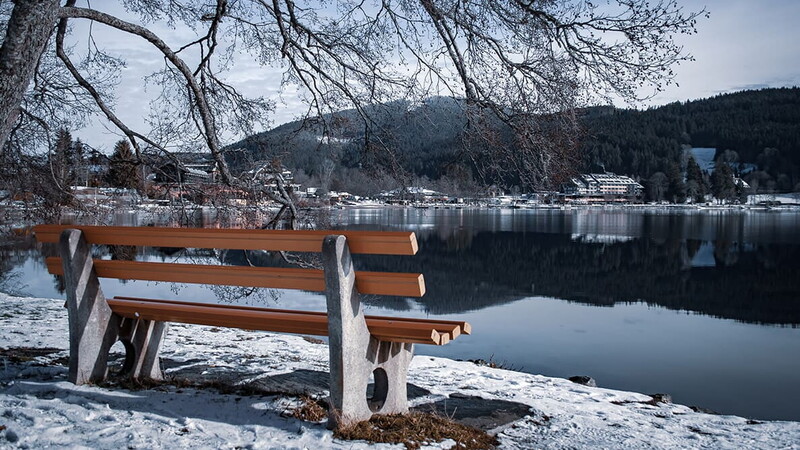
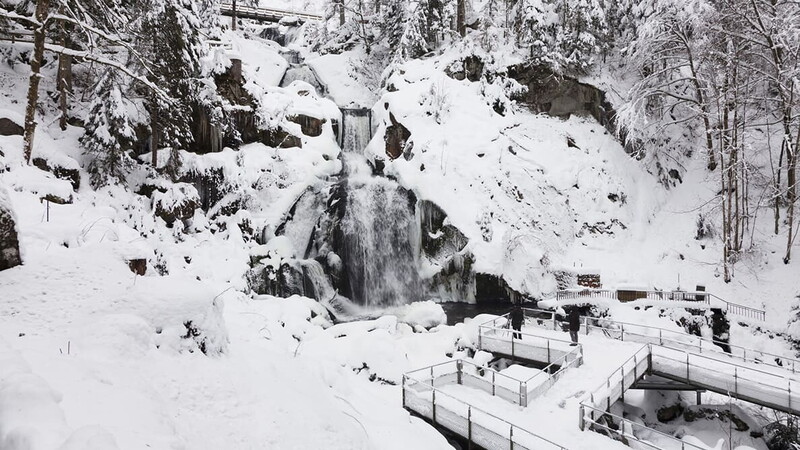
Baden-Baden is a border city; therefore, by taking the A35, one can easily reach Strasbourg, France, in 45 minutes. Its characteristic historic centre, with half-timbered wooden houses, has been declared a UNESCO World Heritage site After a stop in the Alsatian city, set off again on the D415 towards Freiburg, back in Germany. This is a small and welcoming town on the edge of the Black Forest, famous for its cathedral, the most imposing building, and its small water canals that run through the centre. The journey continues with a stop at one of the region's most important glacial lakes: Lake Titisee. In winter, it transforms into an expanse of ice that is even firm enough to walk upon. Alternatively, one can follow various nearby mountain trails for Nordic walking. Here, the driving experience is truly evocative amongst the fir forests that are blanketed in snow during the winter season. South of Lake Titisee lies Lake Schluchsee, the largest artificial reservoir in the Black Forest and also the highest, at an altitude of 930 metres. Approximately 45 minutes away by car, you can visit Triberg, a quiet town located in Baden-Württemberg, famous for both its waterfalls and its cuckoo clocks. The Triberg waterfalls are among the highest in Germany, with a drop of 163 metres between 711 and 872 metres above sea level. In the centre of Triberg, right next to the falls, is the Schwarzwald Museum, featuring an extraordinary collection of historic cuckoo clocks.
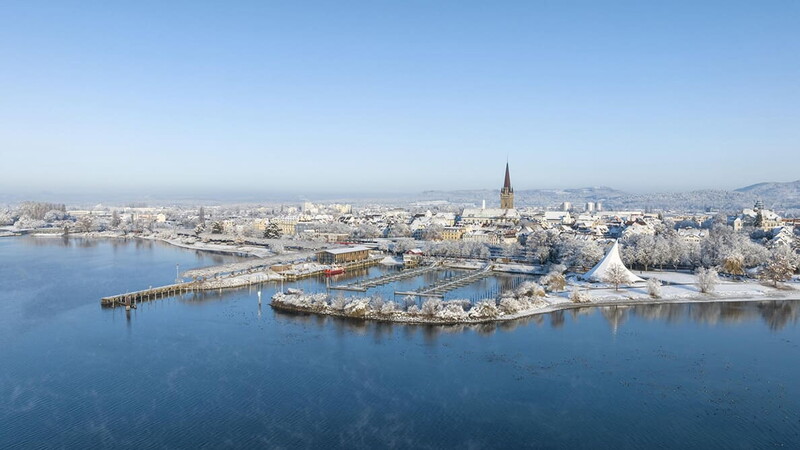
Along the road leading to Lake Constance, you will encounter the elegant village of Meersburg. Perched on a hill, it preserves the oldest inhabited castle in Germany, a Mediaeval fortress dating back to the 7th Century. After passing the town, you reach the shores of the lake, known as the "Swabian Sea" due to its vast size. It is the third largest lake in Central Europe and is particularly striking as it is surrounded by mountains and vineyards. By car, you can skirt its perimeter to discover coastal towns with Mediaeval and Baroque atmospheres, such as Constance and Lindau. It is here, along the shores of the lake, that this evocative journey through the heart of Southern Germany comes to a close.