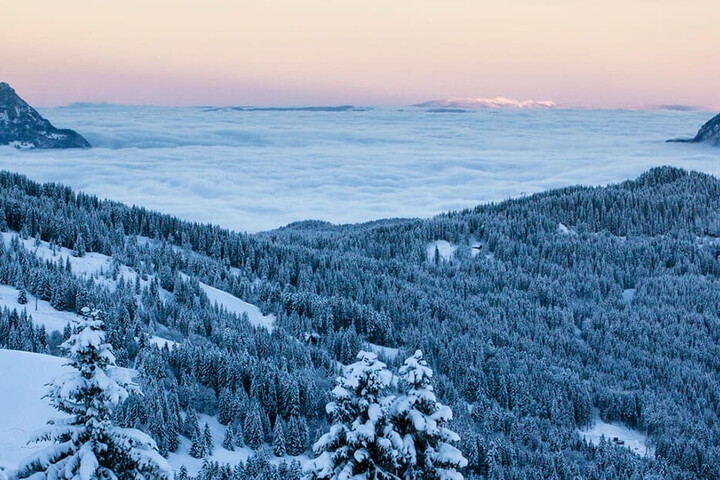
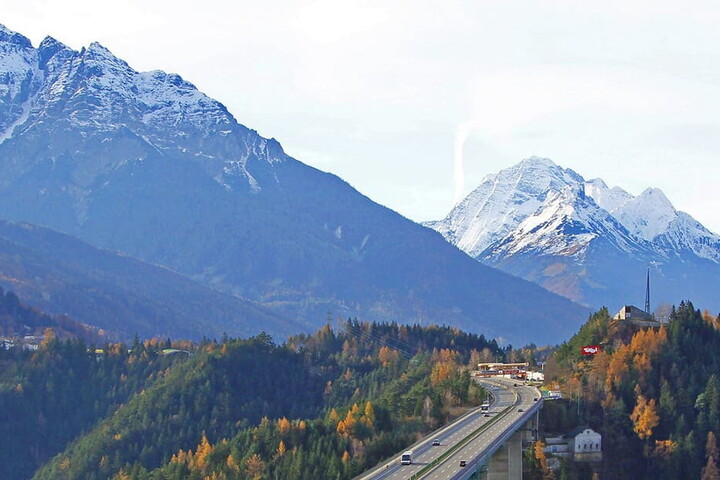
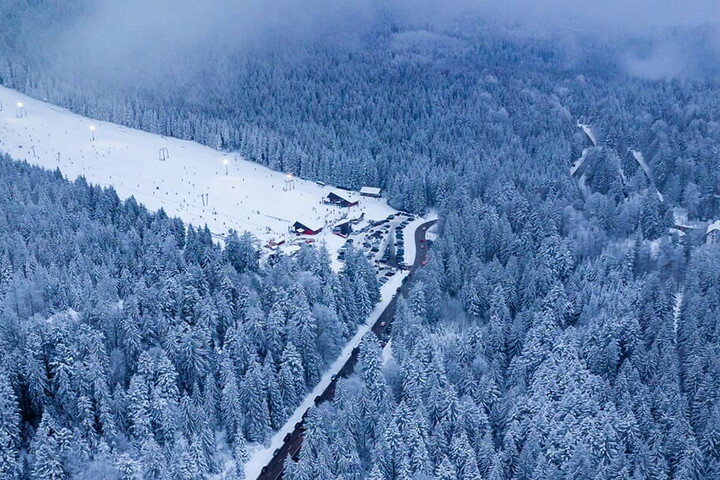
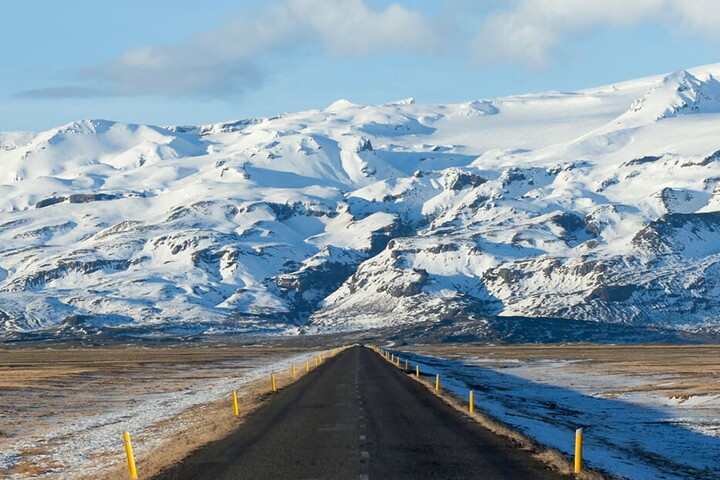
The majesty of the mountains, the beauty of the coniferous forests stretching as far as the eye can see at every turn, perched mountain villages, and frozen waterfalls: driving the Route des Grandes Alpes in winter means indulging in a journey immersed in silence. Between snow-covered surfaces and low-angled light, a sense of charm and mystery is bestowed upon this approximately 700 km route, which traverses France from North to South, connecting Haute-Savoie to the Côte d'Azur.
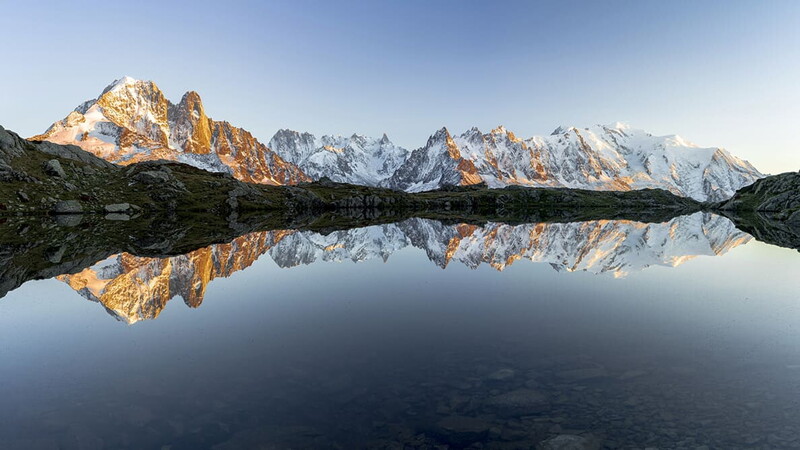
The result of an early 20th Century effort to increase tourism in the area, the Route des Grandes Alpes, also known as the D902, touches sixteen Alpine passes. Six of these are over 2,000 metres in altitude, separating France from Piedmont. This route comprises one of the most famous stretches of the Tour de France as well as one of the most beloved itineraries for those wishing to combine the pleasure of four or two-wheeled driving with a love for Alpine landscapes.
The journey ideally begins in Thonon-les-Bains, on the Southern shore of Lake Geneva. The capital of the natural and historical French Chablais region, it is a pleasant spa town of Mediaeval origins, with traces remaining in the church of Saint-Hippolyte and the basilica of Saint-François-de-Sales. A visit to the ancient Castle of Ripaille, built on what was once the hunting grounds of the Dukes of Savoy, is essential.
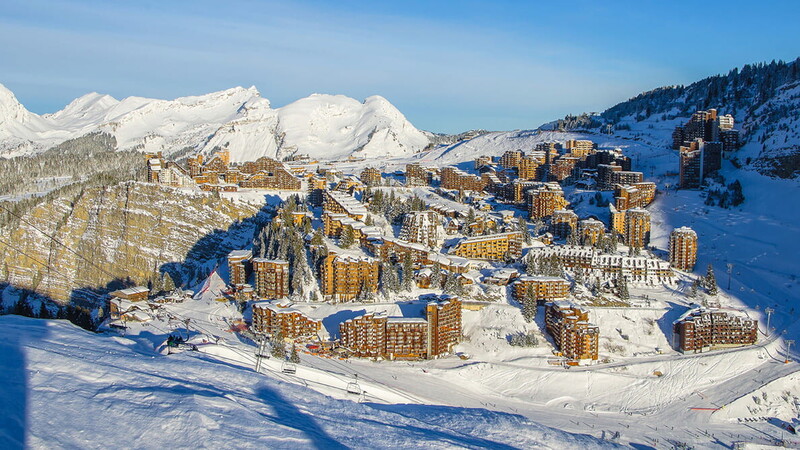
Continuing along the D902, you encounter the first characteristic towns dotted with steeply pitched roofs, such as St.Jean D'Aulps and Morzine. Here, we are near Avoriaz-Morzine, a famous ski resort in the heart of Les Portes du Soleil, one of the largest ski areas in Europe. The architecture of the chalets, strictly wooden, follows the mountain slopes, blending seamlessly with the surrounding landscape.
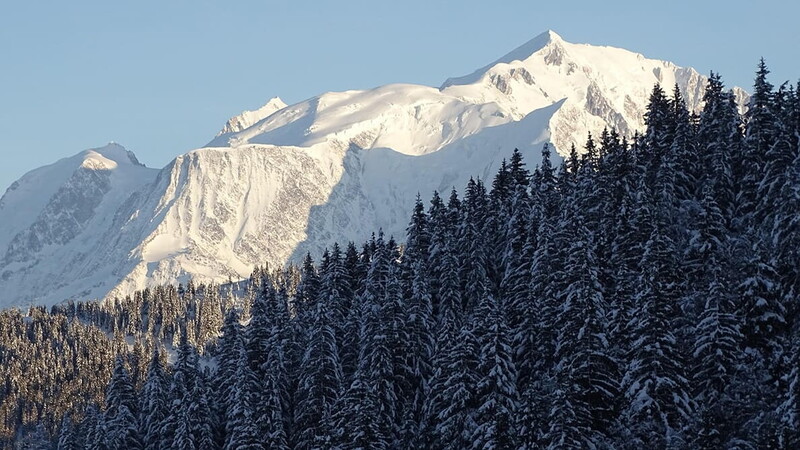
In the heart of the wild and untouched nature of the Aravis massif lies La Clusaz, a chic resort and one of the most important destinations for cross-country skiing, which has successfully preserved its authenticity and traditions. Situated at an altitude of 1,486 metres is the Col des Aravis, an unmissable stop on the journey offering an unparalleled view of Mont Blanc. For those wishing to pause, there are two ski areas: The first is "Les Portes du Mont-Blanc", which connects Combloux to the Jaillet massif (Megève) and the resort of La Giettaz in the Savoie department. It offers 100 km of trails ranging in difficulty. The second is "Evasion Mont-Blanc", which includes Les Portes du Mont-Blanc as well as the resorts of Megève, Saint-Gervais-les-Bains and Les Contamines-Montjoie, providing a total of 445 km of slopes.
After a stop in the delightful village of Beaufort, which preserves numerous vestiges of its various castles, you take a panoramic road leading to the Col de Méraillet at 1,968 metres and then the Comet de Roselend, from which you can admire the fascinating lake of the same name.
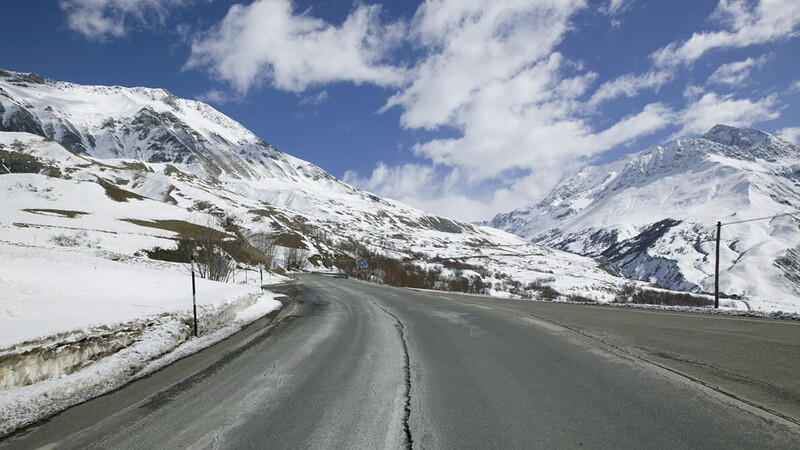
In the heart of an open valley, near what is referred to as the Valley of Glaciers, lies the town of Bourg-Saint-Maurice. Beyond this, the road descends through rocks and fir forests. Amongst curves and hairpins that seem never-ending, you reach Val-d'Isère, an oasis of peace and beauty. Together with the municipality of Tignes, it forms a tourist and sporting mountain area called Espace Killy, famous for regularly hosting skiing competitions. Leaving the Isère river to your right, you go on to discover the Col de l'Iseran. At 2,770 metres, it is not only the highest paved pass in France but in all of Europe, and one of the most exciting points of the entire route.
Driving towards Savoy, skirting cliffs and ridges almost suspended in the void, you pass through the small village of Bessans, a renowned local tourist spot, and then Lanslevillard at the foot of Mont Cenis. Here, a small detour towards the D1006 road is a must. This leads to the artificial lake of the same name, marking the border between the Val di Susa in Italy and the Maurienne valley in France. It is said that Hannibal passed through here during his descent towards Rome with his elephants signs along the road commemorate this fascinating chapter of history. Continuing along the D1006, one is left speechless by the sight of the majestic Esseillon forts, built in the 19th Century by the Piedmontese to prevent a French invasion before Savoy was ceded along with Nice in 1860.
At Saint-Michel-de-Maurienne, you rejoin the D902 towards the Col du Télégraphe, which rises to 1,566 metres and leads to the Col du Galibier. This pass is famous for the feat of Marco Pantani, who in 1998 won the Grenoble-Les Deux Alpes stage, as commemorated by a monument erected in 2011 near Les Granges du Galibier at 2,301 metres. Beyond these passes, you reach the Col de l'Izoard, situated between the towns of Briançon and Château-Ville-Vieille. Here, you will be enchanted by the lunar landscape of the Casse Déserte, a rocky area of rare beauty. After several serpentine curves, you arrive in Guillestre.
Crossing the border from the High Alps into Provence, heading towards the valley, you begin to see towns with characteristic spires such as those of Saint-Paul-sur-Ubaye. The road continues towards the Col de la Cayolle and then the Col de la Bonette, another epic stage of the Tour de France.
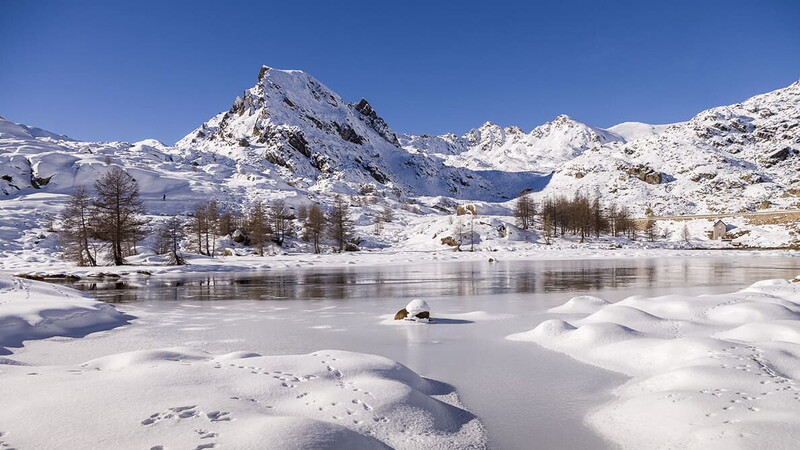
Firs, larches, and green pastures cover the surface of the Mercantour National Park, formerly a royal hunting reserve for King Victor Emmanuel II and a national park since 1979. After Guillaumes, the road descends towards Roubion. Following an incredible series of terraced hairpins and tunnels that plunge towards the Val di Blora with its canyons, you finally arrive at the Côte d'Azur, where you can choose between Menton or Nice. It is this coastal finish that brings this thrilling journey through the heart of the French Alps to a close.