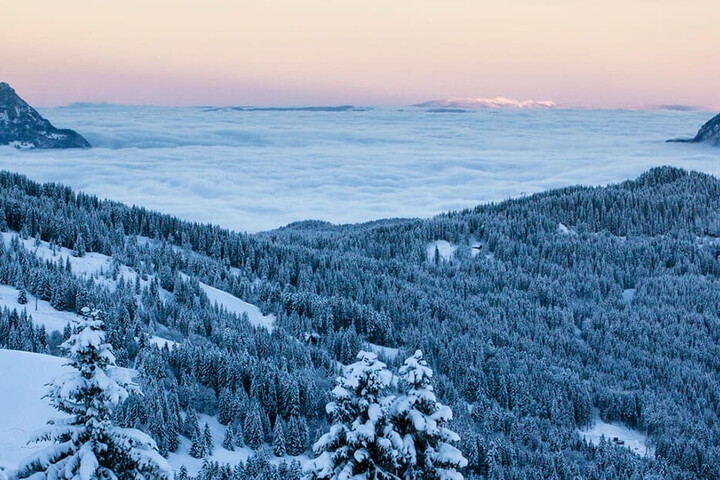
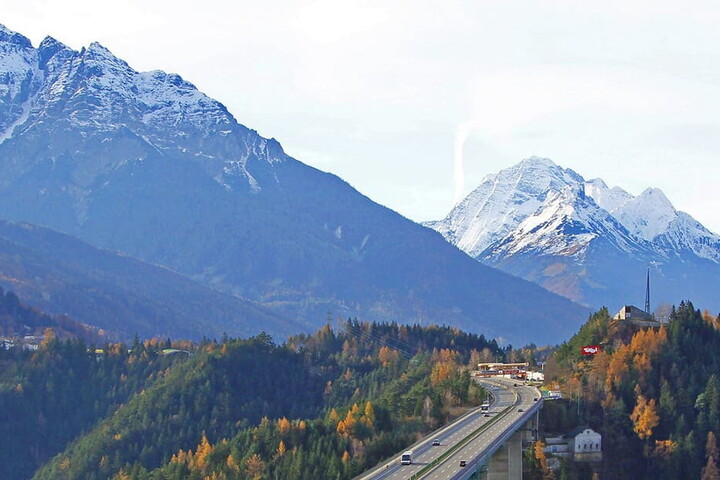
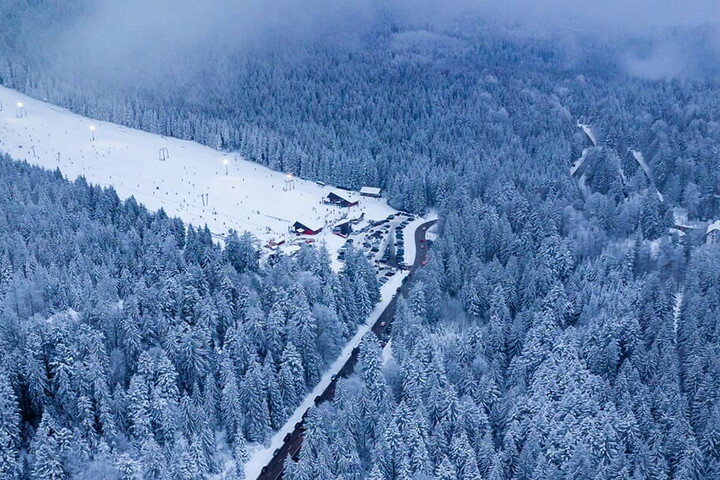
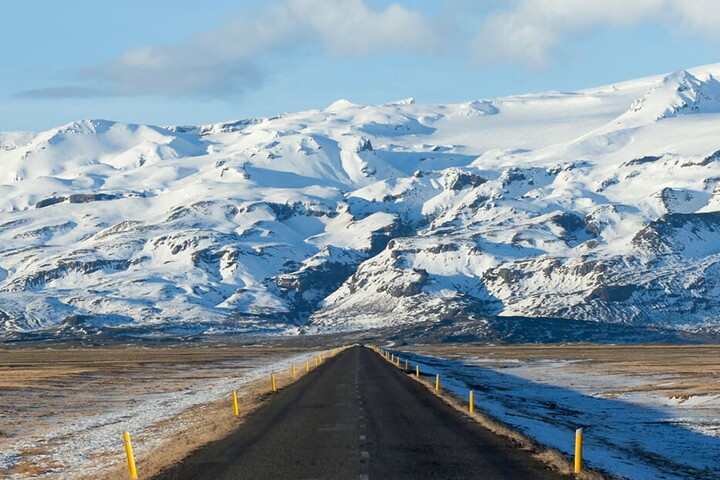
The Ring Road in winter is a total experience. The tarmac that runs between lava fields, frozen waterfalls, and snow deserts becomes the centre of a narrative that celebrates the force of the elements and the engineering that allows for safe passage. Studded tyres, intelligent traction, and roads that face sudden storms: it is a journey that alternates between extreme nature and technological comfort, where winter is not an obstacle but an amplifier of emotions.
One only needs to look at a map of Iceland to understand why the Hringvegur, or Route 1, is known as the Ring Road. This road encircles the island in a loop 1,335 kilometres long, along which one can find some of the most evocative and significant landmarks in the country. Created in the 1970s to facilitate connections for residents, over the years it has become a firm favourite for tourists wishing to visit Northern Europe, as well as a goal for many motorists wanting to test themselves in a territory that remains wild and rugged.
Those who shy away from the unexpected choose to travel it in summer, but those who wish to enjoy the true essence of the island love to set off in winter. This requires preparing for weather conditions that can be somewhat difficult, such as heavy snowfall, very strong wind gusts, or sea storms. Managing these situations, however, means truly understanding why Iceland has fascinated generations of travellers for centuries; they choose to respect the harshness of nature and welcome it as an essential part of their journey. By following a few precautions, it can be transformed into a unique experience. Upon reaching Iceland, hire a 4x4 vehicle equipped with studded winter tyres and heated seats. When dealing with harsh winters and long distances, these are not luxuries, but features that help you drive in maximum comfort. Get behind the wheel after discovering all your vehicle's features: exploit the full potential of intelligent traction when facing various road surface conditions, rely on your ESC to pull you out of less secure situations, and, if the car allows, choose different driving modes to suit the occasion, just as a professional driver would.
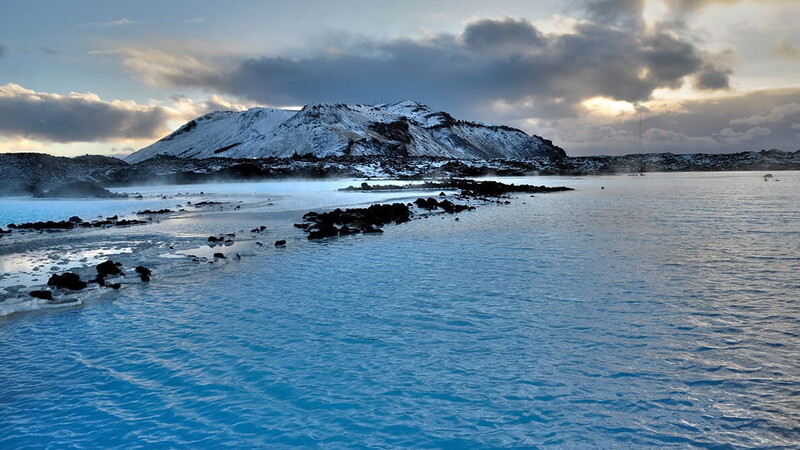
Once you have set off, Iceland will not disappoint. Along the Ring Road, stop at the Blue Lagoon, one of the most famous spas in the world Here, you can bathe in warm geothermal waters, which have a characteristic milky blue colour due to the high mineral content, while the surrounding environment is cold and snowy. Alternatively, take a break at Thingvellir National Park, a UNESCO World Heritage site for both its geology and history. It is perhaps one of the places that makes this island unique because it contains the Silfra fissure,
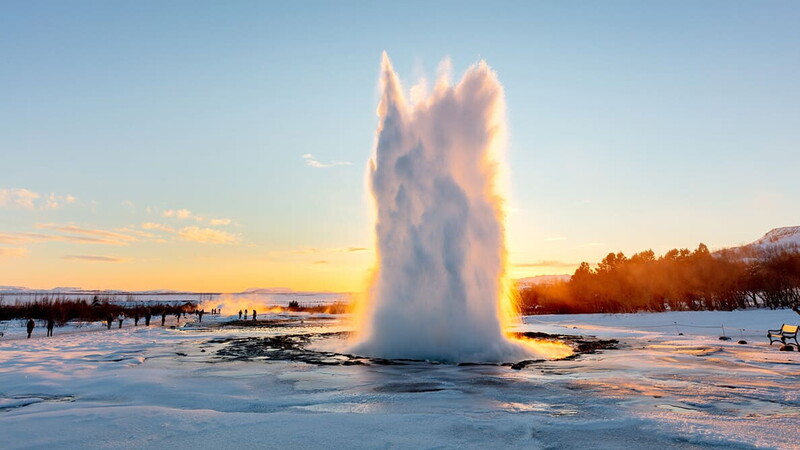
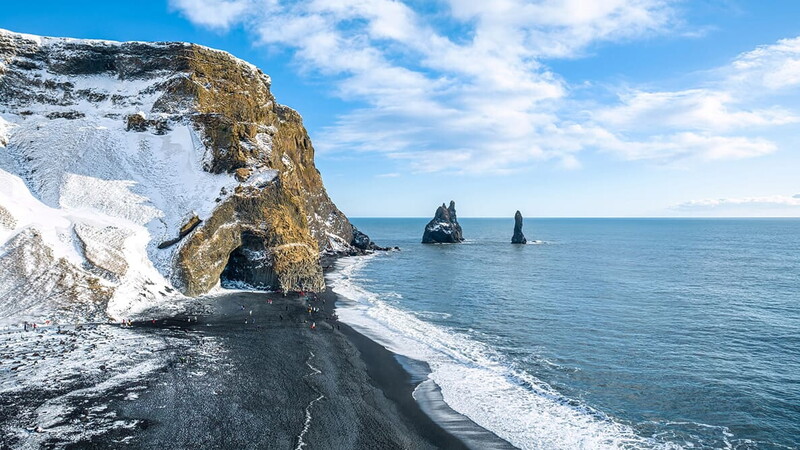
created by the separation of the North American and Eurasian tectonic plates. It is visible proof of how the two continents have pulled apart, creating a natural environment of steep rock faces that are covered in snow and ice in winter. However, Iceland is primarily a volcanic island, and amongst the essential stops on the Ring Road, the Strokkur geyser is a must. It is the most active geyser in the region. This hot spring erupts impetuously throughout the year every 5 to 10 minutes with a characteristic sound. It is no surprise that it is one of the most photographed places in Iceland, welcoming more than a million visitors annually. Similarly evocative scenery can be found at Reynisfjara Beach, a black sand beach where dagger-shaped basalt columns rise from the sea, the result of lava cooling rapidly upon contact with water. During the cold months, when the rocks and sand are blanketed in snow, the landscape becomes almost lunar.
Visiting Iceland in winter also means being patient and respecting nature's timing. Before setting out on the Ring Road, always remember to study the route you have planned for the day; on long stretches, there may be no refuelling stations, so it is wise to organise accordingly. Check weather Apps frequently because conditions change several times a day, and it may be useful to take precautions to avoid sections of road that are temporarily impassable. Yet, there is no more effective way to visit the island, because within these thousand-plus kilometres lies everything that defines it: small villages, volcanic landscapes, long expanses of snow and ice, the ocean lapping the coasts, and the steep rock walls of the Icelandic mountains. To travel it, especially in winter, means learning to enjoy the silence, to avoid haste, and to be fascinated, from the cabin of your car, by a territory that still retains its authenticity.
For many travellers, the Ring Road has been a way to understand the complexity of this island and appreciate its extraordinary nature. For others, it is not just a road or a way to reach a destination, but the heart of the journey itself, the part that encapsulates the true reason they set off. Perhaps there is nothing a traveller desires more: to hold in their memory not only the encounters and the landscapes but also the long stretches of road that separate them from a destination.