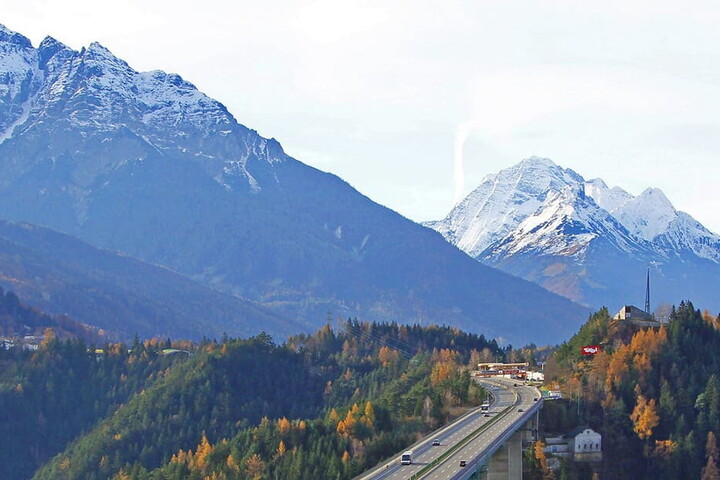
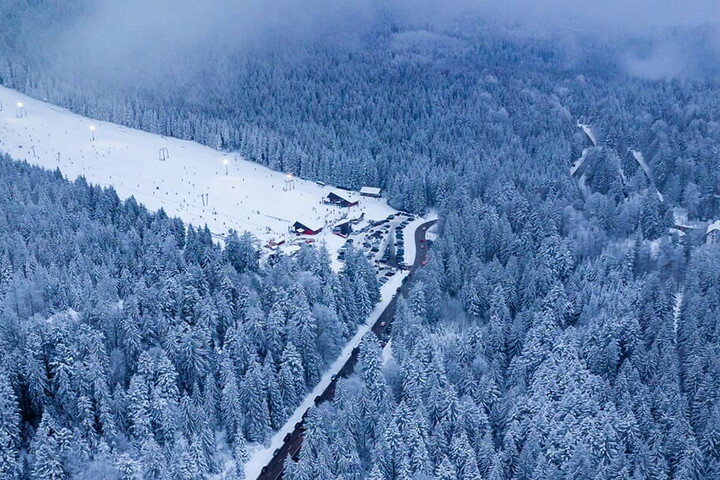
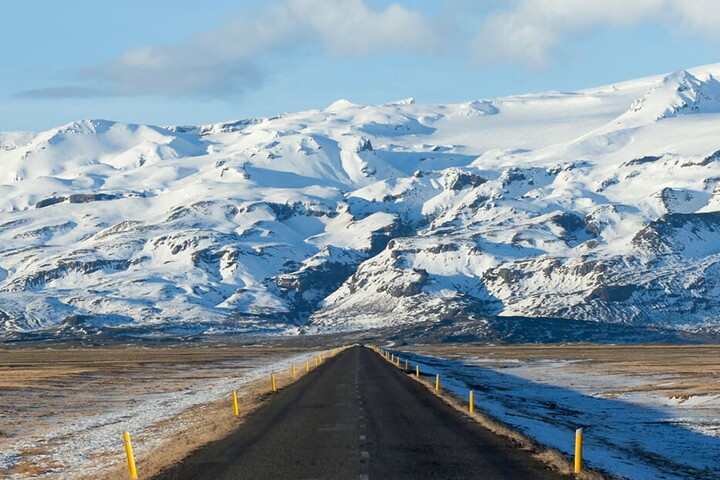
For centuries, the Brenner Route has been one of the most important natural passages linking the Mediterranean world with Central and Northern Europe. As time went on, especially between the nineteenth and twentieth centuries, it gradually took shape as a major road connection. First with the Brenner state road (now the SS12), and later with the construction of the Brenner highway (A22), opened in stages from the 1960s onwards, the route between Verona, Bolzano, Innsbruck and Munich became one of Europe's key north–south corridors. Today, the A22 is still a vital artery for travellers and goods moving between Italy, Austria and Germany, crossing landscapes of remarkable beauty and cultural richness and offering a journey that is as scenic as it is strategic. This is where the journey along the Brenner Route truly begins: a road that is far more than a modern motorway, shaped by over two thousand years of stories, change and constant exchange among the Alpine valleys.
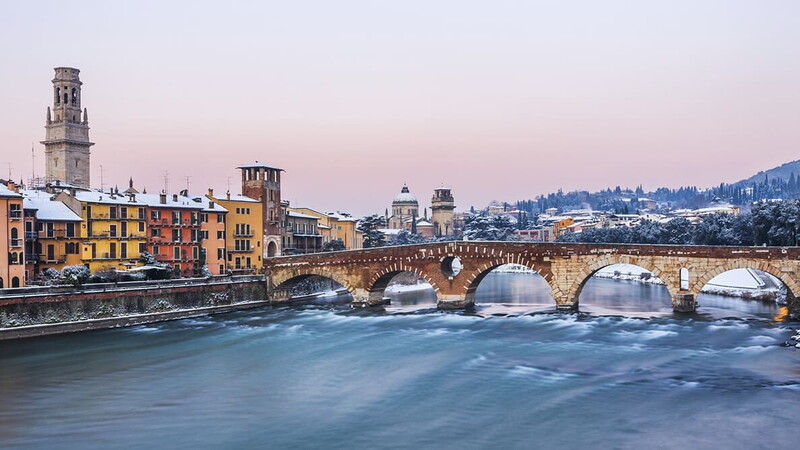
Starting from Verona and heading North, the route passes through Rovereto, a city of significant artistic interest thanks to the Mart (Museum of Modern and Contemporary Art). Further along lies Trento, famous for its Buonconsiglio Castle, which houses extraordinary late-Mediaeval frescoes. The landscape here is defined by three hills: Doss Trento, Dosso di San Rocco, and Dosso di Sant'Agata, which surround the town. Shortly after, the view shifts to the poetic terraced hills of the Val di Cembra, a UNESCO World Heritage site renowned for high-quality wines such as Chardonnay and Trentodoc.
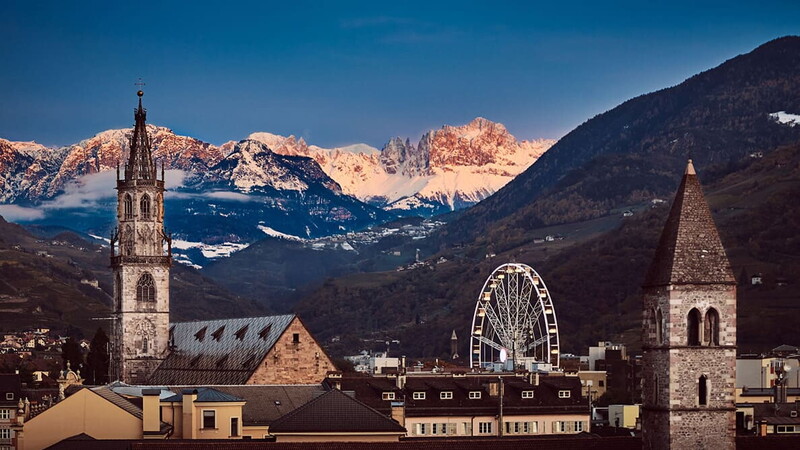
The journey continues towards Bolzano, flanked by the Adamello Brenta Nature Park to the West and the Dolomiti Bellunesi National Park to the East. The mountain villages here are delightful: Salorno marks the emblematic border between German-speaking South Tyrol and Italian-speaking Trentino. Further North is Egna, the main town of the Bassa Atesina, situated on the western slopes of the Adige Valle. Its name derives from the ancient Roman post station Endidae on the Via Claudia Augusta, remnants of which can still be visited. Its historic centre, with 16th-Century porticoes and noble houses, attests to its ancient wealth. Nearby, surrounded by vineyards, cultivated fields, and scenic walks, lies Ora. To the South rises the Castelfeder hill, a protected biotope linked to the Monte Corno Nature Park; it is notable for containing the most extensive dry meadows in the province after the Val Venosta.
A short detour West leads to Termeno (Tramin), one of the most prestigious wine regions and the home of Gewürztraminer. Since 1591, it has hosted the Egetmann parade every two years on Shrove Tuesday, the oldest carnival tradition in Tyrol. Before reaching Bolzano, the route passes Laives, also known as the 'city of apples' due to its fruit production. From there, one can visit the famous Sanctuary of Madonna di Pietralba, the most important in South Tyrol and the highest in Europe, with its 17th-Century Baroque church and expansive views of the Dolomites.
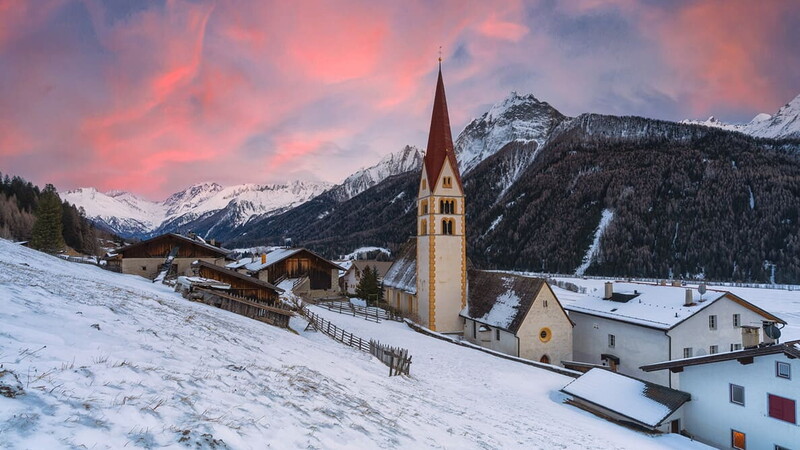
Heading further North, the route passes Chiusa (Klausen), whose ancient village is clustered at the foot of the 'sacred mountain of Tyrol' - the cliff of the Sabiona Monastery, which remains a place of devotion to this day. Just a 15-minute drive away, in a wide, sun-drenched basin at the heart of the Isarco Valley, lies Bressanone (Brixen), the oldest city in Tyrol. It features picturesque porticos, the Parish Church of St. Michael, with its characteristic bell tower known as the 'White Tower' due to its light-coloured masonry spire, and the magnificent Cathedral. Nearby stands the Bishop's Palace, the most imposing historic residential building in South Tyrol. A mere 10 km away is Vipiteno (Sterzing), Italy's northernmost city, nestled between lush wooded slopes and pastures just a few kilometres from the Brenner Pass and the Austrian border. The snow-covered landscape offers winter sports enthusiasts an ideal retreat at the Montecavallo ski resort.
After the municipality of Brennero (Brenner), the route crosses into Austria, reaching Innsbruck, a destination steeped in history and natural beauty, in approximately thirty minutes. The city's symbol is the Golden Roof (Goldenes Dachl), an oriel window adorned with 2,657 fire-gilded copper tiles built for Emperor Maximilian I in 1500. Less than two hours later, the journey concludes at its final destination: Munich. With its Baroque and Rococo churches, royal residences, vast parks and deep-rooted Bavarian folklore, this immersive journey through valleys, fortresses, and snow-capped villages reaches its conclusion in Southern Germany — a metaphor for a Europe that remains in motion and connected even in the coldest months of the year.